


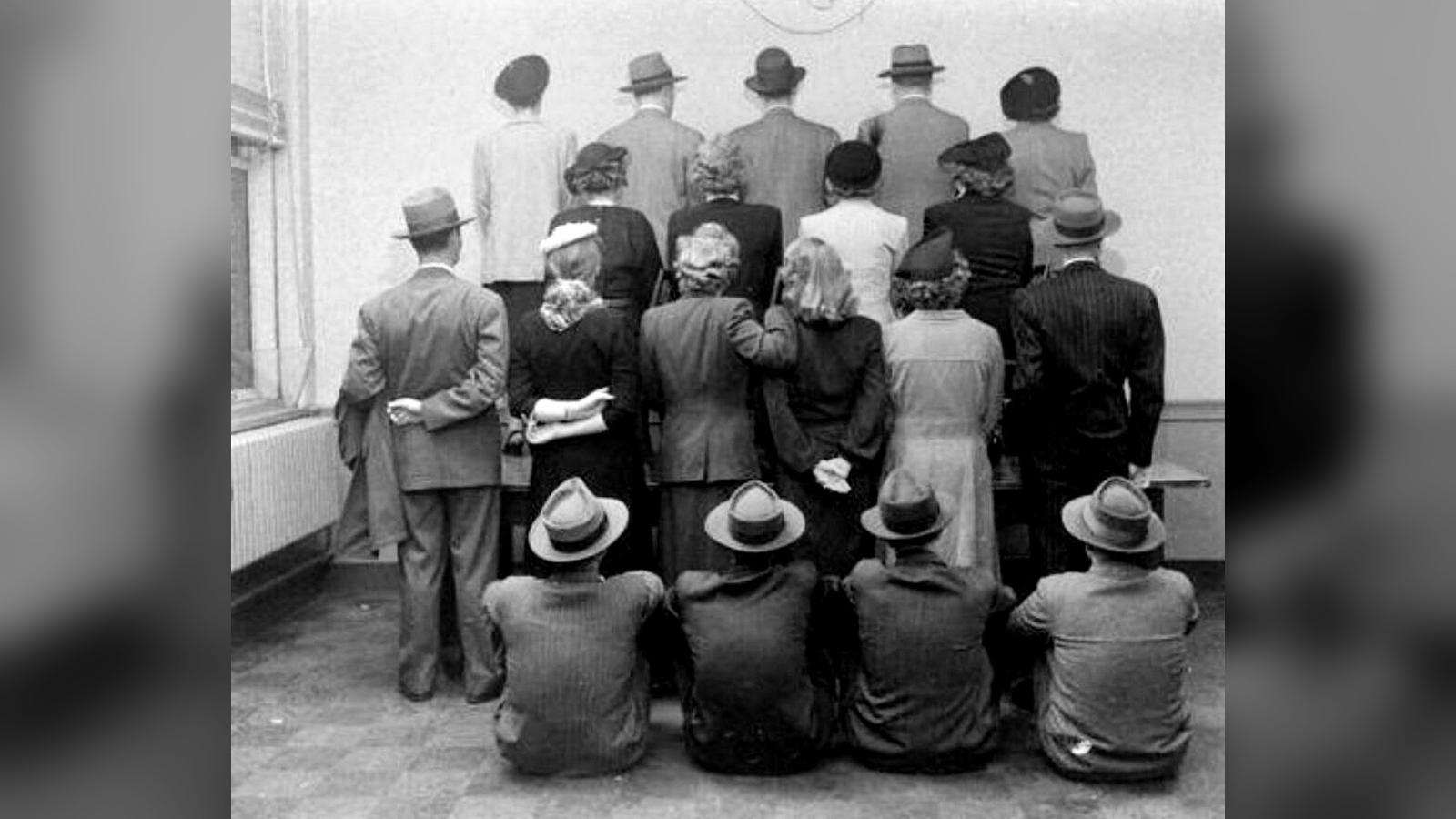
This 1924 group photograph is a study in intellectual intensity, bohemian camaraderie, and the nascent energy of a revolutionary artistic movement. Within the frame, we see a collection of poets, novelists, and provocateurs who would soon become synonymous with the Surrealist revolution. Positioned centrally is Gala—born Elena Ivanovna Diakonova—whose presence is as commanding as the men surrounding her. Beside her, Paul Éluard, her husband at the time, embodies the poetic rigor of the group. Also visible are Philippe Soupault, the co-author of the first automatic writing experiments, and the tragic figures of René Crevel and Robert Desnos. Their posture is informal yet deliberate, captured in a setting that suggests the cafes and studios of Montparnasse where the movement’s manifestos were birthed. Their clothing—tailored coats, loose ties, and the sharp, intellectual gaze characteristic of the era—marks them as the vanguard of a new, irrational reality.
What the photograph shows
The photograph acts as a frozen moment of collective identity. The composition is somewhat crowded, typical of the era’s informal portraiture, where the subjects seem to have been gathered hastily in an apartment or a studio. Gala stands out not merely because of her gender in a male-dominated movement, but because of her poise. Her expression is one of detached observation, a trait that would later define her role as the ‘Soloizé’—the golden muse who managed the practical and commercial realities of the artists she nurtured. The men around her, including Éluard and Soupault, display the classic ‘poet’s uniform’ of the 1920s: dark wool jackets, crisp collars, and a look of existential defiance. The background is indistinct, likely a wall in a Parisian café or a private home, emphasizing that this was a social movement as much as an aesthetic one.
The moment behind the image
The year 1924 was not merely a date; it was the hinge upon which the Surrealist movement turned. This was the year André Breton published his first Surrealist Manifesto, formally defining the group’s mission to resolve the contradictory conditions of dream and reality. The atmosphere in Paris was electric, characterized by a post-World War I disillusionment that drove these artists to seek truth in the unconscious. This photograph captures them at the peak of their collaborative cohesion. Before the internal schisms, political disputes, and the eventual assimilation of figures like Salvador Dalí, this group functioned as a tight-knit, almost cult-like fraternity. They were engaged in constant, frantic dialogue, testing the limits of language and visual expression through games like the ‘exquisite corpse’ and automatic writing. The photograph acts as an artifact of this specific social orbit, where the boundaries between life and art were intentionally erased.
Photographer and provenance
The provenance of this specific image remains wrapped in the informal, often undocumented nature of early Surrealist gatherings. In the 1920s, photography within these circles was frequently the work of a friend or an enthusiast within the group, rather than a commissioned professional. Consequently, precise attribution is often difficult to confirm, with many prints circulating as private mementos among the inner circle. The survival of this image is testament to the group’s own self-awareness; they were documenting their own legend as they created it. It has since migrated from private collections to the archives of modern art history, serving as a primary visual reference for scholars attempting to map the complex web of relationships that defined the movement’s early years. The lack of a professional photographer’s stamp suggests this was an intimate record, intended for the eyes of the members themselves rather than the public press.
Historical context
Gala’s central position in this frame is particularly significant. Long before she became the ‘Soloizé’—the golden muse and business strategist for Salvador Dalí—she was a formidable force in the Parisian literary scene. Born in Kazan in 1894, her trajectory from a Russian sanatorium to the heart of French avant-garde culture is one of the most compelling narratives of the century. She was not merely a muse; she was an editor, a curator of talent, and a bridge between disparate creative minds. Her influence on Paul Éluard was profound, and her presence in this photograph underscores her role as a primary architect of the Surrealist social network. The men surrounding her were the movement’s primary voices, yet historical re-examinations now recognize Gala’s influence in shaping their creative output, fostering the very environment that allowed Surrealism to flourish. She navigated the complex personal dynamics of these men with a sharp intelligence that often surpassed their own, effectively managing the egos that would eventually threaten to tear the movement apart.
Why it still matters
Looking at this photograph today, one sees more than a mere collection of artists; one sees the origins of modern personal branding and creative collaboration. The image persists because it captures a moment of pure, unadulterated avant-garde ambition before the internal schisms and the eventual global fame of its members transformed the group into a historical canon. It remains a vital document, reminding us that the ‘Surrealist revolution’ was, at its heart, a human story of interconnected lives, shared dreams, and the relentless pursuit of an alternative reality. It serves as a reminder that behind the radical manifestos and the strange imagery, there was a group of individuals navigating the complexities of fame, love, and the desire to change the world through the power of the imagination. The photograph is a testament to the fact that movements are built on relationships, and in this frame, we see the foundation of one of the most influential cultural shifts of the 20th century.