


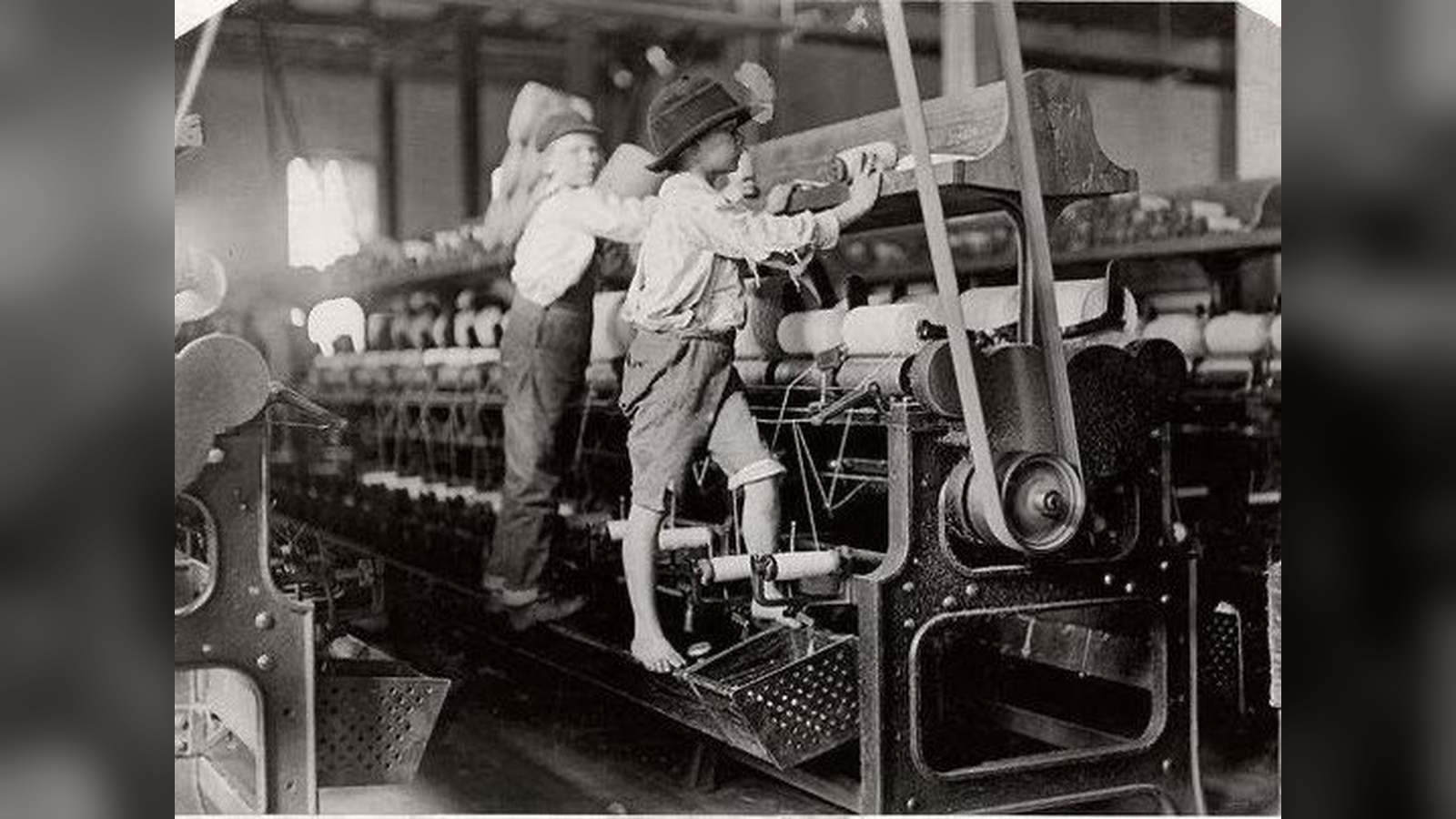
At 1:00 AM on a humid night in August 1908, a camera shutter clicked inside an Indianapolis glass factory, capturing a young, soot-stained boy standing before the intense heat of an annealing oven. This photograph, taken by investigative reformer Lewis Hine, is not just a portrait of exhaustion; it is a historical indictment. In an era when millions of American children worked in coal mines, cotton mills, and glassworks, this image provided undeniable visual proof of their exploitation. This photograph captured a dangerous night shift, showcasing the clandestine methods Hine used to bypass hostile factory owners, and how this single frame helped dismantle the legal framework of child labor in the United States.
What the photograph shows
The young boy, whose name was lost to history but whose weary gaze remains unforgettable, stands in the dim, cavernous interior of the glassworks. He is dwarfed by the massive industrial machinery. His clothes are worn and covered in industrial dust, and his face bears the smudge of soot. The composition is stark; the light from the annealing oven casts long, dramatic shadows, highlighting his fragile frame against the heavy, dangerous equipment. Hine’s lens captures the physical toll of the night shift—the boy’s slouched posture and vacant, tired eyes tell a story of interrupted sleep and relentless physical labor.
The clandestine methods of Lewis Hine
Commissioned by the National Child Labor Committee (NCLC), Lewis Hine traveled across the United States to document the appalling conditions of working children. Factory owners, eager to protect their cheap labor force and public image, routinely barred reformers and journalists. To gain entry, Hine had to be incredibly resourceful. He often disguised himself as a fire inspector, a postcard salesman, a bible vendor, or an industrial machinery salesman. When denied entry, he waited outside factory gates during shift changes or snuck in during the dead of night, as he did for this 1:00 AM shot. Hine carried a heavy, concealed camera and kept a small notebook in his pocket. He measured the children’s heights by aligning their heads with the buttons on his vest and surreptitiously wrote down their ages, working hours, and hazardous duties.
The moment behind the shutter
The glass industry was notorious for its grueling night shifts, known as the “night turn.” Children, often referred to as “blowers’ dogs” or “carrying-in boys,” were required to run back and forth between the glassblowers and the annealing ovens, carrying red-hot bottles on iron shovels. The temperature near the ovens exceeded 1,000 degrees Fahrenheit, while the drafty factory floors could be freezing, exposing the children to extreme temperature fluctuations, toxic fumes, and frequent burns. The boy in the photograph was working a shift that began in the evening and lasted until dawn, earning only a fraction of an adult’s wage for labor that routinely crippled growing bodies.
A catalyst for legislative change
This photograph, archived under No. 102-LH-88 in the National Archives and Records Administration, became part of a massive traveling exhibition and slide-show campaign organized by the NCLC. Hine’s photographs did what statistics could not: they forced the American public to look into the eyes of the children they were exploiting for cheap consumer goods. Despite fierce resistance from industrialists who argued that child labor kept families out of poverty, these images built the moral outrage necessary to pass the Keating-Owen Act of 1916 and, ultimately, the Fair Labor Standards Act of 1938, which banned child labor nationwide. Hine’s work remains a cornerstone of social documentary photography, proving that a single, well-documented image can change the course of history.