


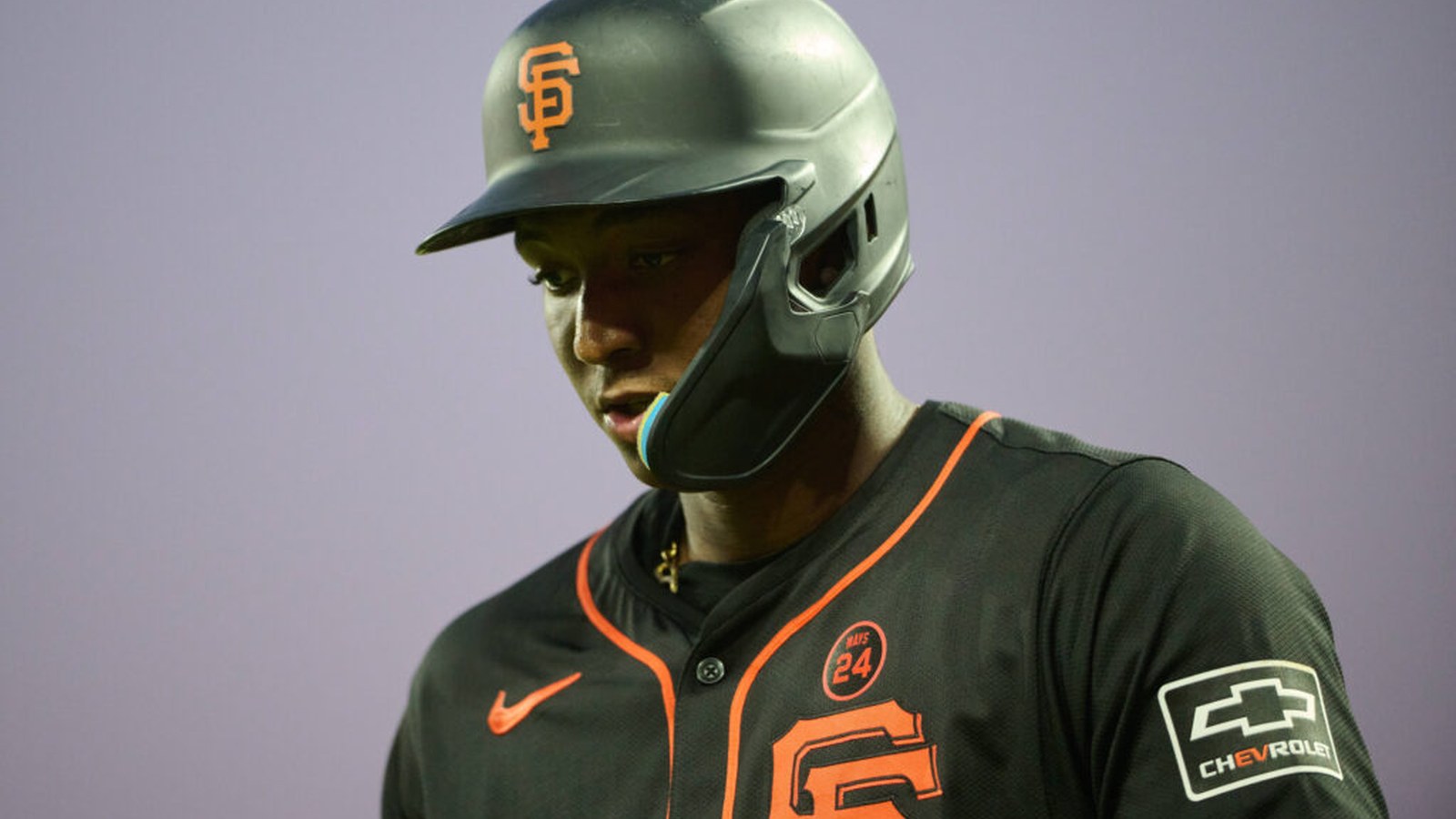
Marco Luciano’s Journey: From Dream Prospect to Waiver Claim
On December 5, 2025, the story of Marco Luciano with the San Francisco Giants reached a quiet, unexpected end. The Pittsburgh Pirates, long known for collecting former Giants prospects, announced they had claimed Luciano off waivers. For a player once heralded as a franchise cornerstone, this was a muted departure, one that speaks volumes about the realities of player development and organizational decision-making in Major League Baseball.
High Hopes and Heavy Expectations: Luciano’s Prospect Pedigree
Luciano’s baseball journey began with promise. Signed out of the Dominican Republic as a teenager, he spent five consecutive years on Baseball America’s top-100 prospect lists, peaking at No. 12 overall in the 2020-21 offseason. He was the kind of talent front offices dream about—an elite power hitter with the potential to anchor the infield for years. For the Giants, he represented hope, a possible heir to Brandon Crawford’s reign at shortstop.
But the path from prospect to big-league contributor is rarely linear. Luciano’s bat, so potent in the low minors, stalled out in Triple-A. Over 226 games and more than 1,000 plate appearances in the hitter-friendly Pacific Coast League, he managed only a .227/.351/.401 line, with a strikeout rate approaching 30%. The swing-and-miss issues followed him to the majors: across 41 games and 126 plate appearances between 2023 and 2024, Luciano hit just .217/.286/.304, striking out more than a third of the time and failing to record a single home run.
Missed Opportunities and Shifting Roles
Luciano’s struggles weren’t limited to the plate. Defensive concerns shadowed his ascent. The Giants, perhaps hoping to spark a turnaround, experimented with his position. In 2024, they began giving him reps at second base in Triple-A. By 2025, he played almost exclusively as a left fielder or designated hitter, with a single game at first base. Last offseason’s signing of Willy Adames to a seven-year deal effectively closed the door on Luciano as the Giants’ shortstop of the future.
Despite these shifts, the organization held onto Luciano for years, resisting trade offers that might have landed proven All-Star talent. The belief in his upside was steadfast, even as whispers grew louder about whether he should be moved to a corner spot or outfield. Ultimately, the Giants waited too long. With Luciano out of minor league options and not in the team’s plans for 2026, waivers became inevitable.
The Giants’ Roster Moves and Developmental Woes
The timing of Luciano’s departure raised eyebrows. Just weeks before, the Giants made no protections ahead of the 2025 Rule 5 Draft, leaving several promising pitchers exposed. Now, with Luciano gone, an open spot on the 40-man roster hints at further moves—perhaps an addition in the Rule 5 Draft or the signing of a free agent. The Giants’ minor league system, once flush with promise, has suffered a string of disappointments. Luciano and Kyle Harrison, the top two prospects as recently as 2024, are no longer with the club. Mason Black, another top-10 prospect, was traded to the Royals this offseason, and Reggie Crawford could be selected in the Rule 5 Draft.
Draft woes compound these issues. The Giants haven’t drafted a true star in the first round since Buster Posey in 2008. Ironically, Posey now leads the team’s baseball operations, tasked with identifying and developing the next generation of talent. The current crop of top prospects—Bryce Eldridge, Josuar Gonzalez, Gavin Kilen (the first first-rounder of the Posey era), Jhonny Level, and Bo Davidson—face the weight of this history. Will any break the cycle, or are they destined to follow the path of Luciano and others, exiting San Francisco for new opportunities elsewhere?
What’s Next for Luciano and the Pirates?
For Luciano, Pittsburgh offers a fresh start. The Pirates’ 40-man roster is now full, and with no set options at shortstop, second base, or left field, Luciano could compete for playing time at any of those positions. The team’s announcement referred to him solely as an outfielder, suggesting that’s where his opportunity lies. He’ll join Jhostynxon Garcia as a right-handed corner outfield option, though Garcia is widely viewed as having a stronger case for regular playing time.
Luciano’s lack of minor league options means Pittsburgh can’t send him to Triple-A without exposing him to waivers again. If he survives spring training cuts, he could carve out a bench role—provided he can finally harness his power and limit the strikeouts. The city of Pittsburgh, and its fans, have seen former Giants prospects blossom before; Bryan Reynolds, now a two-time All-Star, is the shining example. Luciano hopes to follow in those footsteps, transforming potential into production.
The Broader Implications: Development, Patience, and Risk
Luciano’s story is a cautionary tale—one of immense promise, organizational patience, and ultimately, unfulfilled expectations. For the Giants, it’s a lesson in the risks of prospect hoarding and the importance of timely, realistic assessments. For Luciano, the move to Pittsburgh is an opportunity to rewrite his narrative, to prove that his power can play at the highest level and that a change of scenery can rekindle a stalled career.
As the dust settles, Giants fans are left to hope for the best for their former prodigy. The Pirates, meanwhile, have little to lose and everything to gain if Luciano can tap into the talent that once made him one of baseball’s most coveted young players. The story isn’t over—just entering a new chapter, with both teams and the player searching for answers in the unpredictable world of baseball development.
Looking at the facts, Marco Luciano’s journey is a vivid illustration of how potential and reality can diverge in professional sports. The Giants’ handling of his development—delayed position changes, missed trade opportunities, and a final waiver—reflects broader challenges in their system. For Luciano, the fresh start in Pittsburgh is both a last chance and a test of whether elite tools can finally be paired with consistent performance. His fate now hinges not on hype or hope, but on tangible results.