


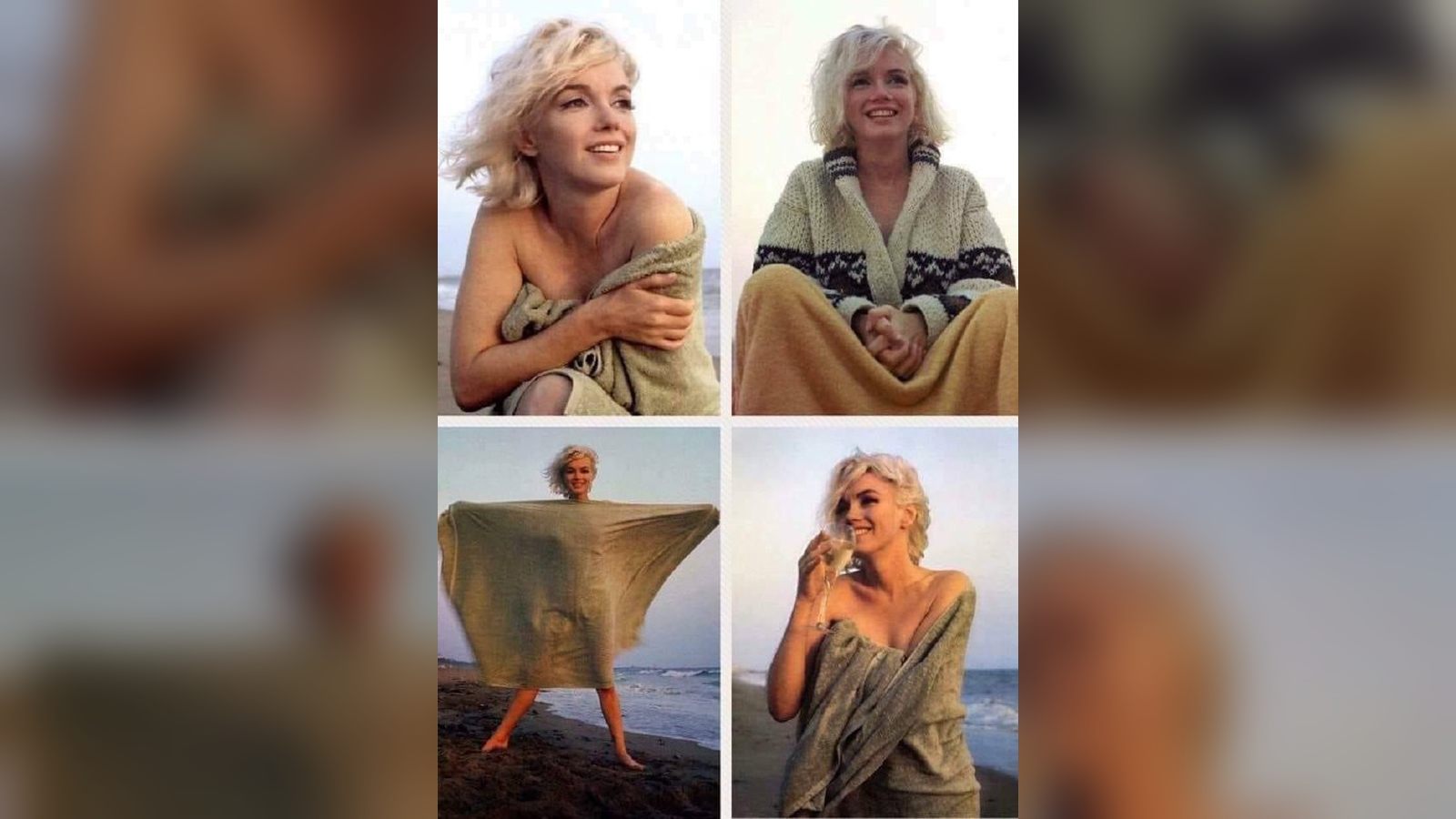
This photograph captures a moment of serene and unexpected beauty: Marilyn Monroe, the world’s most famous film star, standing on the shores of the Pacific Ocean in Santa Monica. With wind-swept hair and a genuine smile, she gazes toward the horizon. Part of the actress’s final professional series, this frame stands in poignant contrast to the tragic events that would unfold just three weeks later. It is a moment frozen in time, depicting a woman on the threshold of her final chapter, yet radiating a warmth that defies the cold reality of her imminent passing.
What is depicted in the photo
In this shot, Monroe is presented in a casual, intimate setting, far removed from the glitz of Hollywood premieres and studio artifice. Dressed in simple, comfortable clothing, her natural charm takes center stage. The soft light of the California coast accentuates her features, revealing a vulnerability often hidden behind her public persona. Unlike the posed shots of her earlier career, this session captures a woman who seems to have found a rare moment of inner peace. Her posture is relaxed, her gaze soft, and the tension characteristic of much of her career is notably absent.
The story behind the photo
This July 1962 session was commissioned by photographer George Barris. Barris, who shared a friendly relationship with the actress, sought to capture a more ‘real’ version of Marilyn for a book project. At the time, Monroe’s life was in a complex phase; she had been dismissed from her final film and was battling personal demons, yet on the beach, she seemed to find a moment of solace. Barris later recounted that she was vibrant and eager to show a side of herself that the public rarely witnessed.
The photographer and provenance
George Barris was a photojournalist who had established a unique rapport with Monroe. His access to the actress was unprecedented, allowing for these candid images. Following Monroe’s death on August 5, 1962, these photographs gained profound historical significance, becoming the final visual testament to a life cut short at 36. Barris held the rights for many years, eventually publishing them as a tribute to the woman he respected and appreciated during those final, quiet days.
Why it matters today
The circumstances of Marilyn Monroe’s death—officially ruled a suicide—have been the subject of conspiracy theories for decades. Yet, looking at these photos, the focus shifts from the tragedy to the human figure, preserving a Marilyn who remains eternal and vulnerable. By stripping away heavy makeup and iconic costumes, Barris allowed us to see Norma Jeane: the person behind the mask. These images serve as a reminder that icons are not merely objects of public consumption, but human beings with complex lives, deep scars, and moments of joy worthy of remembrance.