


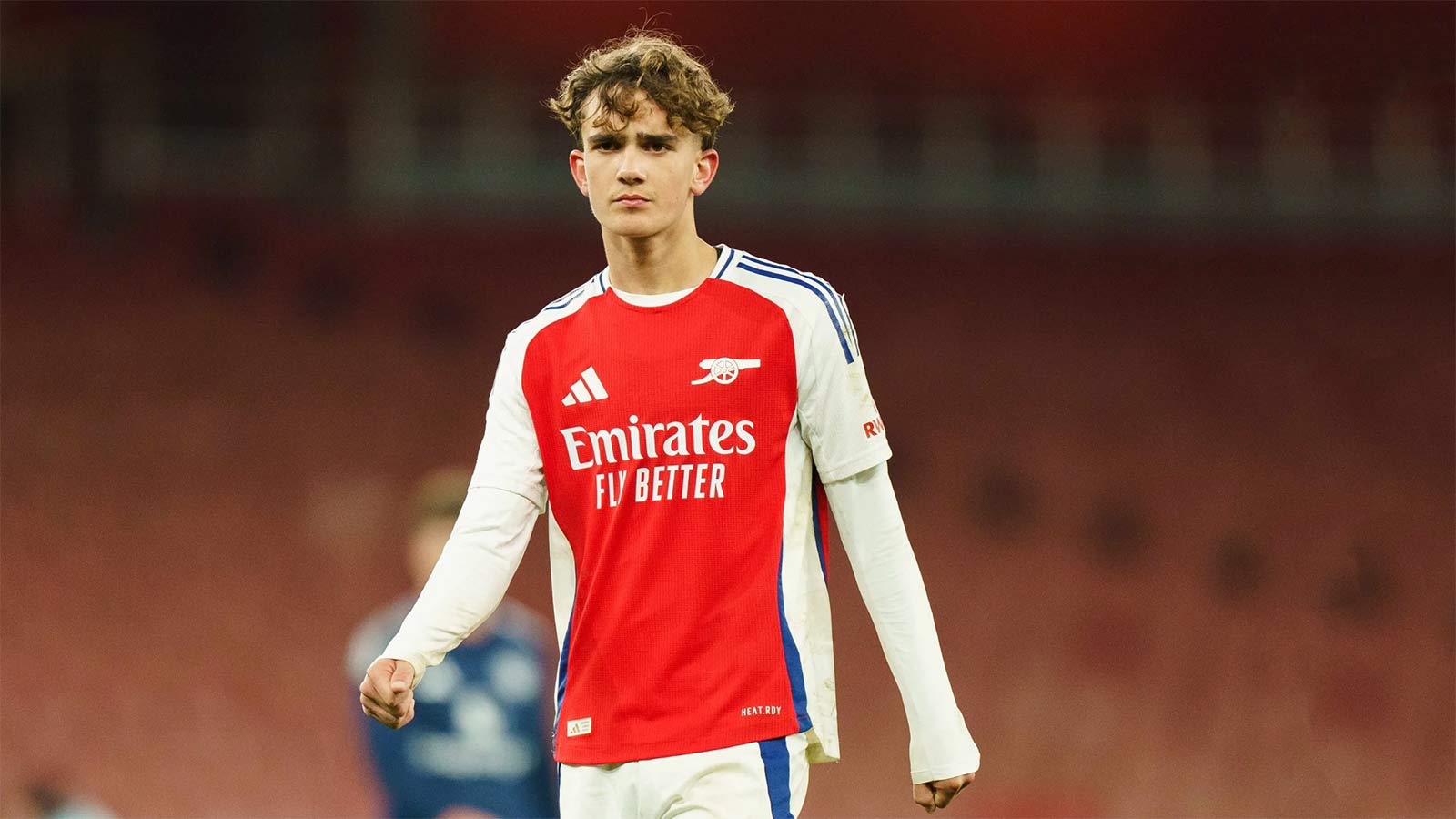
Max Dowman’s Unlikely Ascent: From Hale End to the Emirates Spotlight
Every so often, a young footballer bursts onto the scene with such energy and promise that the entire culture of a club seems to shift. Right now, for Arsenal, that name is Max Dowman. At just 15 years old, Dowman has become a symbol of hope, audacity, and the delicate balance between raw talent and the realities of elite football.
It was a chilly Wednesday night at Vale Park when Dowman’s story took another leap. Arsenal faced Port Vale in the Carabao Cup—a fixture that might have faded into the background if not for the buzz surrounding Dowman. The teenager, already hailed as the next big thing from Arsenal’s Hale End academy, was named on the bench. But even before kickoff, he was already breaking the mold.
As revealed by Simon Collings of The Standard, while the rest of Arsenal’s substitutes warmed up together, Dowman was invited to join the starting XI in their preparations. It was a subtle gesture, yet it spoke volumes: the coaching staff saw him not merely as a benchwarmer, but as a player on the verge of making his mark among the elite.
Breaking Records and Earning Respect: The Port Vale Chapter
The match itself became a showcase for Dowman’s unique journey. In the second half, he replaced Bukayo Saka, becoming the youngest Arsenal player ever to feature in the Carabao Cup—a record previously untouched. His cameo was lively; he almost registered an assist with a slick ball to Viktor Gyokeres, and his presence injected a sense of boldness into Arsenal’s play. The Gunners ultimately triumphed, with Eberechi Eze and Leandro Trossard sealing the win, but Dowman’s brief appearance stole headlines.
But the journey hasn’t been all smooth. Dowman’s technical flair—most notably his penchant for nutmegging senior teammates during training—hasn’t always been met with applause. Mikel Arteta, Arsenal’s head coach, candidly shared that some of the club’s veterans responded to the teenager’s skills with a touch of tough love. “At the beginning, they responded immediately – kick him! That was the first one, and Max, to be fair, he was excellent, stood up, and got to the next one,” Arteta told football.london. It’s a rite of passage—one that tests not just ability, but character.
Dowman’s resilience is proving just as compelling as his talent. Training with the senior squad since he was 14, he’s navigated the challenges of being a prodigy among professionals. His Premier League debut against Leeds United last month saw him win a stoppage-time penalty, underscoring the impact he can have in high-pressure moments.
Arteta’s Leadership: Ego, Recognition, and the Arsenal Identity Crisis
Max Dowman’s rise coincides with a period of introspection and change at Arsenal. Mikel Arteta, often portrayed as a manager obsessed with perception, has come under scrutiny for both his tactical choices and his public persona. Following a cautious 1-1 draw against Manchester City, Arteta faced criticism for his team selection and his apparent reluctance to seize the moment against a vulnerable City side.
During press conferences, Arteta often walks a tightrope between humility and self-aggrandizement. His responses are peppered with references to recognition from industry peers—“coaches, managers, CEOs, presidents”—and subtle jabs at critics. At times, his tone drifts toward the self-referential, reminiscent of political figures like Donald Trump, as noted by Football365. Yet, beneath the bravado lies a manager grappling with the demands of rebuilding an identity for a club that once prided itself on swagger but now, at times, seems meek.
The introduction of talents like Dowman is part of Arteta’s attempt to restore that edge. But it’s a delicate dance; too much ego risks alienation, while too little can breed timidity. Dowman’s journey is therefore entwined with a broader debate about Arsenal’s character—are they a team of bold innovators, or cautious tacticians?
Squad Challenges: Injuries and the Pressure on Youth
Arsenal’s injury woes have added another layer of complexity. Kai Havertz, sidelined with a knee injury, and Noni Madueke, also recovering from a setback, have left gaps in the squad. For Arteta, the pressure to lean on emerging talent like Dowman is both a necessity and an opportunity.
“With Kai, we know that it will be months with him. I don’t know if it can be weeks, you never know, because this is Kai and he’s a different specimen,” Arteta told football.london. The coach emphasized the importance of managing recovery carefully, and with Madueke also out, the reliance on youth is no longer a luxury—it’s a strategy born of necessity.
Dowman isn’t just filling a spot; he’s being asked to shoulder responsibility, to bring energy and unpredictability at a time when Arsenal’s attack is stretched thin. The club’s recent player ratings reflect this, with Dowman receiving positive marks for his cameo and Eze emerging as a star performer in the Port Vale fixture.
Statistical Perspective: Arsenal’s Standing and the Youth Effect
Despite the narrative of caution, Arsenal’s underlying numbers tell a story of strength. According to analytics expert McKay Johns and data from Understat, Arsenal ranks third in the Premier League’s xPts table, behind only Bournemouth and Crystal Palace. The team has emerged from a tough fixture list with solid performances, even as rivals like Liverpool have outperformed their expected metrics.
For a club integrating youth and managing injuries, these numbers suggest resilience. The presence of Dowman and other academy graduates isn’t just a feel-good story—it’s contributing to real results. Every time Dowman steps onto the pitch, he’s not only rewriting records, but also helping Arsenal navigate a season defined by uncertainty and opportunity.
Future Prospects: Embracing Challenge and Change
As Arsenal looks ahead to fixtures against Newcastle and beyond, the question on every supporter’s mind is whether Dowman will continue to feature. His pre-season performances impressed, and his ability to adapt to senior football has earned him the trust of the coaching staff. But the road ahead is fraught with challenges—competition for places, the physical demands of top-tier football, and the ever-present scrutiny that comes with breaking records at such a young age.
Within the club, there’s a growing sense of responsibility to nurture Dowman’s talent without overwhelming him. “You just want to hug him, help him. He’s such a nice boy as well, and he’s very much liked by everybody here,” Arteta said, reflecting the protective instinct that surrounds exceptional prospects. But football is relentless, and for Dowman, every training session, every match, is a test of both skill and mental fortitude.
For Arsenal fans, Dowman’s ascent is more than a footnote—it’s a glimpse of the future. In a season marked by managerial introspection, injury setbacks, and a search for identity, the young midfielder represents a bridge between past glories and new ambitions.
Max Dowman’s rapid rise isn’t just about shattering age records or dazzling on the pitch—it’s a litmus test for Arsenal’s ability to blend youthful courage with mature resilience. In an era where identity is questioned and the pressure to deliver is relentless, Dowman’s journey embodies both the risk and the reward of trusting in youth. The challenge now lies in ensuring that his story remains one of growth, not burnout, as Arsenal continues to redefine itself for the next generation.