


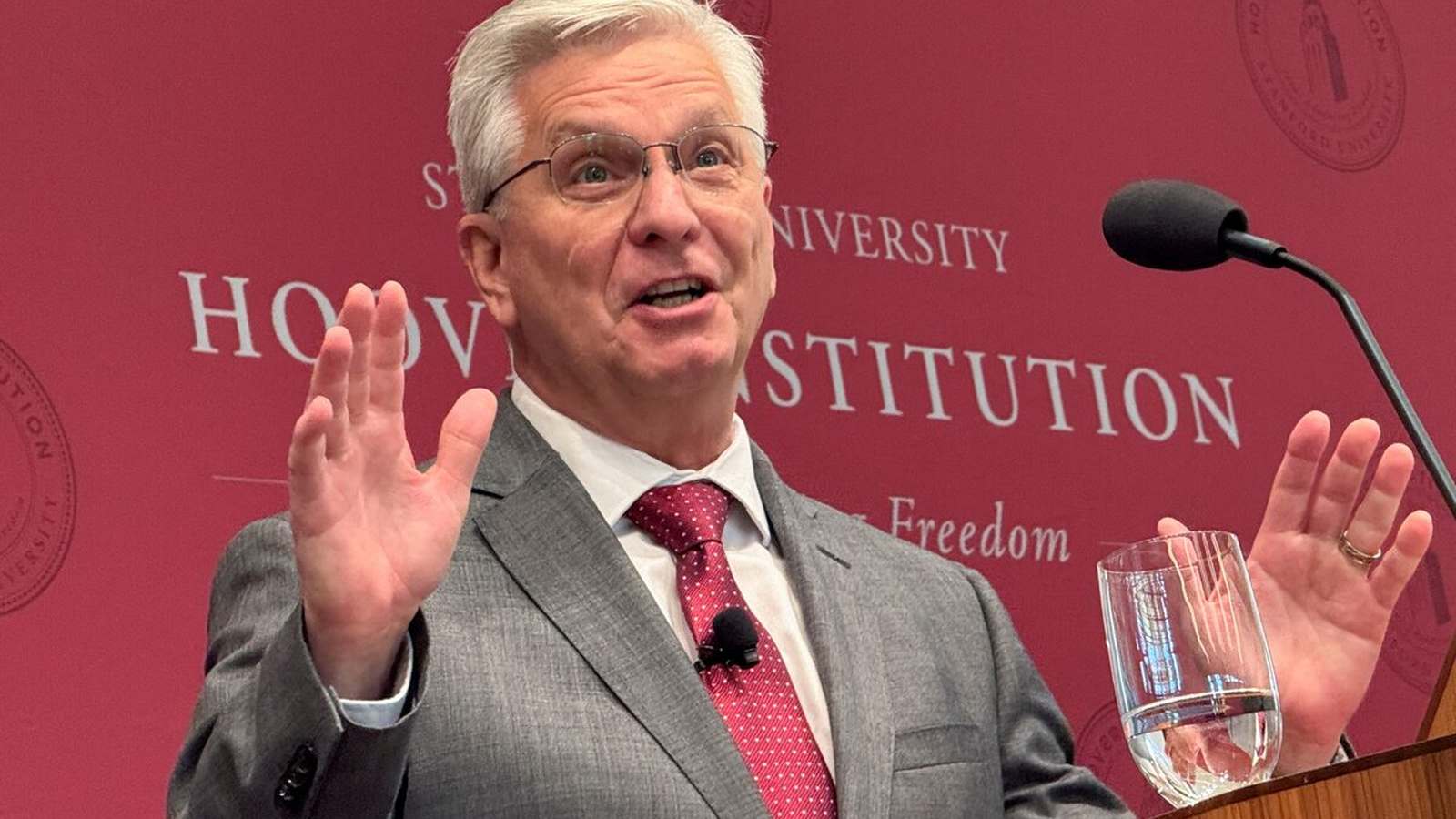
Waller Advocates for Aggressive Policy Shift
Federal Reserve Governor Christopher Waller has signaled that the central bank may need to implement a more aggressive half-point interest rate hike in December to combat persistent inflationary trends. Speaking on CNBC in comments reported by Investor’s Business Daily on November 18, 2026, Waller characterized the current inflation environment as “spreading out” rather than remaining confined to specific sectors. This assessment places Waller at the hawkish end of the Federal Reserve’s policy spectrum as officials weigh their next steps.
The core of Waller’s argument rests on the necessity of market clarity. He suggested that if the Federal Reserve does not provide explicit forward guidance regarding potential follow-up hikes in January, it must compensate by delivering a larger, 50-basis-point increase in December. This action, he noted, would be intended to “shock people” into recognizing the central bank’s commitment to curbing price growth. His position stands in contrast to other members of the Federal Open Market Committee, such as New York Fed President John Williams, who has expressed a preference for further tightening but indicated that dramatic, large-scale moves are currently unnecessary.
Market Expectations and Policy Divergence
Financial markets are currently operating under the assumption of a more measured approach. Market participants have largely priced in a standard quarter-point rate hike for the upcoming December 9 meeting. The probability of a more aggressive half-point shift remains minimal in current futures pricing. However, the sensitivity of the bond market to these comments was evident; while the 10-year Treasury yield saw a slight dip to 5.09% on Wednesday morning, the two-year Treasury yield—which historically tracks more closely with the Federal Reserve’s short-term interest rate outlook—rose by two basis points to 4.81%.
The internal debate at the Fed highlights a broader disagreement over communication strategy. Fed chief Kevin Warsh has reportedly opposed providing explicit forward guidance, creating a policy environment where officials like Waller feel compelled to use larger, singular adjustments to achieve the desired market impact. Without a clear signal for January, Waller argues that the “shock” of a 50-basis-point move is the only mechanism to ensure the market accurately prices in the required tightening.
Evaluating the Economic Stakes
The shift in rhetoric comes as the Federal Reserve attempts to navigate a complex macroeconomic landscape. Waller’s emphasis on inflation “heading in the wrong direction” suggests that the central bank is prepared to prioritize price stability over minimizing near-term market volatility. For investors and policymakers alike, the focus now shifts to the release of the minutes from the October policy meeting, scheduled for 2 p.m. ET, which may provide further insight into the depth of the divide among officials regarding the pace of future hikes.
The implications of this potential move extend beyond immediate market reactions. If the Federal Reserve opts for a 50-basis-point hike, it would represent a significant escalation in the current cycle, signaling to both businesses and consumers that the threshold for acceptable inflation has been lowered. Conversely, if the committee opts for the widely expected 25-basis-point increase, it will rely on the assumption that current restrictive policy is sufficient to temper demand without the need for additional “shock” tactics. As the December 9 meeting approaches, the primary variables remain the degree of consensus among the committee members and whether the upcoming economic data will validate Waller’s concerns about the broadening nature of the current inflationary cycle.
The Broader Context of Monetary Policy
As the Federal Reserve navigates this precarious economic juncture, the divide between policymakers like Waller and those favoring a more cautious approach underscores the inherent difficulty in managing post-inflationary expectations. The “spreading out” of inflation suggests that price pressures are no longer contained within transient supply chain bottlenecks but have instead permeated the broader service and labor sectors. This structural shift necessitates a more fundamental reassessment of the neutral rate, a topic that remains a point of contention within the FOMC.
Waller’s insistence on the necessity of a “shock” to the system reflects a belief that market participants have become too complacent regarding the Fed’s resolve. By floating the idea of a 50-basis-point increase, he is effectively attempting to re-anchor inflation expectations through the threat of decisive action. This strategy carries significant risks, including the potential for overtightening, which could unnecessarily stifle economic growth or lead to an abrupt contraction in credit availability for small and medium-sized enterprises. The tension between achieving price stability and maintaining economic momentum is palpable, as the committee weighs the risks of acting too slowly against the risks of an aggressive policy overshoot.
Furthermore, the reliance on forward guidance as a tool for economic management has become increasingly fraught. With Fed leadership seemingly divided on the utility and optics of providing explicit future signals, the communication strategy of the central bank has become a source of market uncertainty. Investors are left to parse the nuanced language of individual governors, leading to heightened volatility in the Treasury markets. The upcoming release of the October meeting minutes will be scrutinized not just for the data points discussed, but for any indications of a shift in the committee’s collective philosophy toward transparency and guidance. If the minutes reveal a deeper systemic disagreement, it may force the Fed to adopt a more unified, perhaps more hawkish, stance to restore institutional credibility in the eyes of the global financial markets.
Ultimately, the path forward for the Federal Reserve is narrow. The combination of persistent inflationary data and the need to maintain financial stability requires a delicate balance of communication and action. Whether the committee chooses to execute a 50-basis-point hike or opts for a more moderate 25-basis-point increase, the decision will serve as a critical indicator of the central bank’s long-term commitment to its mandate. As the December 9 meeting approaches, all eyes will be on the data, the rhetoric, and the evolving consensus among the governors, as they attempt to steer the economy toward a more stable and sustainable future.