


Securing the AI Experience
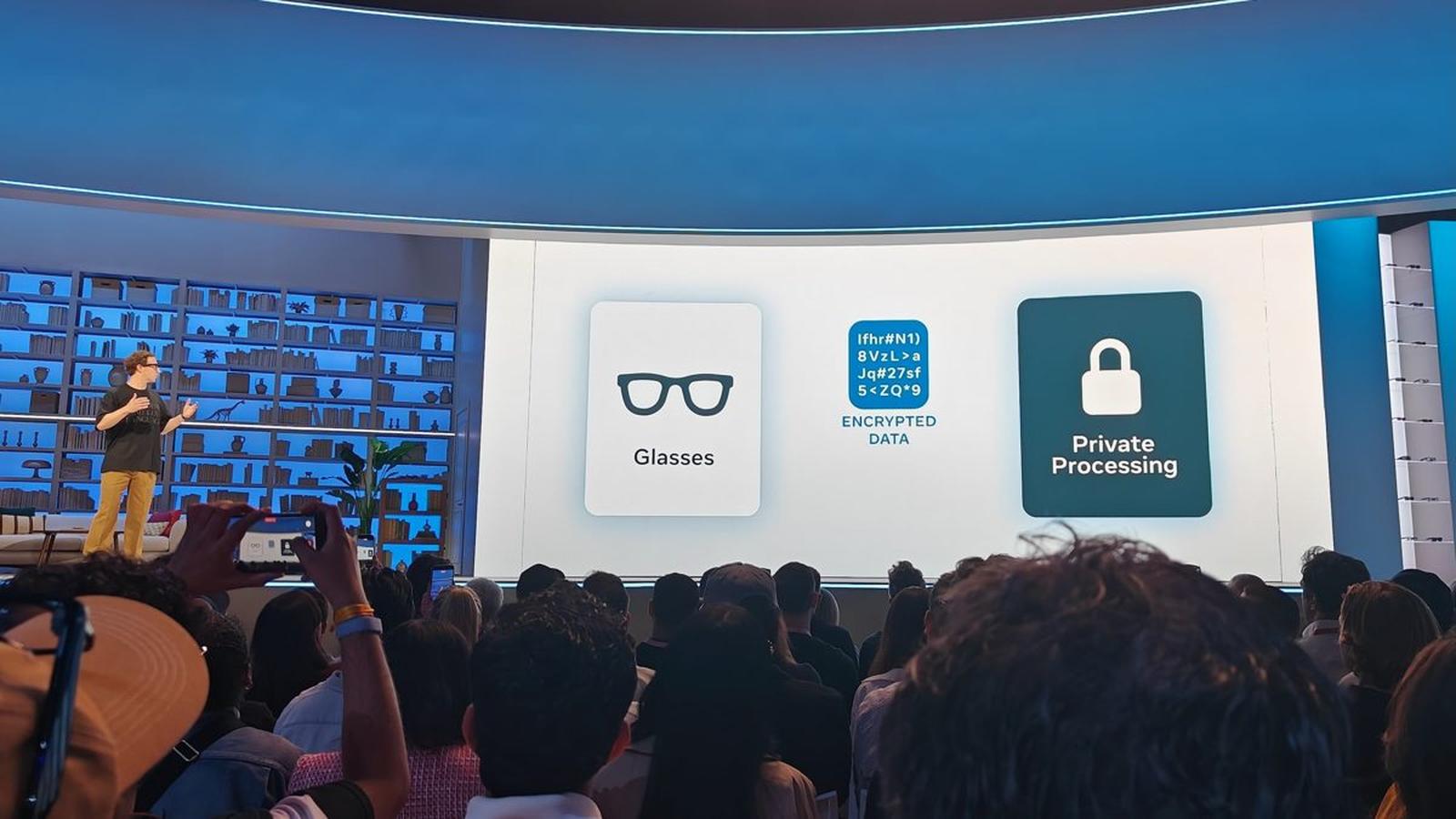
At the recent Meta Connect event, the company announced a significant shift in its wearable hardware strategy: the integration of “Private Processing” for its AI-enabled smartglasses. As Meta prepares to expand its AI capabilities—including the introduction of the Muse AI agent—it is moving to address mounting concerns regarding user data exposure. According to PCMag, the company aims to move AI processing to specialized encrypted servers that prevent even Meta from accessing the contents of user interactions.
The technical hurdle for Meta is substantial. While local processing is the industry standard for privacy, smartglasses often lack the computing power to run advanced models. Meta’s solution involves using encrypted servers where the encryption key remains on the user’s device, ensuring that data is never stored or decrypted by the company. Pritam Shah, a director of trust engineering at Meta, described the challenge as “flying an airline blindfolded,” noting that standard debugging and logging tools cannot be used under this architecture.
The Regulatory and Legal Pressure
The push for enhanced privacy comes as Meta faces a consolidated class-action lawsuit, In re Meta AI Glasses Litigation, currently before U.S. District Judge Edward M. Chen. As reported by HCAMag, the lawsuit alleges that the Ray-Ban and Oakley smartglasses have recorded individuals without their consent. The plaintiffs claim that footage was processed by Meta and subsequently reviewed by third-party contractors for AI training.
This legal scrutiny has forced institutions to act. U.S. Immigration and Customs Enforcement (ICE) has banned the use of Meta’s smartglasses in federal workspaces, citing their potential to act as unauthorized body-worn cameras. Similarly, the New York State Unified Court System has implemented restrictions on the devices within their facilities. These developments have highlighted a growing disconnect between the rapid adoption of wearable tech—with approximately 7 million pairs sold in 2025—and the lack of established corporate or institutional policies regarding their use in private or sensitive environments.
Future of the Hardware Ecosystem
Meta is attempting to reconcile its goal of “hyper-personalized” AI experiences with the need for data security. To monitor the health of its encrypted systems without compromising privacy, the company is using aggregate signals like network latency and CPU utilization. Furthermore, Meta plans to expand its Bug Bounty program to include the new privacy infrastructure, inviting external researchers to vet the security measures.
While the company has not provided a firm launch date for the expanded Private Processing suite on glasses, it signals a strategic pivot to protect the viability of its hardware division. By prioritizing security, Meta hopes to mitigate the risks that have led to workplace bans and consumer litigation, positioning its glasses as a secure companion rather than a privacy liability.