


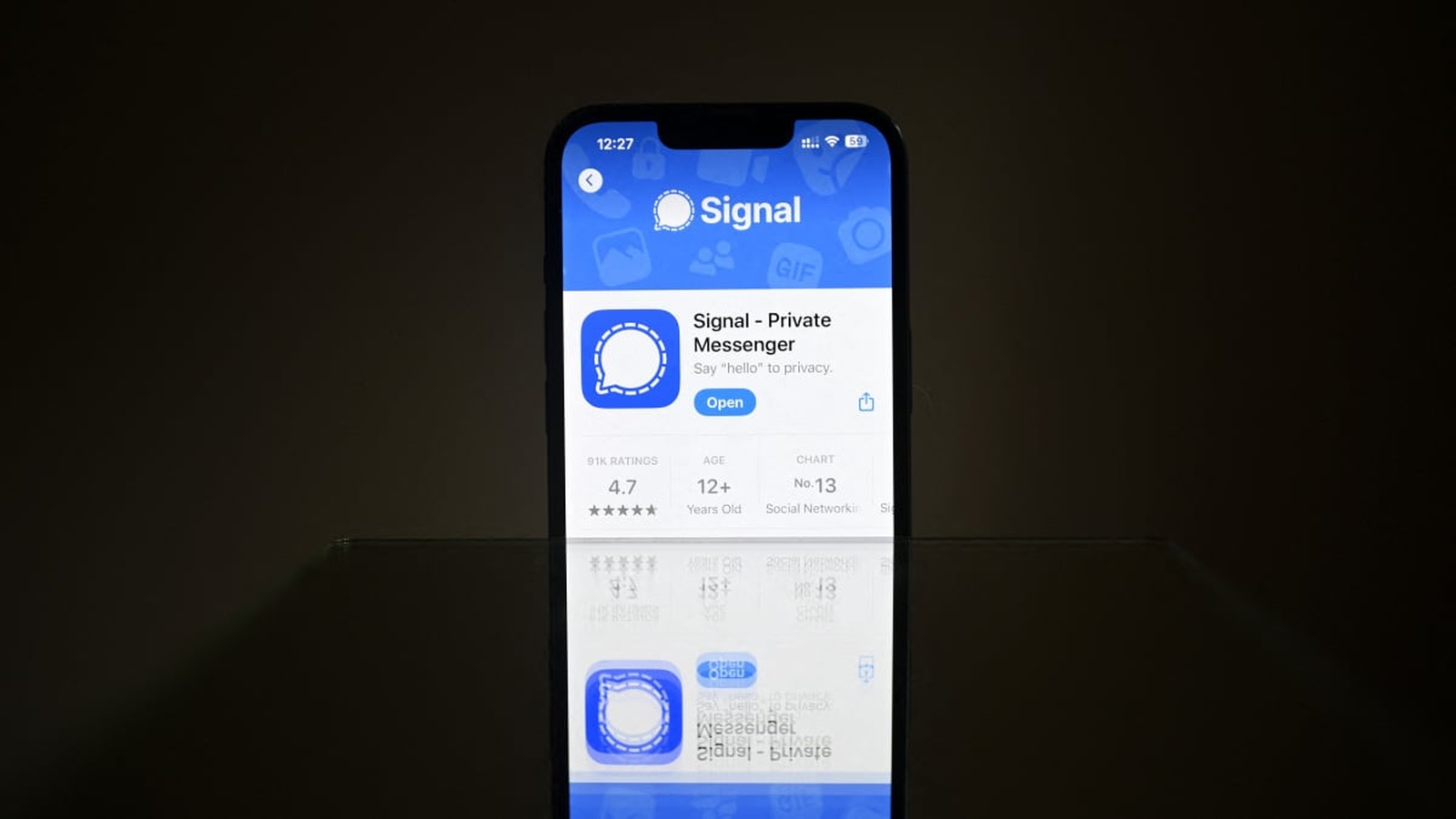
New Privacy Safeguards Against AI Harvesting
On November 20, 2026, the messaging platform Signal initiated a significant update to its security architecture, introducing new restrictions on screen capturing for both iOS and Android devices. The move serves as a direct response to the increasing integration of artificial intelligence assistants, such as Apple’s Siri AI and Google’s Gemini, into operating systems. These AI agents, often designed to process on-screen information to provide contextual assistance, have demonstrated the ability to read and analyze content within end-to-end encrypted chats, effectively bypassing the security protocols that protect messages during transit.
For users operating on iOS 27, Signal has enabled a default “Block Siri AI” setting. On supported Android devices, the application now automatically activates “Screen security” protocols when it detects an AI assistant attempting to scan the display. As reported in an article published by Mashable, these measures are intended to prevent AI tools from accessing both the chat content and the contact information visible on a user’s screen.
The Architectural Conflict of Display-Layer Access
The core of the issue lies in the tension between OS-level AI convenience and application-level privacy. Signal’s President, Meredith Whittaker, highlighted in a company blog post that while end-to-end encryption secures messages while they are being transmitted, the protection diminishes once the messages are rendered on the user’s display. At that point, AI agents—often utilizing accessibility permissions—can read the text as easily as a human user. GadgetReview noted that these accessibility tools, originally designed to assist users with disabilities, can inadvertently function as “skeleton keys” for AI agents, providing them with broad access to private application data.
The necessity for this update was underscored by a report from Reuters, which detailed an instance where a Meta employee received a notification from the company’s own “Muse” AI assistant prompting them to reply to a message received via Signal. This incident illustrated that AI assistants can capture message text directly from notifications or by using accessibility tools to scan the screen, even without explicit user authorization for such deep integration.
Stakes for Users and Developers
Signal has framed these changes as a necessary workaround, as current mobile operating systems do not provide developers with granular controls to explicitly block AI agents from accessing specific app content. The current implementation forces a binary choice upon the user: retain AI functionality or maintain absolute privacy. While users can manually disable these protections in the settings, Signal warns that doing so exposes their conversations and contact lists to potential AI harvesting.
The broader implication of this move is a call to action for major technology companies. Whittaker has publicly urged Apple, Google, and Microsoft to provide developers with clearer, more robust tools to manage and restrict AI access to app-level data. Until such systemic changes are implemented, Signal’s screenshot and preview blocking stands as a defensive posture, though the company acknowledges it is not an exhaustive solution. AI agents may still find other routes to access data already stored on a device’s filesystem, meaning that while these new protections mitigate the most immediate “display-layer” risks, they do not guarantee total immunity from all forms of data exposure.
Evaluating the Broader Landscape of OS-Level Surveillance
The November 2026 update by Signal follows a pattern of defensive software design against automated scraping features built directly into modern operating systems. Last year, Signal implemented similar blocks to prevent Microsoft’s Recall feature from capturing conversation histories on Windows 11 machines. In both scenarios, the underlying challenge remains consistent: operating system vendors are embedding systemic AI capabilities that operate indiscriminately across all open applications, regardless of whether those applications employ strict end-to-end encryption.
According to security experts such as John Strand, CEO of Black Hills Information Security, this architectural reality fundamentally alters threat modeling for end-users. When an AI assistant operates at the display layer, it bypasses the need to decrypt network traffic or compromise server infrastructure. It simply observes the plaintext data rendered on the screen for the user. Consequently, traditional cryptographic guarantees are rendered insufficient if the viewing environment itself is continuously monitored by automated agents.
Operational Challenges and Platform Limitations
Implementing these screenshot and display protections has not been uniform across all operating systems. While iOS 27 permits a system-wide default block via the “Block Siri AI” toggle, Android implementations rely on dynamic detection mechanisms that can vary significantly depending on device fragmentation and specific OS distributions. Furthermore, Signal has openly admitted that it cannot currently deploy comparable safeguards on macOS due to the lack of adequate developer APIs and permission controls provided by Apple for desktop environments.
Beyond device-level discrepancies, Signal’s screenshot restrictions do not address alternative leakage channels, such as notification pop-ups or local filesystem storage caches. As highlighted by cybersecurity analysts, an AI assistant or auxiliary application with broad accessibility privileges can harvest conversation snippets before they even reach the active application window. These structural gaps emphasize why Signal’s leadership continues to demand standardized, developer-friendly opt-out mechanisms from Apple, Google, and Microsoft, rather than forcing individual applications to rely on fragile UI workarounds.