


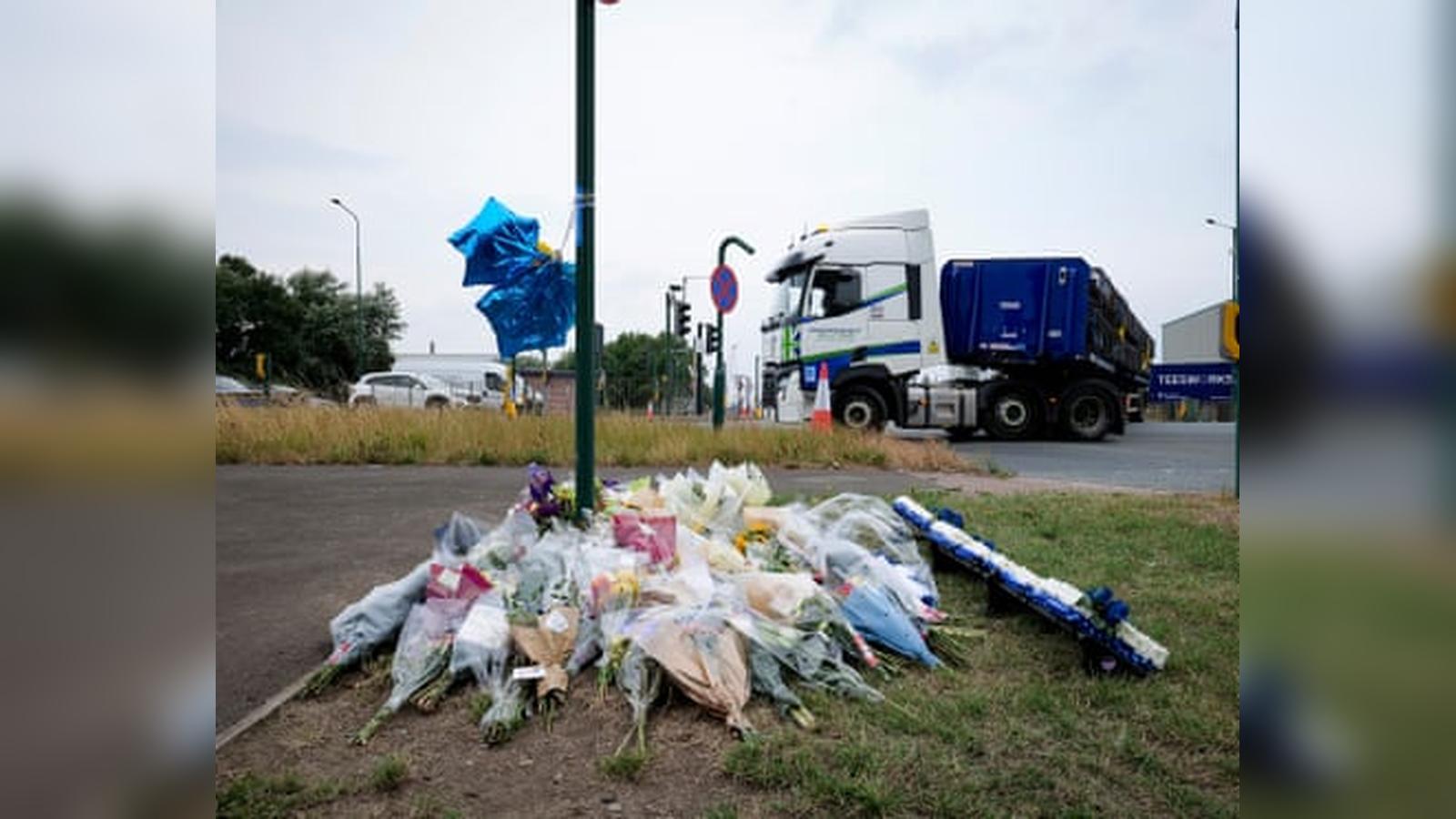
A catastrophic head-on collision on the A66 dual carriageway near Middlesbrough has escalated into one of the most significant organized crime investigations in the recent history of Teesside. According to official statements from Cleveland Police and reports by the BBC and The Guardian, seven additional men have been arrested within the last 24 hours, bringing the total number of individuals detained in connection with the wider probe to 24. What initially appeared to be a tragic traffic pursuit incident has rapidly unfolded into a sweeping institutional crackdown on local illicit networks, exposing deep-seated public safety risks, community trauma, and a severe policing funding crisis in northeast England.
A Rapidly Expanding Criminal Investigation
The latest phase of the Cleveland Police operation culminated late on Thursday night, August 27, 2026, when tactical officers intercepted a Mercedes vehicle on Kingsley Road in Grangetown, Middlesbrough. Inside the vehicle, officers arrested four men—aged 35, 25, 40, and 21—and seized a significant quantity of Class A drugs alongside £15,000 in cash. According to Assistant Chief Constable Wayne Fox, these four suspects are being questioned on suspicion of criminal damage with intent to endanger life, arson, and possession with intent to supply Class A drugs.
This report draws on information published by BBC and The Guardian.
The arson charges relate to a caravan that was deliberately set alight on Atlee Road in Middlesbrough in the early hours of Wednesday morning. Meanwhile, the criminal damage charge stems from the violent ramming of a residential garden wall in Steele Crescent on Sunday, August 23. While Cleveland Police have stated that they are not directly linking this specific Kingsley Road vehicle stop to the fatal collision on the A66, the arrests are part of the broader, highly disruptive anti-gang activity triggered by the crash.
The scale of the judicial response is reflected in the diverse and serious nature of the charges already leveled against other suspects in the conspiracy. Among those charged are Kai Beattie, 19, who faces counts of possessing a firearm with intent to endanger life; Cameron George, 26, charged with possession of Class A drugs with intent to supply and possession of criminal property; and Kai Inico, 21, charged with possession with intent to supply a Class B drug. Furthermore, two older women, aged 61 and 47, were arrested on suspicion of firearms and drug offenses before being released on conditional bail, illustrating how deeply the suspected criminal network penetrates the local community.
A Week of Unprecedented Violence and Loss
The catalyst for this intensive mobilization was the horrific collision that occurred at approximately 03:39 BST on Saturday, August 22, 2026. A Volkswagen Passat carrying five young men collided head-on with a marked Cleveland Police vehicle on the A66 dual carriageway at South Bank. The impact was devastating. Police officers PC Matthew Blades, 37, and PC Tom Clough, 38, died at the scene. The five occupants of the Passat—Cole Worthy, 17; Theo Rae, 17; Makai Saddington, 18; and 23-year-olds Michael Cahill and Jakub Matusiak—were also killed, bringing the immediate death toll to seven.
The tragedy quickly ignited community tensions. At a vigil held in Haswell, County Durham, to honor Michael Cahill, a large crowd gathered on grassland. The memorial rapidly descended into chaos as cars were seen skidding through the area, and several vehicles were subsequently torched. Remnants of fireworks, smoke canisters, and charred car parts littered the field, prompting local leaders to condemn the lawlessness. Labour MP for Middlesbrough and Thornaby East, Andy McDonald, went as far as to describe the escalating cycle of violence as “terrorism,” pointing to a clear “causal link with organised crime” that has left local residents feeling trapped and unsafe in their own homes.
Adding to the community’s grief, a separate fatal house fire in Grangetown on Wednesday claimed the lives of Natalie McDonald, 34, and her seven-year-old niece, Valentina Foster, while injuring four others. Two men have been arrested on suspicion of murder in connection with the blaze. Although Natalie McDonald’s brother, Josh Kirton, publicly stated that his sister was entirely disconnected from gang activity or the A66 incident, Cleveland Police have refused to rule out a potential link between the fatal fire and the ongoing gang hostilities.
Political Fallout and the Funding Crisis
The crisis has reverberated through the highest levels of British governance and local administration. King Charles III wrote directly to the families of PC Blades and PC Clough, expressing his condolences and praising the selfless commitment of officers working under exceptionally challenging circumstances. Locally, Middlesbrough Football Club organized a stadium-wide tribute before their home match against West Bromwich Albion, reflecting the profound civic grief felt across Teesside.
However, beneath the public mourning lies a fierce political debate over police resources. Alec Brown, the leader of Redcar and Cleveland Council, revealed that he has written to Prime Minister Andy Burnham to demand emergency central government intervention. Brown pointed out that over the past decade of austerity, Cleveland Police had their ranks slashed by up to 500 officers, leaving the force severely under-resourced to handle the “unprecedented” loss of nine lives in a single week. “Our communities are close, and one loss is tragic—but nine is unbelievable to deal with,” Brown told Times Radio, emphasizing that local officers are currently working 20-hour days to manage the fallout.
This sentiment was echoed by Cleveland Police and Crime Commissioner Matt Storey, who described the past week as “the most tragic” in the force’s history. Storey aimed sharp criticism at the UK’s “outdated and ineffective funding system” for policing, which he argued systematically disadvantages Cleveland. He pledged to continue fighting for structural funding reform to ensure that the force can prevent crime and bring complex organized crime syndicates to justice.
Systemic Security Stakes and Legal Next Steps
As the Teesside area coroner, Paul Appleton, formally opens the inquests into the seven deaths from the A66 crash, the focus of the investigation shifts toward securing long-term convictions against the wider gang network. The provisional causes of death for the two officers—head and neck injuries for PC Blades, and neck injuries for PC Clough—underscore the violent nature of the high-speed impact.
For Cleveland Police, supported by hundreds of mutual aid officers from neighboring forces and the National Crime Agency (NCA), the priority is maintaining a visible, highly disruptive presence in Grangetown and South Bank. The coming weeks will be critical as forensic teams analyze the seized Mercedes, digital devices, and the £15,000 cash haul to map out the financial and logistical pipelines of the criminal group. Ultimately, this crisis has forced a national conversation on whether regional police forces in historically deprived areas are adequately equipped to confront heavily armed, highly organized criminal syndicates that threaten both the lives of the public and the officers sworn to protect them.