


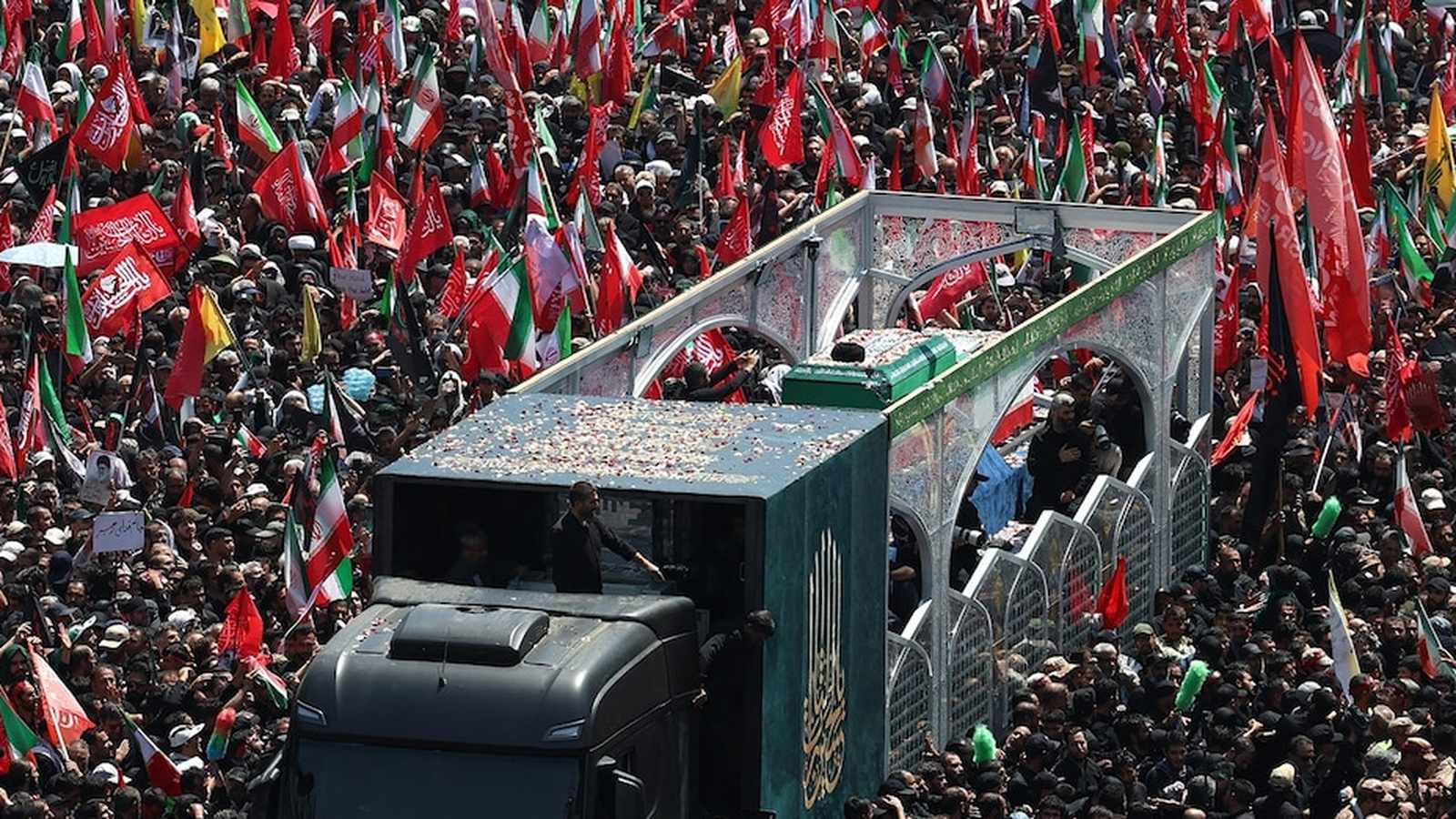
A Nation in Mourning
Millions of mourners flooded the streets of Tehran on Monday, stretching from Azadi Square, to attend the funeral of Supreme Leader Ayatollah Ali Khamenei. The massive procession, which observers note surpassed the turnout for the 2020 funeral of Qassem Soleimani, serves as a powerful display of state-sanctioned unity following the February 28 airstrike that killed Khamenei and four of his family members.
President Masoud Pezeshkian and IRGC Chief Ahmad Vahidi were among the high-ranking officials in attendance. Despite the presence of state leadership, the new Supreme Leader, Mojtaba Khamenei, remains in hiding. Officials cite persistent security threats and reports that the younger Khamenei was injured in the same strike that claimed his father’s life as reasons for his absence from the six-day mourning ceremonies.
Geopolitical Stakes and Transition
The funeral takes place against a backdrop of ongoing hostilities. While US President Donald Trump has pledged that neither side will engage in fire during the funeral proceedings, the rhetoric on the ground remains combative. Mourners at the procession carried banners calling for revenge, and effigies of the US President were displayed, highlighting the deep-seated grievances fueling the current conflict.
The transition of power remains a focal point for regional stability. Mojtaba Khamenei, though absent, has already signaled through state media his authorization of a memorandum of understanding between the Iranian and US presidents, while simultaneously calling for justice regarding the strikes that devastated his family. Parliamentary Speaker Mohammad Bagher Ghalibaf added to the tension, asserting that Iran will not relinquish its rights in the Strait of Hormuz, warning that the waterway should not be treated as an enemy.
Analysis: The Fragile Stability
The massive public turnout suggests that the Iranian establishment remains deeply embedded in the national consciousness despite decades of international sanctions and the recent military escalations. However, the internal landscape is more complex than the scenes of unity suggest. While the immediate threat of total war has been paused by temporary ceasefires, the underlying structural issues—economic pressure and internal factionalism—remain unresolved.
The absence of Mojtaba Khamenei from public view underscores the extreme volatility of the current leadership transition. His ability to consolidate power while under constant threat of assassination will be the defining factor in whether Iran pursues a path toward de-escalation or deeper confrontation. As the funeral ceremonies conclude, the international community remains watchful, waiting to see if the rhetoric of “revenge” translates into new military actions or if the pragmatic necessity of state survival will force a pivot toward the diplomatic channels currently being tested.