


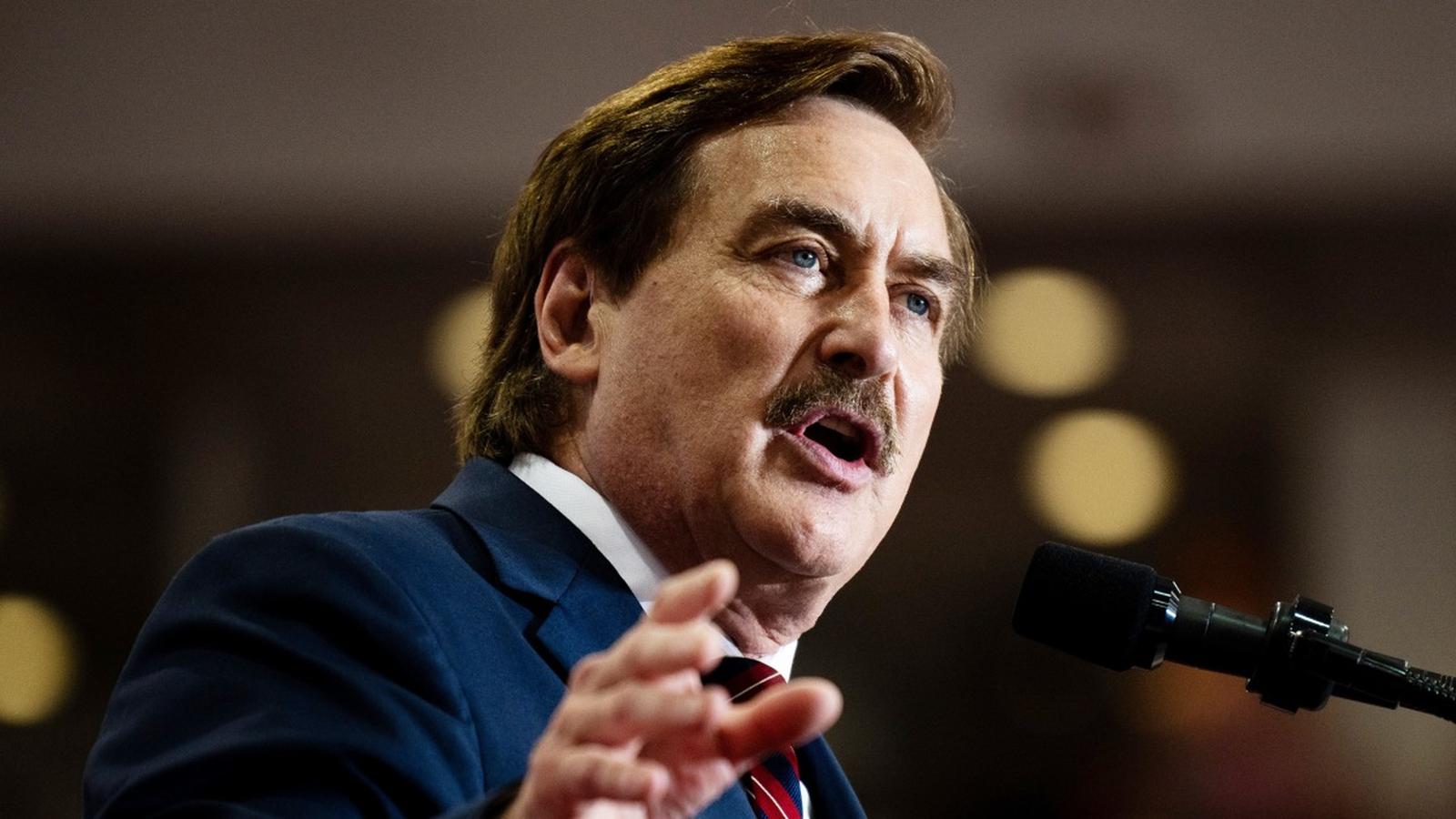
ST. PAUL — The Minnesota Supreme Court has formally rejected a legal challenge by MyPillow founder Mike Lindell seeking a comprehensive manual recount of the state’s Republican gubernatorial primary. The ruling effectively concludes the intra-party dispute surrounding the August 11 primary, confirming state House Speaker Lisa Demuth as the Republican nominee for governor and clearing the way for general election preparations to move forward without administrative delay.
In a six-page opinion delivered on Saturday, Chief Justice Natalie E. Hudson determined that election administrators within the Minnesota Secretary of State’s office and the State Canvassing Board acted entirely in accordance with state statute. The court found no evidence of any wrongful act, omission, or administrative error in the board’s established recount framework, which Lindell had attempted to halt through emergency litigation.
The Legal Mechanics: Distinguishing Recounts from Election Contests
The core of the judicial decision centered on the statutory definition and procedural purpose of a candidate-funded primary recount under Minnesota law. Following the August 11 primary, in which Demuth defeated Lindell by approximately 45,000 votes, Lindell publicly pledged to fund a full manual recount, initial estimates for which reached approximately $825,000. However, Lindell subsequently declined to deposit the required funds after state officials clarified that the recount would focus specifically on the primary contest between him and Demuth.
Lindell argued in his filing that election officials committed a “bait-and-switch” by refusing to conduct a hand examination of all 1.1 million primary ballots cast statewide. His petition sought to mandate an exhaustive hand tally of votes for all seven candidates on the Republican primary ballot, alongside ballots cast in the concurrent Democratic primary. Lindell asserted that such an audit was necessary to investigate potential unverified anomalies and examine electronic voting machine tallies.
Addressing these contentions, Chief Justice Hudson wrote that Lindell’s legal strategy conflated the procedural function of a manual recount with that of a formal election contest. Under Minnesota election law, a candidate recount is designed strictly to confirm vote totals between competing candidates to determine the rightful nominee. Conversely, investigating underlying systemic irregularities, voting machine software integrity, or broader fraud allegations falls exclusively under the statutory mechanisms of an election contest, which requires a distinct evidentiary threshold and procedural framework.
Under the state-approved recount structure, election workers sort Democratic and Republican primary ballots, then divide Republican ballots into distinct categories for Demuth, Lindell, and third-party primary candidates. Chief Justice Hudson highlighted that this established process provides full verification of the candidate tally while allowing observers to raise official challenges to specific ballots. “In other words, after all votes are sorted and counted, Lindell would know whether he is the winner over Demuth,” Hudson noted in the court’s opinion.
Administrative Deadlines and Election Machinery Integrity
Beyond the statutory interpretation, state election authorities presented critical operational arguments against altering the scope of the recount. Counsel for the Minnesota Secretary of State’s office informed the court that granting Lindell’s request for an expanded audit of 1.1 million ballots would create severe administrative bottlenecks. With ballot printing scheduled to commence immediately and early voting set to begin on September 18, state officials warned that an open-ended recount risked delaying general election readiness and compromising statutory mailing deadlines for absentee voters.
The Supreme Court’s unanimous posture reinforces the finality of the State Canvassing Board’s primary certification. By upholding the standard recount protocols, the court ensured that county election administrators across Minnesota’s 87 counties can proceed with final ballot formatting, printing, and distribution without fear of conflicting judicial injunctions.
The decision removes the final legal obstacle for Speaker Lisa Demuth as she formally consolidates the state party apparatus behind her campaign. Demuth now enters the general election campaign facing incumbent Democratic-Farmer-Labor (DFL) Senator Amy Klobuchar, alongside Green Party nominee Steven Young. Party leaders have cited the ruling as a crucial step toward stabilizing Republican campaign operations ahead of the autumn voting cycle.
Supreme Court Appeal Ambitions and Broader Legal Entanglements
Despite the unequivocal ruling from Minnesota’s highest bench, Lindell stated in phone interviews following the decision that he intends to file an emergency appeal with the Supreme Court of the United States. Asserting that his name appeared on more than one million ballots that require physical review, Lindell maintained that he is prepared to cover all associated legal and procedural expenses regardless of cost.
However, legal analysts note that federal courts, including the U.S. Supreme Court, historically grant broad deference to state supreme courts on matters strictly involving the interpretation of state election statutes. Because election administration and recount procedures are fundamentally governed by state law, federal intervention in state primary certification disputes remains exceptionally rare absent a clear federal constitutional violation.
The primary challenge represents the latest in a series of high-profile legal battles involving the MyPillow chief executive. Lindell, who received an endorsement from former President Donald Trump during the primary campaign, has repeatedly promoted unsubstantiated claims regarding the security of electronic voting infrastructure. These assertions have led to significant legal and financial exposure outside the political arena.
In June 2025, a federal court ruled that Lindell had defamed a former executive of Dominion Voting Systems, an allegation Lindell continues to deny. Furthermore, Lindell faces ongoing financial penalties in a separate civil defamation action brought by voting technology provider Smartmatic USA Corp. Court records indicate that Lindell owes more than $56,369 in court-ordered sanctions to Smartmatic, a figure that continues to accrue interest and additional legal fees due to non-payment. Lindell recently reiterated to reporters that he has no intention of paying those sanctions, characterizing the actions against him as politically motivated.
With Minnesota courts declining to alter state primary procedures, state election officials have confirmed that preparations for the September 18 early voting launch will proceed as scheduled under the certified primary results.