


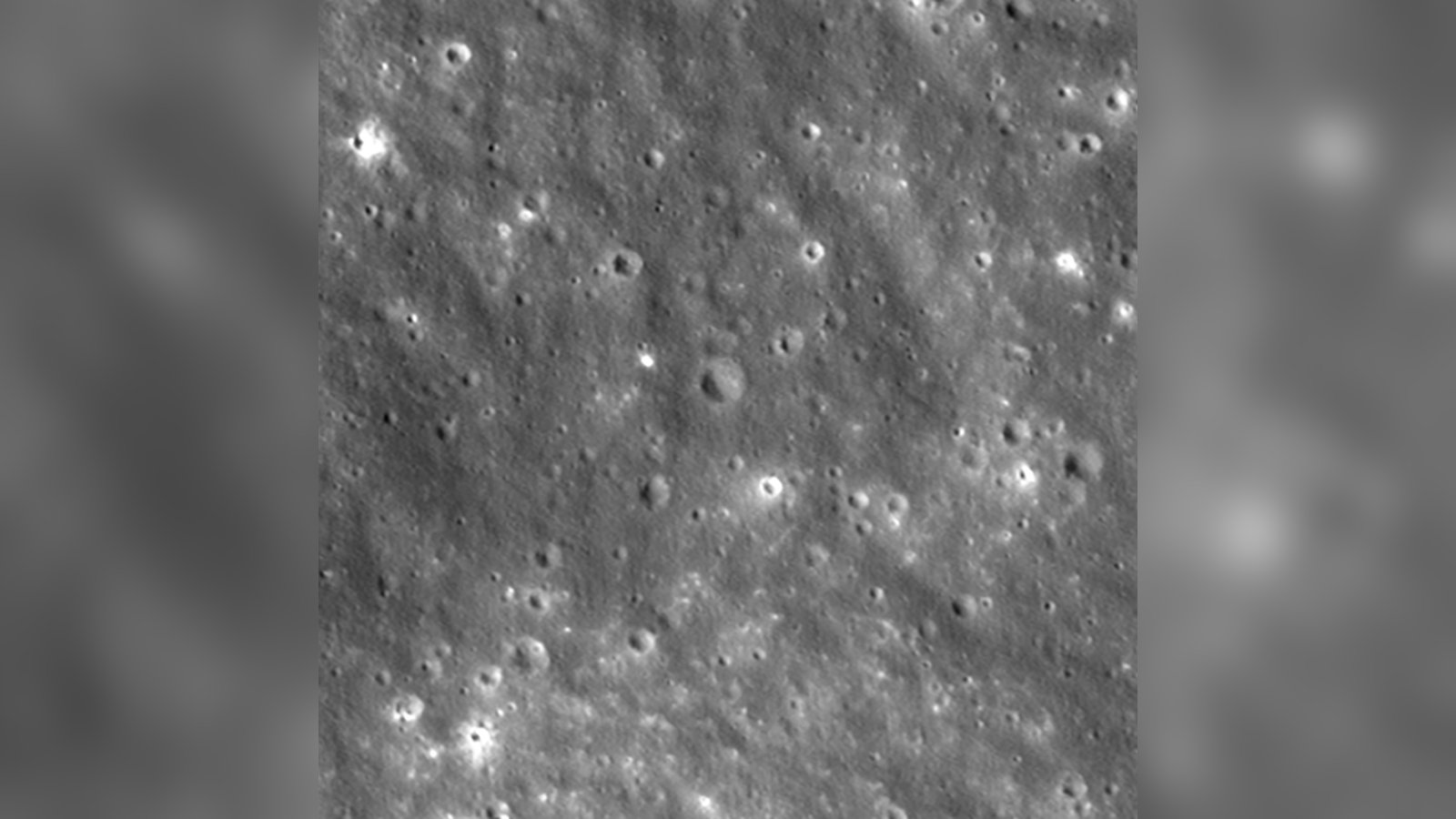
Visual Confirmation of Lunar Impact
NASA has released definitive photographic evidence of a fresh impact crater on the lunar surface, created when a defunct SpaceX Falcon 9 upper stage collided with the moon on August 5. The images, captured by the Lunar Reconnaissance Orbiter (LRO) on August 11 and 12, reveal a 60-foot-wide scar on the lunar terrain, confirming the trajectory predictions made by researchers following the uncontrolled descent of the hardware.
The booster, which weighed approximately 8,800 to 10,800 pounds, struck the moon at an estimated speed of 5,400 mph. The LRO, which has been surveying the moon since 2009, was required to perform a complex maneuver to document the site. Flight controllers tilted the spacecraft while it was 60 miles above the lunar surface, moving at 1 mile per second, to align its cameras with the impact coordinates. It took six days for the LRO’s orbit to synchronize with the site, located along the western edge of the moon’s sunlit side.
Technical Analysis of the Crater
Scientists estimate the crater is less than 10 feet deep, based on the length of the shadows cast within the feature. The imagery provides a unique look at the lunar subsurface, showing bright and dark streaks radiating from the impact center. According to NASA, the darker material represents surface dust and rocks that had been weathered by solar wind and cosmic rays over eons, while the brighter streaks consist of fresher, unexposed material excavated from roughly 1.5 feet underground.
The Falcon 9 stage had been drifting in space since January 2025, when it was used to launch two commercial landers. While SpaceX stated that it works to manage hardware disposal responsibly, solar activity and gravitational forces eventually altered the booster’s orbit, leading to the collision. This event marks one of the few instances where a human-made object has struck the moon uncontrollably, a rare occurrence compared to the constant bombardment of natural meteoroids.
Sustainability and Lunar Policy
The incident has intensified discussions regarding the sustainability of the growing lunar economy. As international space agencies and commercial entities accelerate their plans for moon bases and infrastructure, the management of space debris in lunar orbit has become a focal point for regulators. While some NASA scientists have described the event as a technically accepted method of hardware disposal in low lunar orbit, others argue that the increase in commercial traffic necessitates more rigorous tracking and disposal protocols to prevent future unintended impacts.
The impact site itself is located in a region of scientific interest, as the presence of water ice nearby makes it a potential target for future exploration. The event serves as a reminder of the complex orbital dynamics involved in lunar missions, where even discarded hardware can pose challenges to planetary protection and operational safety as the moon becomes an increasingly crowded destination.