


Atmospheric Reentry and Tracking Estimates
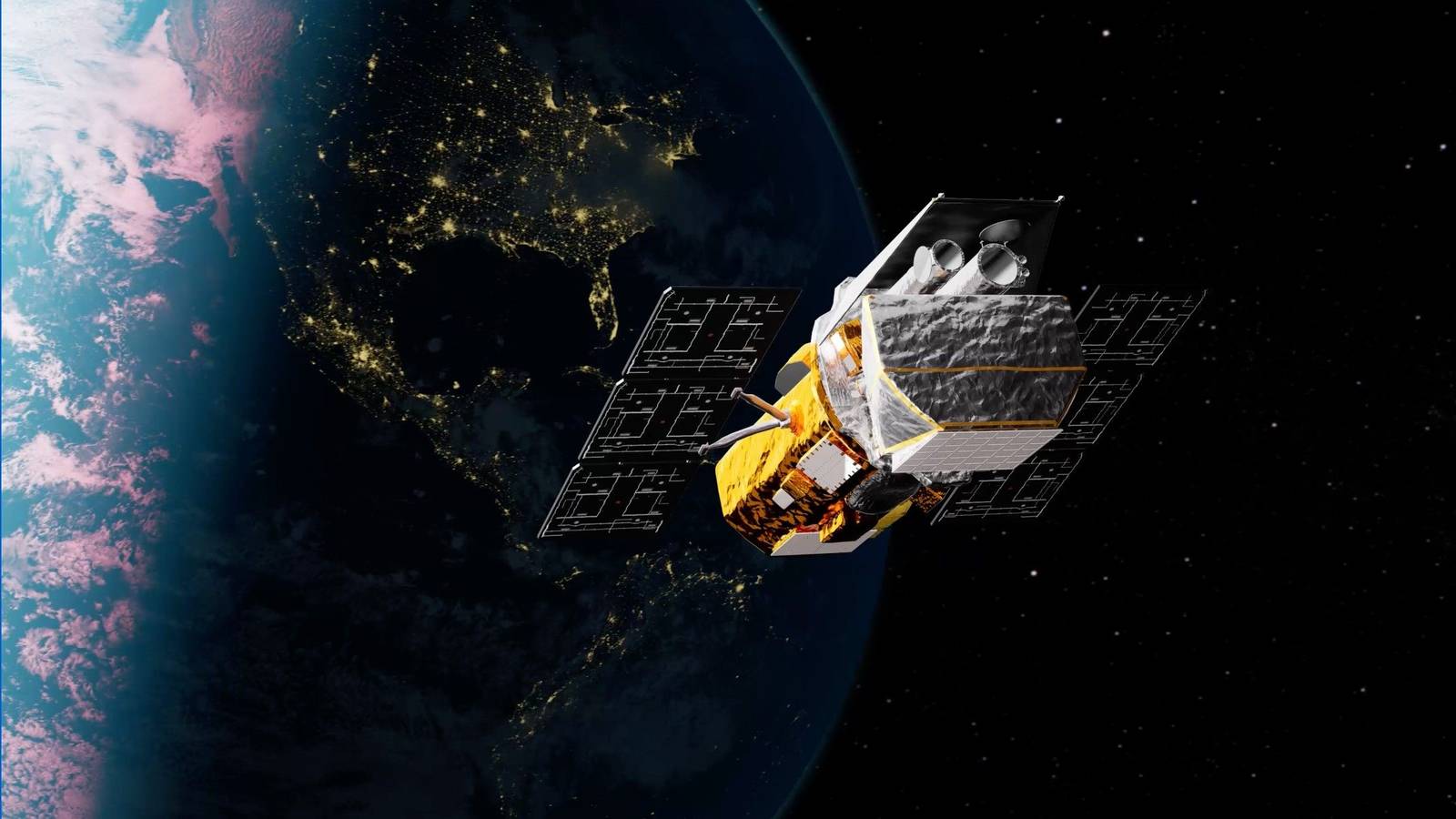
NASA’s 3,200-pound (1,450-kilogram) Neil Gehrels Swift Observatory plunged back into Earth’s atmosphere on Wednesday, November 4, 2026, following a rapid orbital decay driven by heightened solar activity. According to Live Science, space agencies and tracking organizations spent days monitoring the spacecraft’s final descent windows. NASA’s projections centered around Wednesday morning, while independent models from the nonprofit Aerospace Corporation and the U.S. Space Force estimated arrival windows ranging between early morning hours and midday on Wednesday.
While the vast majority of the observatory is expected to burn up during its fiery passage through the thick inner band of the atmosphere, officials noted that surviving fragments carry an estimated risk of 1 in 2,100 of landing in a populated area. This debris footprint spans a latitude band between 20.6 degrees south and 20.6 degrees north, encompassing portions of Central and South America, the Caribbean, Central Africa, southern India, Southeast Asia, northern Australia, and vast stretches of open ocean.
Failed Rescue Attempt and Solar Drag
The spacecraft’s premature demise was accelerated by extreme solar activity as the sun peaked in its 11-year cycle, causing Earth’s atmosphere to expand and intensifying atmospheric drag on the aging observatory. ABC7 News reported that NASA and its partners had hoped a daring rescue mission launched in July by Arizona-based Katalyst Space Technologies would latch onto the telescope and boost its decaying orbit. However, that private effort ultimately failed, leaving the spacecraft stranded at an altitude of just 171 miles (275 kilometers).
With the observatory no longer able to compensate for atmospheric drag, engineers at Penn State—who operate the mission’s operations center—sent the final kill-switch command to the spacecraft on October 20, 2026. Science operations were officially terminated, marking the conclusion of a mission that far exceeded its original two-year design lifespan.
Scientific Legacy and Modern Debris Standards
Launched in November 2004, the Neil Gehrels Swift Observatory was built to study gamma-ray bursts, supernovas, and black-hole eruptions across the universe. Over nearly 22 years of operations, the telescope contributed data to more than 7,000 scientific papers, establishing a major repository of high-energy astrophysical observations.
The uncontrolled reentry also highlights evolving standards in orbital safety. According to the Aerospace Corporation, spacecraft launched under current debris mitigation guidelines—updated in 2019—must adhere to stricter end-of-life planning mandates, requiring uncontrolled reentries to maintain an expected casualty risk of less than 1 in 10,000.
Expanded Timeline of Orbital Decay
The final weeks of the Swift Observatory highlighted the increasing vulnerability of low-Earth orbit satellites to space weather. As solar maximum conditions sustained an expanded atmospheric profile, tracking stations in the United States and international partner networks continuously adjusted their forecast models. The spacecraft’s descent rate accelerated significantly during the third quarter of the year, reducing the margin for intervention before controllers were forced to terminate active systems.
Independent analysts from the Aerospace Corporation noted that prediction windows are inherently variable due to unpredictable fluctuations in thermospheric density caused by solar flares and coronal mass ejections. These environmental variables complicated efforts to pinpoint the exact moment and location of structural breakup during reentry, reinforcing the technical hurdles faced by orbital analysts when managing derelict hardware of this scale.
Commercial Servicing Precedents and Future Projections
The failure of the Katalyst Space Technologies rescue attempt serves as a critical case study for the emerging orbital servicing sector. While the LINK spacecraft was developed on an accelerated timeline to grapple and elevate the decaying telescope, its failure to reach the target underscores the immense mechanical complexities involved in autonomous docking with uncooperative, tumbling space assets.
Despite this setback, space agencies are actively exploring commercial partnerships to extend the operational lifespans of other flagship observatories. NASA recently issued a Request for Proposals soliciting commercial concepts for servicing or boosting the Hubble Space Telescope, which faces its own deorbit timeline in the next decade. These ongoing initiatives demonstrate a broader strategic shift toward commercial remediation as the volume of legacy hardware in low-Earth orbit continues to expand.
Debris Footprint Analysis and Safety Protocols
Public safety evaluations conducted by NASA and the U.S. Space Force emphasized that while the probability of structural components surviving the thermal stress of atmospheric entry is non-zero, the geographic dispersion of the debris corridor minimizes direct risk to human populations. By distributing the potential impact zone across vast oceanic regions and equatorial landmasses, statistical casualty expectations remained within established federal safety thresholds for unguided spacecraft disposal.
Nevertheless, regulatory bodies and aerospace researchers continue to advocate for rigorous design-for-removal protocols on future missions. As constellations and scientific platforms proliferate in low-Earth orbit, adherence to post-mission disposal frameworks remains paramount to mitigating orbital congestion and safeguarding terrestrial populations from uncontrolled space debris hazards.