


The Shift Toward On-Device Artificial Intelligence
The push toward running artificial intelligence models directly on personal hardware has accelerated significantly, driven by a growing desire for data privacy and an avoidance of major cloud services. According to testing reported by The Verge, users are increasingly exploring local hardware setups—such as the M5 Ultra Mac Studio and incoming Windows machines—to run powerful open-source models completely offline.
While cloud-based tools controlled by major tech firms remain the industry norm, the appeal of having a private AI assistant operating entirely within a local machine is substantial. However, transitioning from cloud infrastructure to local execution exposes a steep learning curve, hardware cost considerations, and the fundamental challenge of finding genuinely useful day-to-day tasks for an on-device model.
Many participants approaching this ecosystem are motivated by a distinct reluctance to feed personal files, emails, or corporate drafts into external servers managed by OpenAI, Google, Microsoft, or Anthropic. Instead, the prospect of an isolated digital gofer running exclusively inside a physical box on a desk feels fundamentally different from subscribing to a remote chatbot service. Yet, stepping into this domain requires navigating a dizzying array of hardware choices, ranging from expensive consumer desktops equipped with massive pools of unified memory to specialized upcoming laptop architectures like RTX Spark configurations boasting up to 128GB of RAM.
Hardware Capabilities and Software Ecosystem
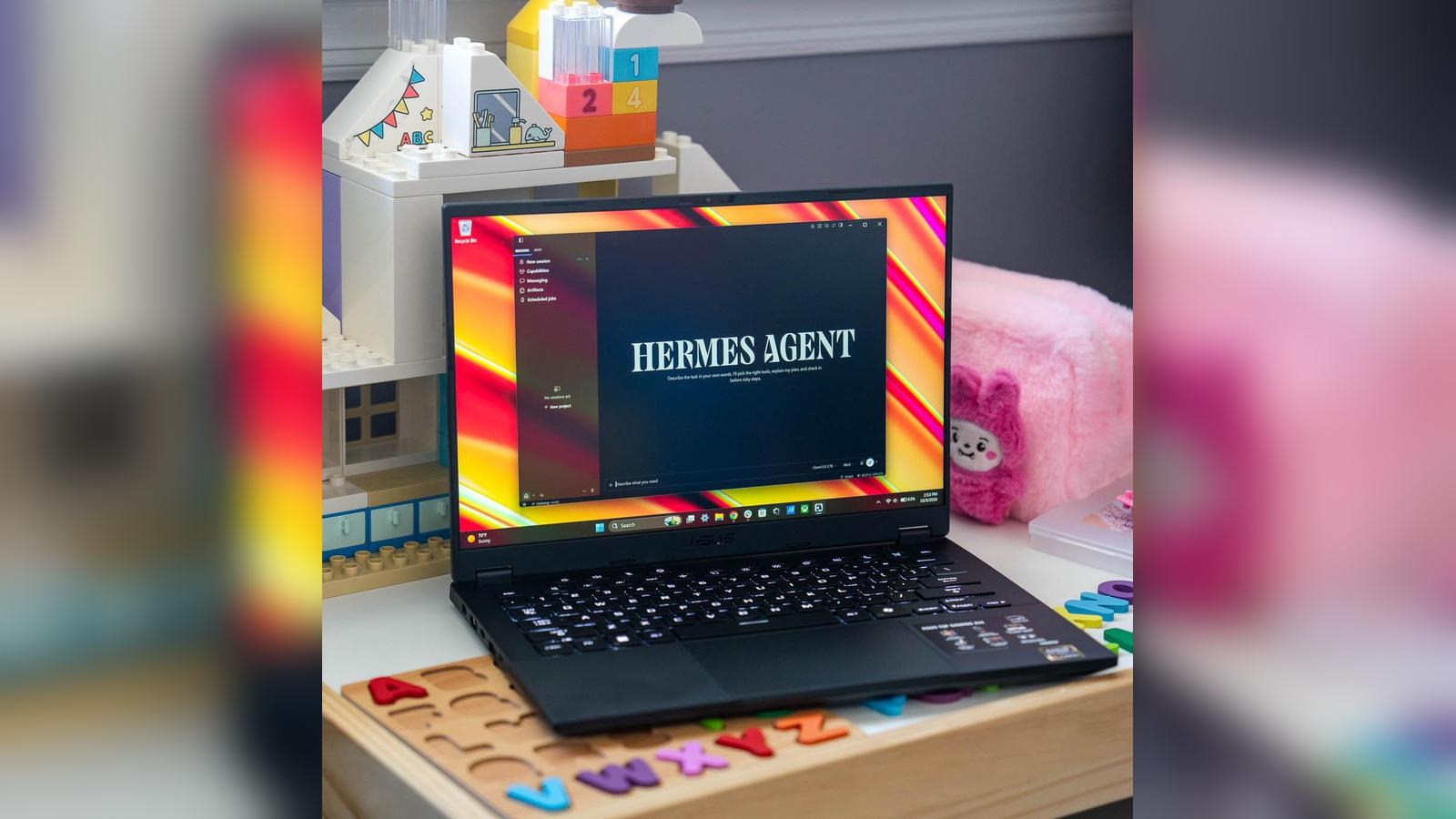
Modern hardware developments have made local AI increasingly viable. Apple has heavily promoted its new Mac desktops for local AI workloads, while a wave of upcoming Windows systems featuring dedicated hardware configurations and ample RAM are aimed directly at running agentic AI workflows. The Verge detailed testing using an M5 Ultra Mac Studio equipped with 256GB of unified memory, running the open-source Hermes Agent desktop application.
Hermes is a self-hosted AI agent desktop app compatible with macOS, Windows, and Linux, operating entirely free of charge when paired with local large language models. Because high-end hardware removes token costs associated with cloud APIs, users can experiment with massive models. For instance, testers deployed the Qwen 3.8 Flash Next model—a 125-billion parameter architecture requiring approximately 105GB of storage—demonstrating the raw capacity of modern high-end unified memory systems.
The sheer breadth of the open-source model ecosystem presents an immediate paradox for newcomers. Without a centralized curator dictating singular pathways, operators face an overwhelming number of choices, parameters, and specialized architectures. Because running models locally bypasses per-token cloud API charges, users are emboldened to deploy massive architectures right from the start. However, matching these models to correct hardware specs—such as balancing parameter sizes against available unified memory or VRAM—requires continuous research and technical patience.
Practical Workflows Versus Setup Hurdles
Despite impressive hardware specifications, finding practical and reliable tasks for local AI agents remains a frustrating hurdle. Initial experimentation often begins with basic projects, such as configuring automated daily briefings via Telegram that scan email calendars and weather reports. Yet, practical hurdles quickly emerge; automated cron jobs fail if host operating systems enter sleep modes, requiring troubleshooting and system adjustments.
More substantial utility has been found in targeted file and data organization tasks. For example, local AI agents can successfully reorganize large digital libraries, such as sorting hundreds of Steam games by genre after temporary API integration. Furthermore, local execution allows users to process sensitive data—such as financial records or embargoed product specification spreadsheets—without exposing proprietary or private information to external cloud servers. More complex automation attempts, such as scripting benchmark testing procedures, highlight both the potential and the ongoing limitations of local agentic tools.
These early trials emphasize that local AI models do not magically transform into universally capable assistants without explicit configuration. Simple projects like morning briefings provide a baseline understanding of cron scheduling and script execution, even if the resulting utility is modest. Meanwhile, more complex workflows demand rigorous permission management, such as registering and subsequently revoking temporary web API keys to let an agent parse external application libraries safely.
Security, Independence, and Future Benchmarks
The true dividing line for local execution often comes down to data confidentiality. Tasks involving sensitive financial audits or embargoed product specifications cannot ethically or safely be pushed to standard cloud platforms. Keeping such files bound strictly to local storage creates the operational margin required to adopt these tools at all. At the same time, attempting sophisticated multi-step automation—such as writing and debugging Python scripts to automate complex hardware benchmarking procedures—reveals the ongoing friction points of agentic software development.
Ultimately, treating local AI as an ordinary software utility rather than a conscious companion helps maintain realistic expectations. Operators interact with these local environments without unnecessary pleasantries, viewing them strictly as functional system processes. As hardware ecosystems continue to expand across diverse architectures, the ongoing diary of local AI testing underscores both the genuine technical liberation of offline computing and the persistent complexities of making those capabilities genuinely productive.