


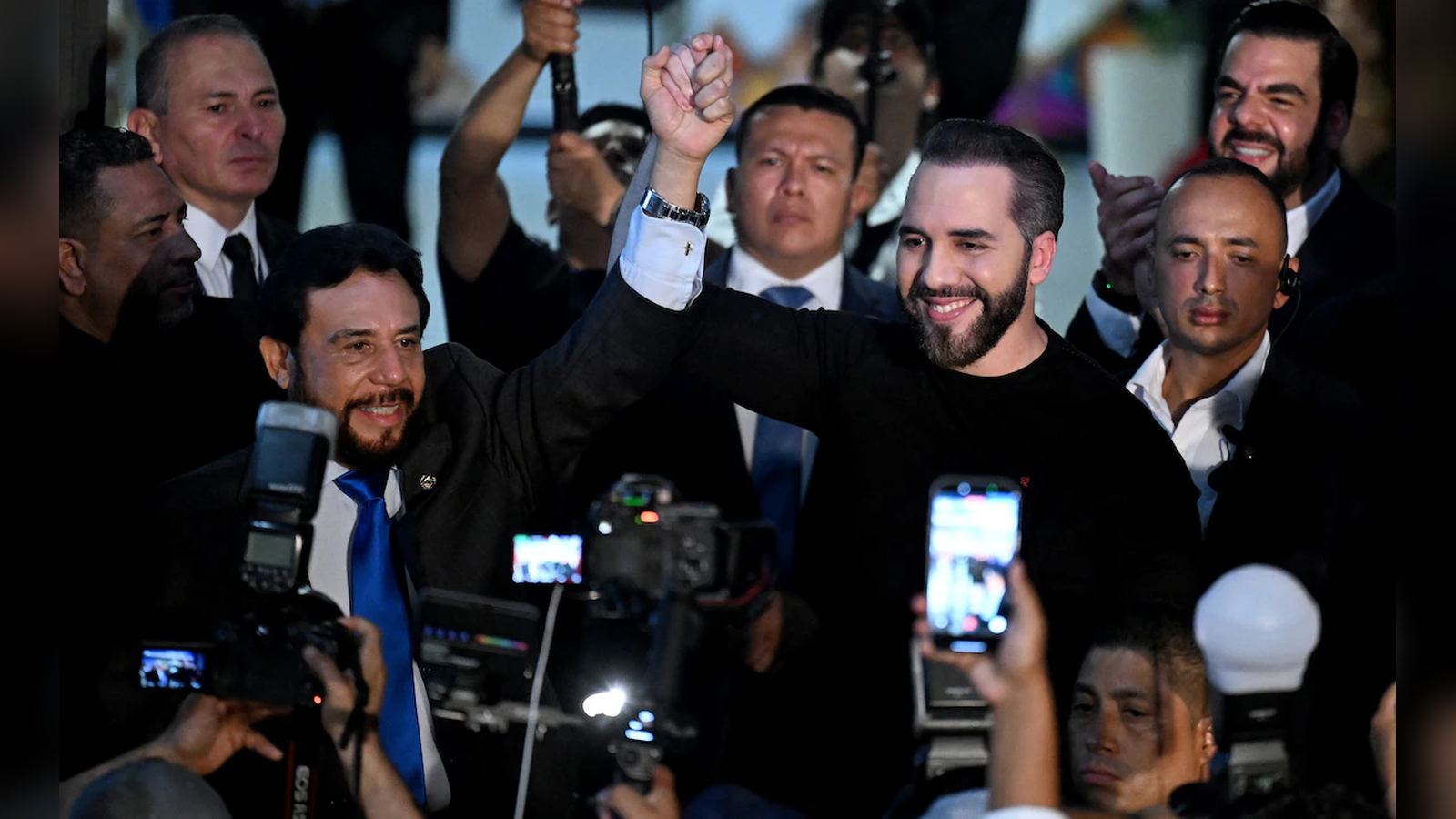
SAN SALVADOR (Azat TV) – El Salvador’s President Nayib Bukele formally registered his candidacy for a third presidential term on Thursday, setting the stage for a February 28, 2027 election that could keep him in office until 2033. Bukele, 45, submitted his registration papers at the country’s electoral tribunal, flanked by supporters and accompanied by Vice President Felix Ulloa, with whom he is running again.
The filing comes after years of systematic political consolidation by Bukele and his allies in the Legislative Assembly. The Nuevas Ideas party, which holds a wide majority in the legislature, passed a constitutional amendment in 2025 enabling presidents to seek an unlimited number of terms and extending presidential mandates from five to six years. Those legal changes followed a 2021 Supreme Court ruling that overturned a previous constitutional ban on immediate re-election.
Security Crackdown and Domestic Popularity
Bukele’s administration has enjoyed broad domestic popularity and regional acclaim, primarily driven by an aggressive crackdown on criminal gangs launched in 2022 under an extended state of emergency. The campaign granted sweeping arrest powers to security forces, leading to a dramatic drop in homicides and transforming Bukele into a prominent political figure across Latin America.
However, the security strategy has drawn intense international and domestic criticism. Human rights advocates and political opponents report that more than one percent of El Salvador’s population has been detained under emergency measures, often without access to due process or adequate legal representation. Mass trials have resulted in hundreds of simultaneous convictions, while critics and journalists face growing legal hurdles, including the implementation of a Foreign Agents Law that restricts civil society funding.
International Reactions and Regional Deployments
Addressing cheering crowds outside the electoral tribunal after his registration, SSB Crack reported that Bukele rejected international criticism regarding the state of Salvadoran democracy. “Some international media say there isn’t democracy in El Salvador,” Bukele told his supporters. “I tell them, no, no, no, there wasn’t democracy in El Salvador before.”
At the same time, Bukele’s administration has expanded its security footprint abroad. Al Jazeera noted that El Salvador has deployed approximately 2,500 troops to Haiti to support a United Nations-backed international force. The deployment faced operational complications after four Salvadoran aviation technicians went missing following a gang ambush, though crowds in Haiti recently turned out to express support for the Salvadoran intervention.
Next Electoral Steps and Opposition Contenders
With his candidacy officially registered ahead of the Thursday deadline, Bukele enters the upcoming electoral cycle as the clear favorite. Opposition parties are fielding a fragmented challenge, with candidates including Maytee Iraheta of the right-wing Nationalist Republican Alliance and Rafael Aguirre of the left-wing Farabundo Marti National Liberation Front preparing to contest the presidency. The election outcome will determine whether Bukele’s legislative overhaul cements a long-term political realignment in Central America.