


A Landmark Legal Precedent
On November 19, 2026, the International Court of Justice (ICJ) delivered a historic judgment, formally ruling that Myanmar committed genocide against the Rohingya minority during its 2017 military campaign. This decision marks the first time the United Nations’ highest court has found a state responsible for the crime of genocide, rejecting Myanmar’s long-standing defense that the operations in northern Rakhine state were legitimate counterinsurgency efforts. The 15-judge panel, led by ICJ President Yuji Iwasawa, reached a 9-6 decision, concluding that Myanmar violated its obligations under the 1948 Genocide Convention. The court determined that Myanmar’s security forces killed approximately 10,000 Rohingya civilians, engaged in systematic sexual violence, and targeted children, demonstrating a clear intent to destroy the group in whole or in part.
The Weight of Judicial Findings
During the three-hour reading of the judgment at the Great Hall of Justice in The Hague, President Iwasawa detailed how the court reviewed graphic evidence, including testimonies from survivors and reports from international investigators. The court noted that nearly 400 villages—approximately 40 percent of the total in northern Rakhine—were partially or totally destroyed. The military operations included the murder of infants, which the judges concluded supported the inference of an intent to prevent births within the group, an act explicitly prohibited under Article II of the Genocide Convention. By formally identifying the Rohingya as a distinct ethnic group with their own language and culture, the ICJ underscored that they constitute a protected group under international law, invalidating Myanmar’s long-standing claims that the population were merely interlopers from across the border.
Enforcement and Diplomatic Stakes
While the ruling is final and legally binding, the court lacks independent enforcement mechanisms. Its authority rests on the U.N. Security Council to ensure compliance. The judgment mandates that Myanmar must allow the safe, voluntary, and dignified return of refugees, investigate and prosecute those responsible for genocidal acts, and pay compensation to survivors. The specific financial reparations will be determined in subsequent proceedings, with the court requiring Myanmar to report on restitution measures within two years. The international reaction has been swift, with U.N. Secretary-General Antonio Guterres labeling the ruling a “reaffirmation that impunity for such horrific acts must not stand.” Following the decision, the U.K. government announced it would expel Myanmar’s defense attache and requested an urgent U.N. Security Council session to discuss the implementation of the court’s orders.
Impact on Global Justice
This ruling serves as a vital legal benchmark that extends beyond the immediate crisis in Myanmar. Experts note that it will likely influence ongoing genocide allegations currently before the court, including cases involving the conflict in Gaza and the war in Ukraine. Maria Elena Vignoli, senior international justice counsel at Human Rights Watch, emphasized that the decision provides a significant precedent for victims of grave crimes globally in their pursuit of justice. By establishing a clear threshold for genocidal intent and state responsibility, the ICJ has provided a framework that legal scholars will study for decades. The ruling clarifies that state-led “counter-terrorism” narratives cannot be used as a shield to mask systematic campaigns of destruction against protected ethnic groups.
The Reality of Return and Security
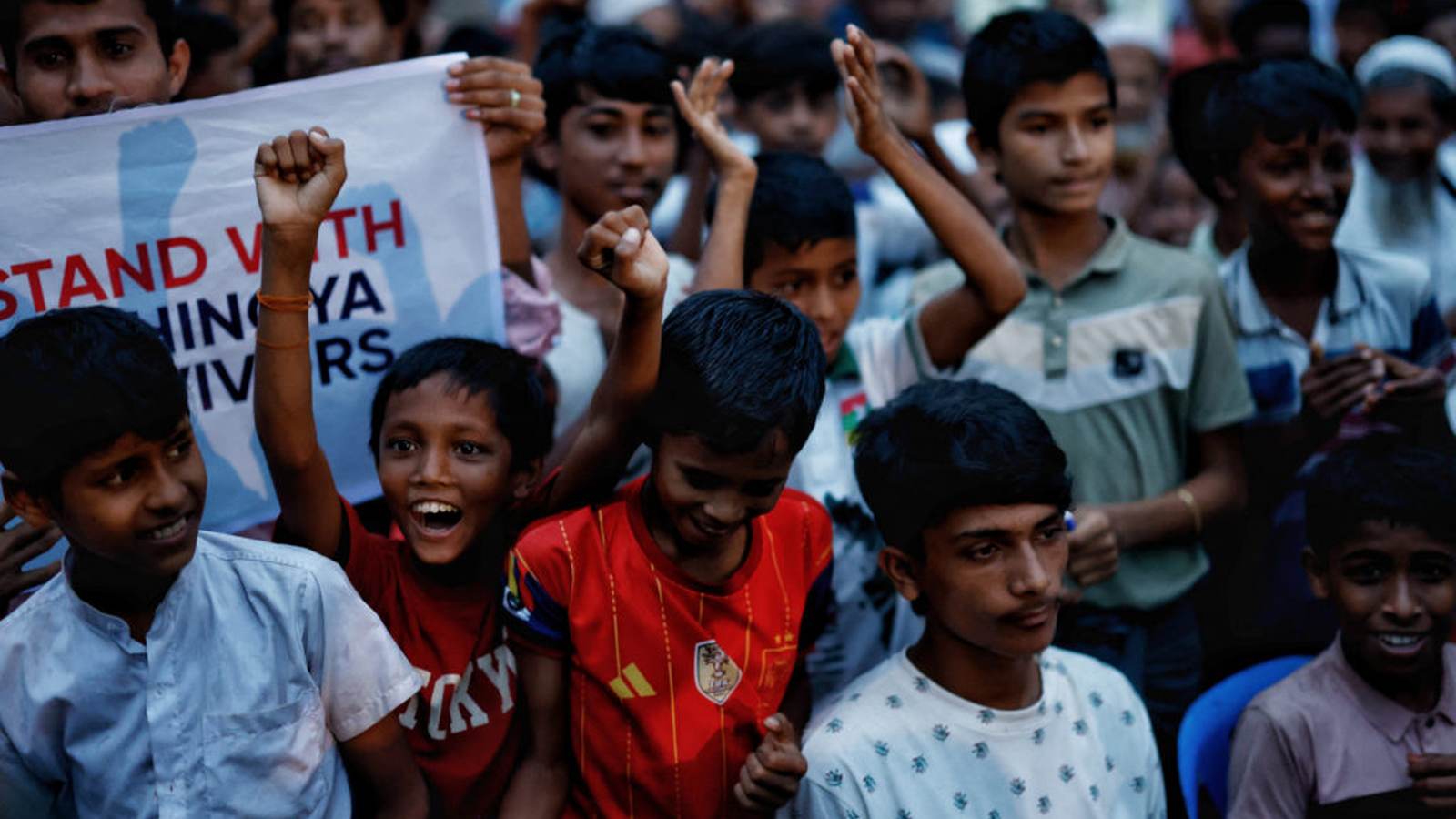
For the Rohingya community, the judgment offers long-awaited validation. Over 1.2 million refugees currently reside in crowded, precarious conditions in Bangladesh’s Cox’s Bazar district. Advocates argue that while the legal victory is monumental, the practical challenge of ensuring the safety of returnees remains the primary hurdle. The territory in northern Rakhine is currently contested, with the Arakan Army and other armed factions exerting control, complicating any potential repatriation efforts. Analysts from the Armed Conflict Location & Event Data project warn that without a cessation of hostilities and credible security guarantees from all armed actors, the path to return remains blocked by the risk of renewed violence and famine. The junta’s continued blockade and the ongoing lack of citizenship rights for the Rohingya further exacerbate these challenges. As the struggle for justice shifts from the courtroom to the diplomatic arena, the international community faces increased pressure to move beyond symbolic recognition toward concrete enforcement of these obligations, including potential reviews of trade and arms agreements with the military-backed government in Myanmar.
A Legacy of Accountability
The case, initiated by The Gambia in 2019, represents a significant victory for international human rights law. It highlights the role of smaller nations in initiating global accountability mechanisms, even when the perpetrators enjoy significant geopolitical insulation. The emotional impact of the ruling was palpable in The Hague, where survivors who had traveled thousands of miles witnessed the court officially acknowledge their suffering. As the world watches how the U.N. Security Council responds to this mandate, the focus remains on whether this historic legal precedent can translate into actual protection for the millions who remain displaced and stateless. The judgment is not merely a retrospective condemnation; it is a forward-looking directive that places the burden of rectifying these crimes squarely on the shoulders of the Myanmar state, setting a rigorous standard for how the international community must handle future allegations of state-sponsored genocide.
Reporting source: pbs.org.