


Tactical Escalation in Port-au-Prince
On November 18, 2026, Salvadoran President Nayib Bukele confirmed that his military forces conducted a high-profile aerial operation targeting the residence of Jeff Larose, a prominent Haitian gang leader known widely as Jeff Canaan or Jeff Gwo Lwa. The operation, which utilized military helicopters to strike the mansion with heavy firepower, was framed by Bukele in a video released on social media as a “gift to the Haitian people” in honor of the anniversary of the Battle of Vertières. The 1803 conflict remains a foundational moment in Haitian history, representing the final major victory against French colonial forces that secured the nation’s independence. While the strike serves as a significant tactical assertion of power, the current status of Larose remains unconfirmed, and there is no verified data regarding potential casualties or the specific extent of structural damage to the property.
This engagement follows a similar military offensive conducted on November 8, 2026, against the home of Wilson Joseph, who leads the 400 Mawozo gang. These actions signal a distinct shift in the security campaign currently unfolding in Haiti, as foreign forces increasingly leverage advanced aerial assets—including helicopters and potentially explosive munitions—to bypass the logistical and physical challenges of navigating heavily fortified, gang-controlled neighborhoods. The Associated Press, in a report published via WRAL, noted that while the Haitian police and national army have remained silent regarding their potential involvement in the latest strike, a U.N.-backed gang suppression force has explicitly denied any participation in the operation.
Institutional and Operational Stakes
The reliance on aerial firepower marks a significant departure from traditional peacekeeping and stabilization models, raising complex questions regarding international accountability and the long-term sustainability of the mission. Diego Da Rin, a Haiti specialist with the International Crisis Group, observed that while the residences of gang leaders like Larose are easily identifiable via satellite imagery, the use of such force creates a volatile and unpredictable environment. These mansions, often distinguished by architectural markers like swimming pools or specific logos, have functioned as symbols of the gangs’ perceived immunity and dominance within their respective territories. The transition from ground-based containment to aerial interdiction suggests a prioritization of high-impact, symbolic victories over the slow, methodical process of territorial reclamation.
However, the operational efficiency gained by these strikes is constantly weighed against the heightened risk to the surrounding civilian population. Experts warn that as gang leaders are displaced from their primary strongholds, the resulting power vacuums and inevitable retaliatory measures often target vulnerable civilians. Sandra Pellegrini, a senior analyst with the Armed Conflict Location and Event Data (ACLED) project, emphasized that gangs are likely to exploit these civilian vulnerabilities to undermine public support for foreign military interventions. A core challenge remains: the capacity of external forces to maintain long-term territorial control once a strike is completed, rather than merely displacing the leadership or destroying infrastructure, which often leaves residents exposed to further violence.
Public Reception and Security Context
Despite significant international scrutiny and calls from groups like Amnesty International for transparency, the Salvadoran military’s presence has elicited strong, visible support from segments of the Haitian populace. Following the November 18 strike, thousands of residents in Port-au-Prince held demonstrations, chanting in support of the Salvadoran leader. For many local residents, these aggressive tactics represent a long-overdue response to the persistent gang violence that has crippled the capital since the 2010 earthquake. Larose’s gang, which maintains control over the Canaan community, has long been a focal point of the security crisis, dominating critical transit corridors that lead to the northern and eastern regions of the country. These roads are vital for commerce, and the tolls extracted by gangs have become a primary source of illicit revenue.
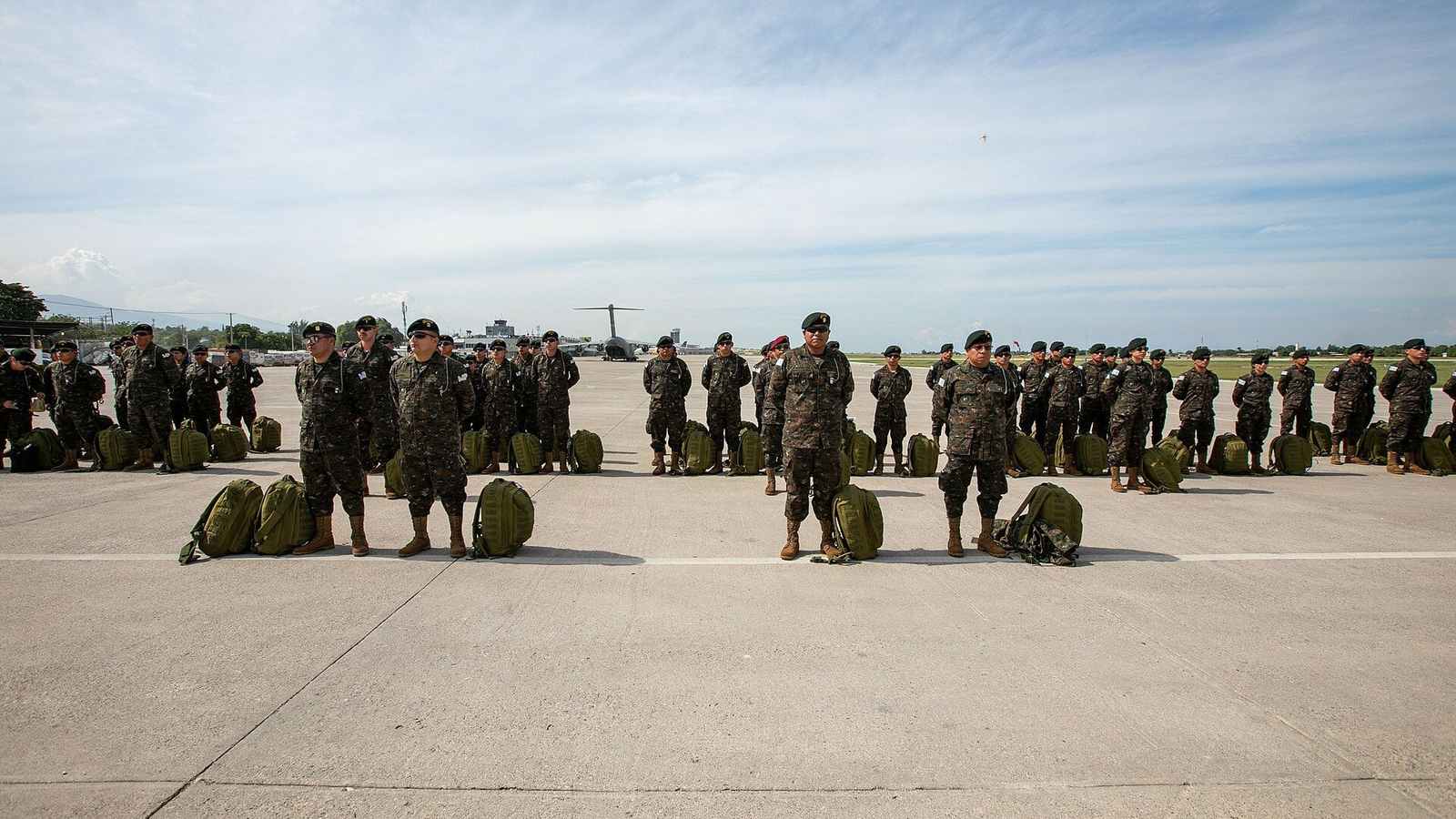
The current campaign gained momentum following the disappearance of four Salvadoran troops who came under attack in gang-held territory on October 18, 2026. With approximately 2,500 troops now deployed, the mission has evolved into a critical test of whether foreign-led, high-intensity operations can effectively dismantle the gang infrastructure that governs large swathes of the country. Critics and analysts alike are watching closely to see if these actions will lead to a more stable security environment or if they will merely trigger a protracted cycle of violence with significant humanitarian costs. The lack of a formal, public disclosure regarding the agreement between El Salvador and Haiti has further complicated the diplomatic landscape, with organizations like Amnesty International demanding clarity on the rules of engagement and the chain of accountability for the deployed forces.
Geopolitical and Strategic Implications
Beyond the immediate security concerns, the deployment of Salvadoran troops highlights the broader, often convoluted nature of international intervention in Haiti. While some regional neighbors, including the Dominican Republic, have expressed support for the intervention, other international stakeholders have maintained a distance. U.S. officials have largely distanced themselves from the Salvadoran-led operations, opting to focus on the U.N.-backed force. This creates a fragmented security landscape where multiple, non-coordinated entities operate under different mandates and objectives. The Salvadoran government, for its part, continues to present the intervention as a successful model of security policy, despite questions regarding the applicability of their domestic anti-gang strategies to the more fragmented and politically entrenched landscape of Haiti.
As the conflict continues, the focus remains on whether these strikes against gang leaders—like the destruction of Larose’s home—can produce lasting results or if they will simply force gangs to reorganize and diversify their operations. The history of foreign intervention in Haiti is replete with examples of short-term gains that failed to translate into long-term institutional stability. Consequently, the international community remains deeply divided on the efficacy and legality of the current approach. For the people of Port-au-Prince, the immediate reality is a mix of hope for relief from the violence and fear of the potential collateral damage that such high-intensity warfare may bring to their neighborhoods. The coming months, leading into Haiti’s scheduled elections, will likely determine whether this strategy serves as a turning point or merely another chapter in the country’s prolonged security struggle.