


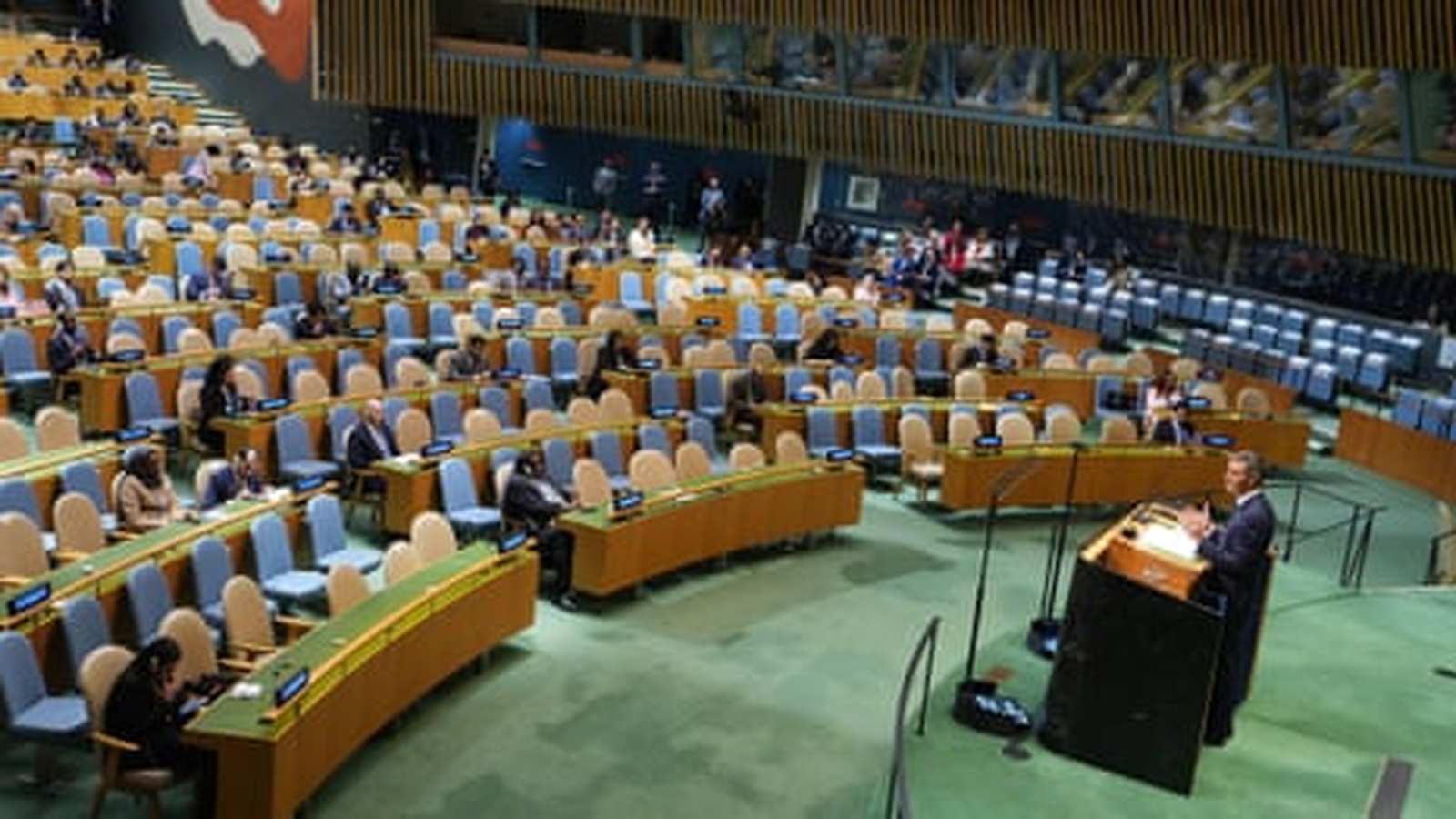
A Combative UN Address
Israeli Prime Minister Benjamin Netanyahu delivered a defiant address to the UN General Assembly on Friday, framing Israel’s ongoing regional conflicts as an existential struggle for survival. In a speech marked by sharp rhetoric, Netanyahu dismissed international criticism of Israel’s military conduct, labeling those who walked out of the hall as “moral cowards” and defending the nation’s military operations across seven fronts, according to the United Nations.
Netanyahu invoked historical parallels, comparing current security challenges to the 1967 Six-Day War and his brother Yonatan’s role in the 1976 Entebbe rescue mission. He asserted that Israel has “no other choice” but to continue its military campaign, claiming that the country had successfully dismantled the leadership and military capabilities of Hamas and Hezbollah, while also targeting Iranian nuclear infrastructure.
Protests and Civil Unrest in New York
While Netanyahu addressed the assembly, the streets of New York City became a focal point for intense demonstrations. According to Al Jazeera, law enforcement authorities arrested more than 100 protesters who gathered to voice opposition to the Prime Minister’s visit. The demonstrations, which spanned several blocks near the UN headquarters, drew a diverse coalition of activists, including high-profile figures such as Susan Sarandon and Hannah Einbinder, who were reportedly among those detained.
The protests underscore the growing polarization surrounding Israel’s policy. While Netanyahu maintains that his government is fighting a necessary war against terrorism, protesters argue that the humanitarian cost in Gaza and the broader region is unacceptable. The arrests reflect the heightened security posture of the New York Police Department (NYPD) during the high-level UN week, as officials balance the right to protest against the logistical demands of protecting visiting heads of state.
Political Stakes and Future Outlook
The domestic and international pressure on Netanyahu remains significant. Within Israel, the Prime Minister faces a complex political landscape with upcoming electoral considerations, while his rhetoric at the UN signaled a refusal to pivot from his current military-first strategy. His public dismissal of “settler violence”—which he characterized as a distortion by international media—further highlights the divide between his administration and various international bodies.
As the UN General Assembly concludes, the diplomatic fallout from Netanyahu’s speech remains to be seen. His assertion that many world leaders privately support Israel’s actions while publicly distancing themselves creates a tense environment for future diplomatic engagements. The immediate challenge for his administration will be managing the aftermath of the military operations he described, while addressing the persistent domestic protests that have followed his delegation from Jerusalem to New York.