


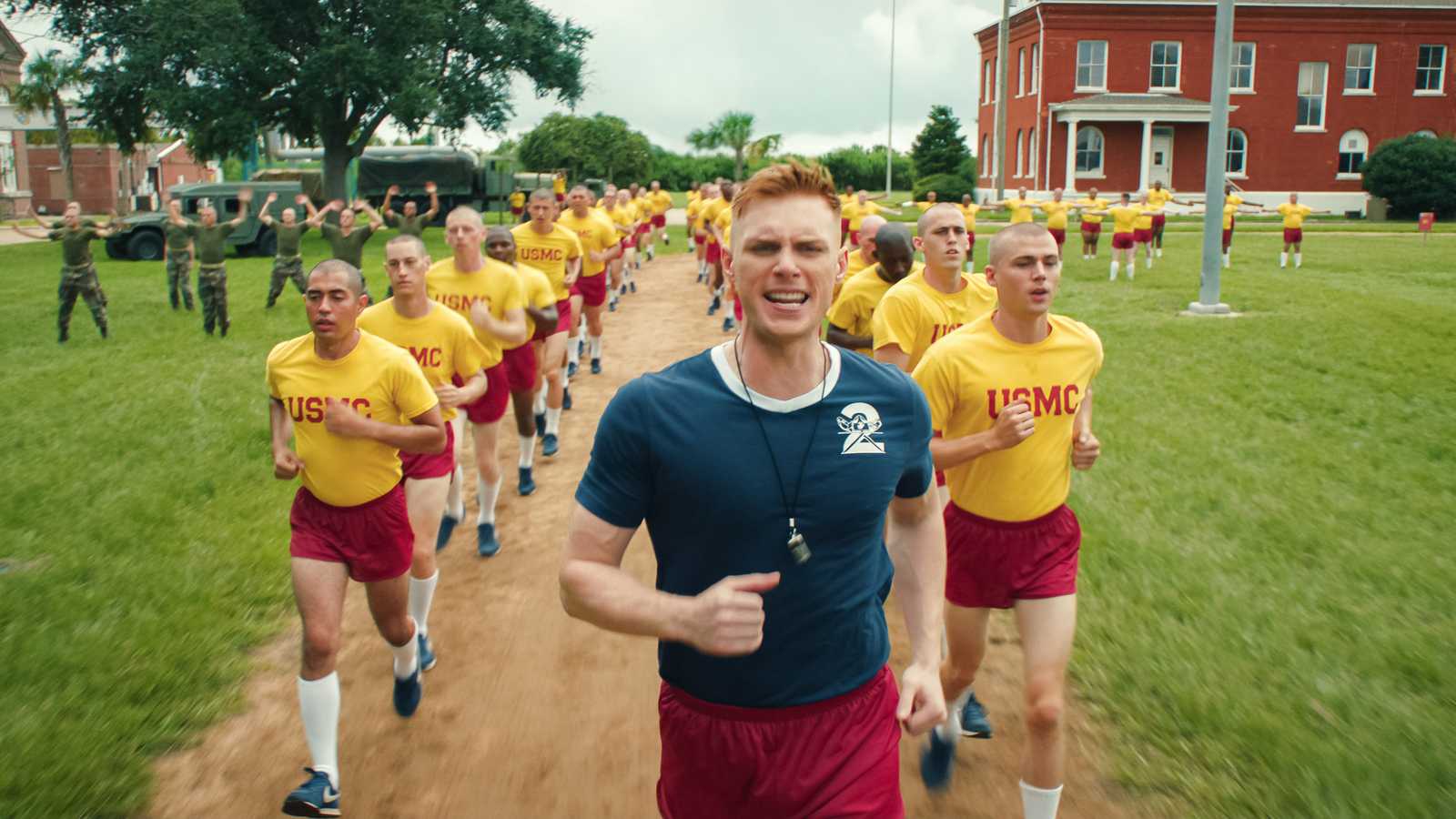
When Netflix announced its adaptation of Greg Cope White’s memoir, The Pink Marine, viewers and fans of the book were eager to see how the deeply personal and transformative story would translate to the screen. The resulting series, Boots, offers not just a retelling but an ensemble-driven reimagining of White’s journey, blending elements of humor, struggle, and camaraderie. While the memoir focuses on White’s personal experience as a closeted gay recruit in the U.S. Marine Corps, the series broadens the narrative, introducing new characters and dramatic arcs to create a layered and universal story.
From Memoir to Ensemble Drama
Greg Cope White’s memoir, published in 2015, chronicles his journey through Marine Corps boot camp in 1979, a time when being gay in the military was not just stigmatized but outright illegal. White’s story begins with an impulsive decision to join the Marines alongside his best friend Dale, motivated by a mix of loyalty, a desire for transformation, and a need to prove himself. His narrative captures the grueling physical and emotional challenges of boot camp, as well as the constant fear of being discovered as gay.
Netflix’s Boots, however, shifts the timeline to the early 1990s, a period just before the “Don’t Ask, Don’t Tell” policy was enacted. This change allows the series to explore themes of identity and belonging within a slightly more modern context. The protagonist, Cameron Cope, is inspired by White but is not an exact replica. Played by Miles Heizer, Cameron’s story is one of transformation, resilience, and finding one’s voice in a demanding and often unforgiving environment. The series also expands the narrative by introducing a diverse cast of characters, each with their own struggles and arcs, creating a rich ensemble dynamic.
Core Themes: Identity, Belonging, and Transformation
At its heart, both the memoir and the series grapple with questions of identity and belonging. For White, joining the Marines was a way to blend in, to “camouflage” his true self while proving his worth. The uniform and the shared experience of boot camp provided a sense of equality, even as he navigated the risks of being discovered.
In the series, these themes are explored not only through Cameron’s journey but also through the experiences of other recruits. The camaraderie that develops among the group highlights the universal nature of the challenges they face, from physical exhaustion to emotional vulnerability. The series also delves into the complexities of masculinity, particularly in a hyper-masculine environment like the Marine Corps. Cameron’s interactions with Sgt. Sullivan, a drill instructor grappling with his own hidden identity, serve as a poignant exploration of these themes.
Balancing Drama and Authenticity
One of the most striking aspects of Boots is its ability to balance dramatic storytelling with authenticity. The series incorporates elements of humor and absurdity, reflecting the often surreal nature of boot camp. From the midnight arrival at Parris Island to the intense final test known as the Crucible, the show captures the rhythm and grit of recruit training while also weaving in moments of levity and grace.
This balance is no accident. The production team, including co-showrunners Andy Parker and Jennifer Cecil, worked closely with military advisers and drew on the experiences of White and other Marines to ensure the show’s authenticity. White himself contributed as a writer, penning a pivotal episode that reflects his personal experiences. His involvement ensured that the series stayed true to the spirit of his memoir while embracing the creative liberties necessary for a television adaptation.
Legacy and Impact
For Greg Cope White, the journey from memoir to screen was deeply personal. Writing The Pink Marine was an act of courage, inspired by a desire to provide representation and hope for LGBTQ individuals, particularly young people struggling with their identity. The Netflix adaptation extends that mission, bringing his story to a global audience and highlighting the challenges and triumphs of marginalized individuals in the military.
The series also serves as a tribute to the late Norman Lear, a legendary television producer who championed White’s story and served as an executive producer on Boots. Lear’s legacy of tackling taboo subjects with humor and humanity is evident throughout the series, which uses its ensemble cast and nuanced storytelling to explore complex themes in an accessible and engaging way.
Netflix’s Boots is more than just an adaptation of The Pink Marine; it is a celebration of resilience, friendship, and the human capacity for transformation. By expanding the scope of White’s memoir, the series offers a universal story that resonates with audiences from all walks of life, proving that true strength lies in authenticity and connection.