


A New Wave of Youth Demonstrations Across Europe
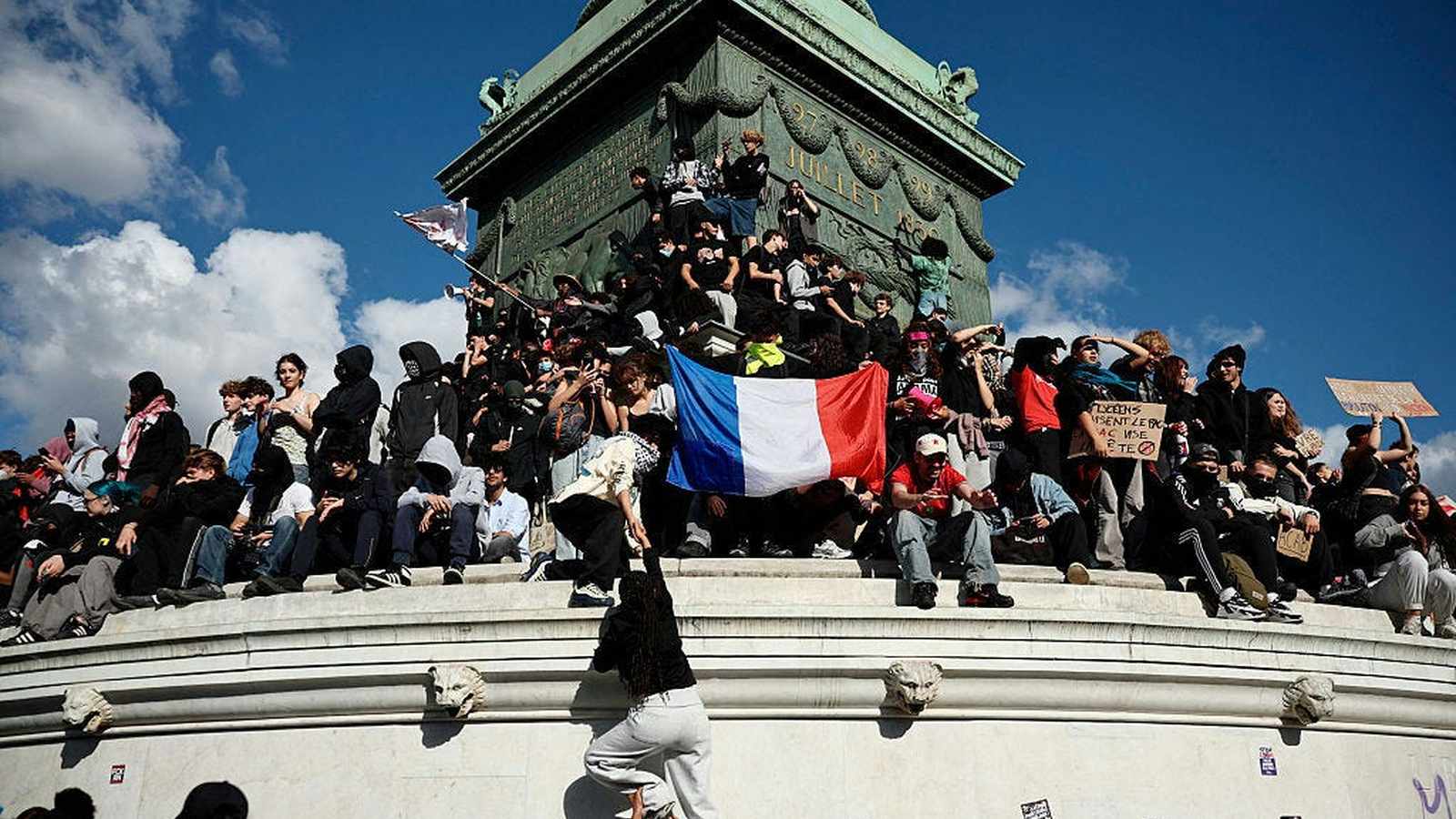
A fresh wave of youth-led demonstrations and public unrest has surfaced across major European urban centers, drawing sharp analysis from contemporary historians and observers. Writing for The Free Press, historian Niall Ferguson points out that while French high schools have seen students setting fires and clashing with police under the banner of demanding greater investment in education, similar youth mobilizations have erupted beyond France. In Madrid, demonstrators have taken to the streets to protest an intensifying housing crisis, while young activists in Brussels have mobilized against government budget cuts and fiscal tightening.
Ferguson observes that these disparate demonstrations reflect distinct local grievances yet share a common thread of generational frustration. In France, the unrest invokes historical imagery of public dissent, where street demonstrations function almost as an established political ritual for younger generations. Viral videos and recurring scenes across Parisian boulevards capture groups enacting modern iterations of revolutionary behavior, complete with street confrontations and burning debris. Yet the immediate demands—ranging from school funding to urban housing affordability and public expenditure reductions—highlight deep-seated and mounting economic pressures facing young Europeans in multiple jurisdictions simultaneously.
The Intersection of Social Unrest and Sovereign Debt
Beyond immediate street-level clashes, this wave of civil discontent coincides with growing financial strain at the sovereign level, particularly in France. The convergence of domestic political friction and fiscal vulnerability has raised fresh questions among economists regarding euro-area stability. However, Ferguson cautions against prematurely labeling the current climate as a direct replay of the sovereign debt turmoil of the late 2000s and early 2010s, which originated in Greece before rippling outward.
Instead, financial observers note that institutional safeguards established over the past decade provide central authorities with substantially broader mechanisms for intervention. Ferguson highlights that should French sovereign bond yields climb significantly higher—potentially by another 100 basis points, or 1 percent—the European Central Bank possesses the monetary policy instruments necessary to step in, calm market volatility, and stabilize regional bond yields, drawing on the established precedent of defending the currency union under stress.
Institutional Readiness and Market Stabilizers
The institutional architecture of the eurozone has evolved considerably since the 2009–2012 crisis, equipping technocratic bodies with explicit playbooks to address contagion risks. When Mario Draghi famously declared in July 2012 that the central bank would do whatever it takes to preserve the euro, it fundamentally altered market expectations regarding sovereign default risk within the bloc. Today, as fiscal deficits and political gridlock test member states like France, those same defensive mechanisms remain available to monetary authorities.
Nevertheless, the juxtaposition of visible youth agitation in major capitals with underlying fiscal imbalances underscores the delicate balancing act facing European policymakers. While monetary tools can successfully insulate bond markets from panic, resolving the underlying socio-economic drivers—such as youth employment barriers, housing affordability, and educational resource distribution—requires sustained structural and legislative efforts from national governments that extend far beyond central bank intervention.
Historical Parallels and Contemporary Realities
As Ferguson elaborates, the cultural significance of public protest in certain European nations cannot be overstated. In France, political street protest operates almost as a rite of passage for adolescents and young adults, blending historical references to past eras of dissent with contemporary political slogans. Whether referencing historical uprisings or modern frustrations over educational policies, young demonstrators frequently employ disruptive tactics that draw heavy police responses, further polarizing public discourse.
Simultaneously, the grievances expanding across Madrid and Brussels illustrate that European youth are grappling with systemic economic vulnerabilities that extend beyond national borders. The housing affordability crunch in Spain and budgetary austerity measures in Belgium demonstrate that younger demographics bear a disproportionate burden of ongoing macroeconomic adjustments. Consequently, public demonstrations serve as both an outlet for immediate economic distress and a warning sign to political leaders about the fragility of the social contract across the continent.
Policy Implications and Future Outlook
Looking ahead, the interaction between grassroots youth unrest and high-level sovereign debt pressures will likely remain a defining characteristic of European politics. While the European Central Bank stands ready to deploy backstops if bond market stress intensifies, monetary policy alone cannot address the fundamental structural complaints voiced in the streets. National governments across France, Spain, Belgium, and beyond face the formidable task of balancing fiscal consolidation with policies that address the legitimate economic aspirations of their younger citizens.