


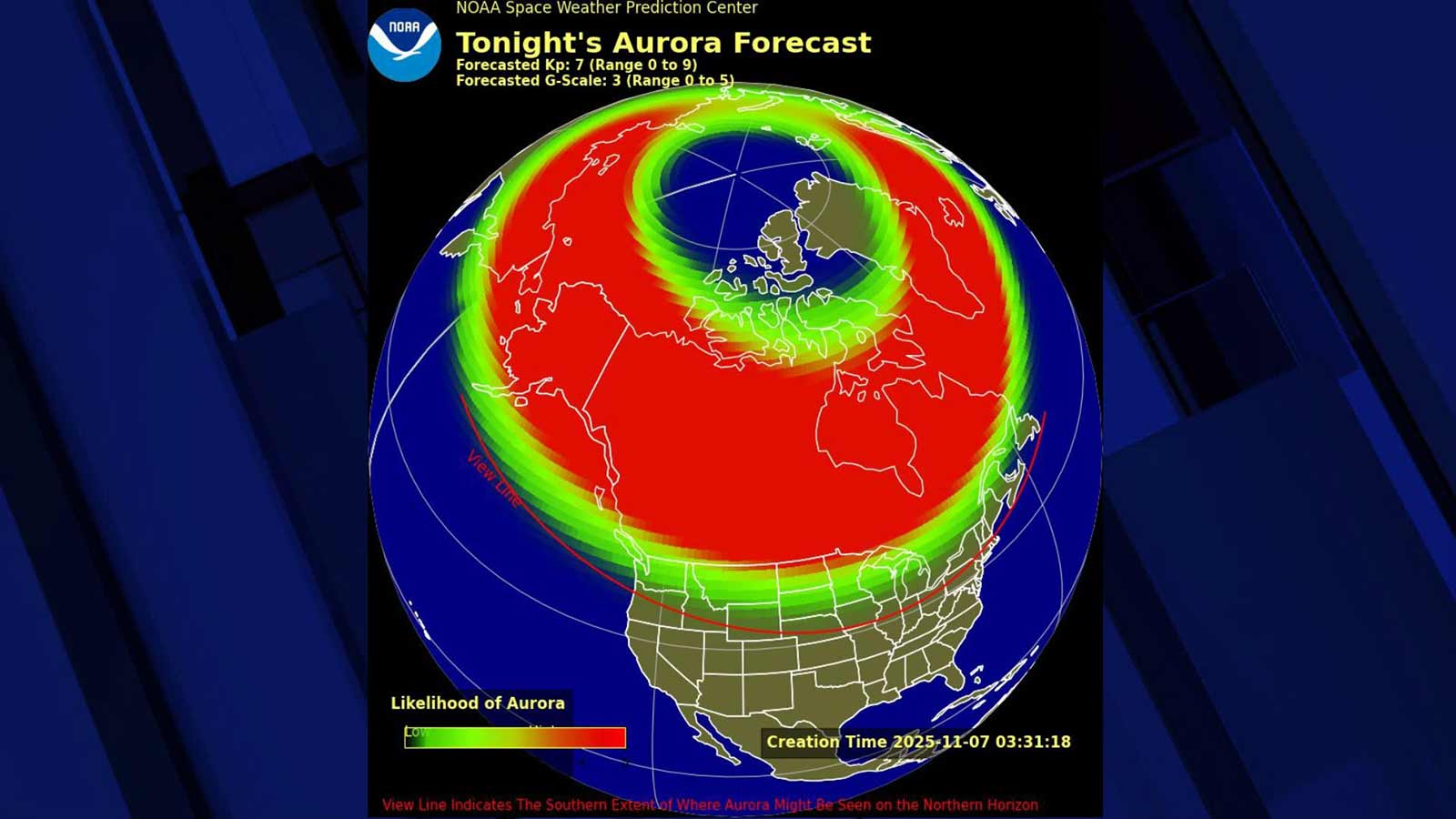
The National Oceanic and Atmospheric Administration (NOAA) has issued a space weather forecast predicting potential G3-class geomagnetic storms starting from the night of July 3 through July 4. This activity is driven by coronal mass ejections (CMEs) from the sun, which are expected to create auroral displays across as many as 26 U.S. states.
NOAA experts note that while the most vivid sightings are anticipated in northern states such as Montana, Minnesota, and North Dakota, the intensity of a G3 storm could push visibility as far south as Kansas, Kentucky, and Virginia. The UK Met Office has also corroborated these findings, indicating a strong likelihood of geomagnetic activity throughout the holiday weekend.
Visibility may be challenged by the current lunar phase and the extended daylight hours following the summer solstice. Astronomers recommend that observers look toward the northern horizon after midnight, away from artificial light sources. For those attempting to capture the phenomenon, long-exposure camera settings are advised to compensate for fainter displays.
Real-time updates and tracking are available via NOAA’s official aurora forecast tools. The interplanetary magnetic field’s Bz component remains a critical factor in determining how effectively solar energy will penetrate the magnetosphere to produce visible light.