


A Mobilization at the Historic Site
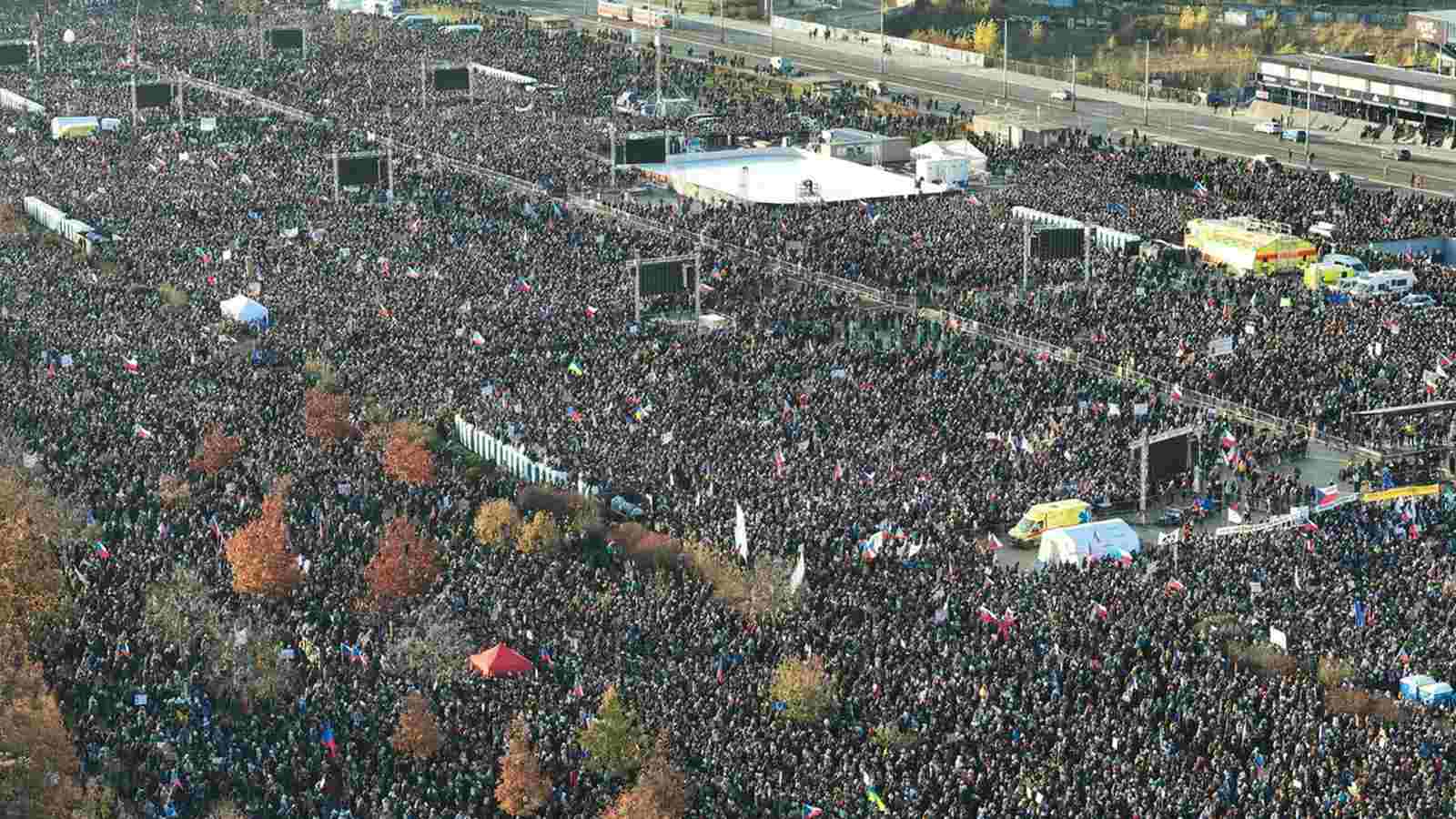
On November 15, 2026, a massive crowd gathered at Prague’s Letná Plain to protest proposed legislative changes to the funding structure of Czech public-service media. Organized by the civil society group Milion chvilek, the demonstration drew between 350,000 and 450,000 participants, according to the group’s chairman, Mikuláš Minář, as reported by Expats.cz. This turnout, if confirmed, would represent the largest public mobilization in the Czech Republic since the revolutionary events of late 1989.
The event took place two days before the anniversary of the Velvet Revolution, a date that carries profound symbolic weight in the Czech capital. While the police spokesperson, Eva Kropáčová, declined to provide an official crowd estimate to the Czech News Agency, the scale of the gathering underscores significant public anxiety regarding the independence of Czech Television and Czech Radio. The protest, while occupying the same historic venue as the 1989 anti-communist rallies, is framed by organizers as a defense of democratic institutions within the current parliamentary system rather than a revolutionary movement.
The Legislative Point of Contention
The core of the dispute lies in legislation that advanced through a parliamentary vote on October 24, 2026. The proposed bill seeks to replace the current license-fee funding model for public broadcasters with direct financing from the state budget. Opponents of the measure, including the demonstrators at Letná, argue that shifting to state-controlled funding could strip public media of its editorial autonomy, rendering it vulnerable to political pressure from the ruling coalition.
Prime Minister Andrej Babiš and members of his coalition have consistently rejected these claims, denying that the legislation is intended to exert political control or initiate censorship of public-service outlets. Despite these government assurances, the bill’s progress—particularly the criticism that it was advanced during expedited, late-night parliamentary sessions—has become a focal point for civil society. The demonstrators, including representatives from student, theatrical, business, and religious organizations, voiced their opposition through chants and signage, demanding that the government halt the bill and engage in a more transparent public discussion regarding the future of public media.
Civil Society and Institutional Stakes
The significance of the Letná protest extends beyond the specific media funding bill. It reflects a broader institutional clash over the boundaries of government power and the mechanisms of accountability in a democratic state. Milion chvilek has expanded its demands to include the removal of Tomio Okamura as parliamentary speaker and the reassignment of the Defense Ministry, citing concerns over the SPD party’s influence on national security.
For the organizers, the protest is a test of civic endurance and the ability of the public to influence legislative processes before they are finalized. Minář has issued a formal invitation to the government for a public debate scheduled for December 2 at the Švandovo divadlo. Additionally, the group has called for a nationwide warning action to occur on the same day at 4:36 p.m., signifying their continued commitment to the issue. As of the time of reporting on November 15, the demonstration concluded without major security incidents, though the government has yet to signal a shift in its legislative strategy.
The logistical impact of the event was felt across Prague, with significant traffic restrictions implemented near the Letná area and the Blanka tunnel. While public transport services remained largely operational, the sheer volume of participants necessitated careful management by local authorities. The event highlights a persistent tension in Czech politics: the struggle to balance executive governance with the preservation of independent institutional checks and balances.