


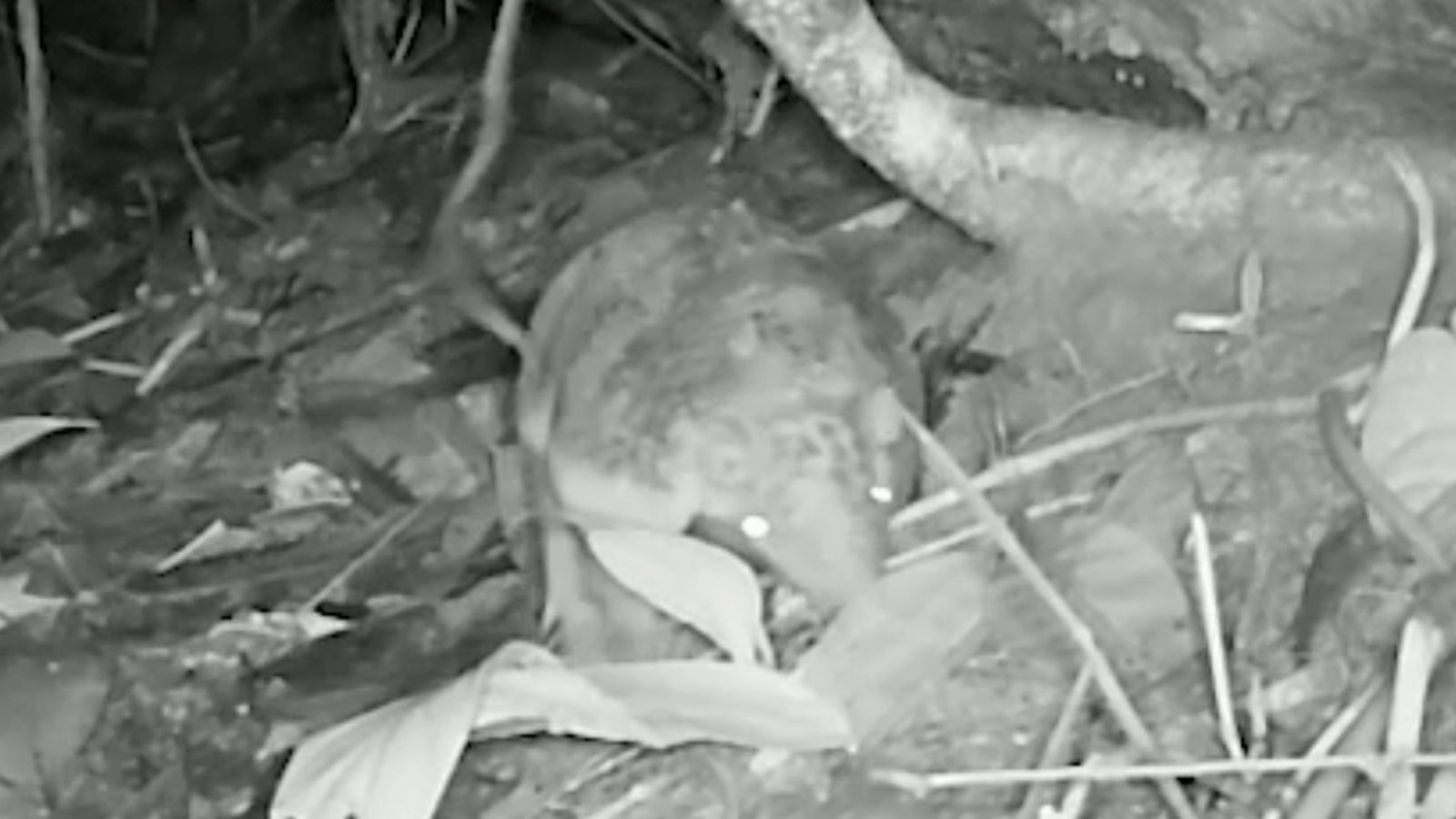
Researchers working in the Peruvian Amazon have captured unprecedented video footage of a baby giant armadillo, a milestone achieved by combining modern camera trap technology with traditional Indigenous knowledge. The discovery was detailed by conservationist Rosa Vásquez Espinoza, founder of BBC Wildlife, during an appearance on the podcast Wild Lives. The deployment took place in the Native Community of San Francisco within the Loreto region, yielding results that typically elude projects relying on hundreds of devices over extended periods.
Overcoming Field Challenges Through Local Expertise
Giant armadillos are widely recognized as among the most elusive mammals to document in their natural habitat. According to BBC Wildlife reporting, conservation projects often deploy hundreds of camera traps for over a year without securing a single verified clip. By contrast, the team from Amazon Research Internacional secured the footage in a remarkably short timeframe using a highly limited number of devices. Rosa Vásquez Espinoza attributed this efficiency directly to collaboration with local Indigenous colleagues, whose generational understanding of animal pathways and behavior guided the strategic placement of the equipment.
The success highlights a fundamental shift in how field biology operates in complex tropical ecosystems. While conventional scientific approaches frequently rely on random placement grids or broad spatial distribution models, integrating local ecological knowledge dramatically narrows down the search parameters. In the case of the Native Community of San Francisco, local trackers understand the subtle topography, seasonal shifts, and micro-habitats that dictate where subterranean mammals travel and forage. This cooperative methodology drastically reduces both logistical costs and the hardware footprint required in sensitive rainforest environments.
Ecological Significance and Breeding Pressures
The giant armadillo holds the distinction of being the largest species of its kind in the world, yet its populations face severe pressures. The animals reproduce only once every three years and produce very small litters. Furthermore, their survival is threatened by ongoing rainforest fragmentation and illegal hunting across the Amazon basin. Beyond its own vulnerability, the giant armadillo plays a foundational role in the local ecosystem. Their subterranean burrows are routinely utilized by a wide variety of other rainforest species seeking safety from predators and crucial feeding sites, making the species an essential ecological architect.
Because of their exceptionally slow reproductive rate, population recovery following localized extinctions or hunting pressures takes decades. Each successful birth documented in the wild represents a vital data point for understanding demographic resilience. The visual evidence of a playful juvenile with distinct physical features offers tangible proof of an active breeding population within the Loreto jurisdiction, providing researchers with fresh impetus to evaluate the health and continuity of the local habitat matrix.
Leveraging Evidence for Regional Environmental Law
The newly captured footage serves a direct regulatory purpose beyond scientific documentation. Amazon Research Internacional is utilizing the visual evidence to spearhead a local conservation law in the Loreto department aimed at legally protecting the giant armadillo alongside other large mammals listed on the IUCN Red List. These species function as vital indicators of overall forest health. The initiative builds upon a recent legislative precedent in Satipo, located within Peru’s central Junín province, where the organization successfully helped introduce similar protective statutes.
Conservationists note that ongoing regional monitoring—which already encompasses local stingless bees and their nesting trees—creates an interconnected protective framework where safeguarding smaller pollinators indirectly reinforces the security of megafauna. By linking micro-habitat protection with legislative advocacy for flagship species, the organization seeks to establish comprehensive legal boundaries that withstand commercial encroachment and industrial land-use changes. The visual proof of reproducing populations acts as an invaluable advocacy tool when presenting policy recommendations to regional authorities and municipal assemblies.