


A New Geopolitical Calculus
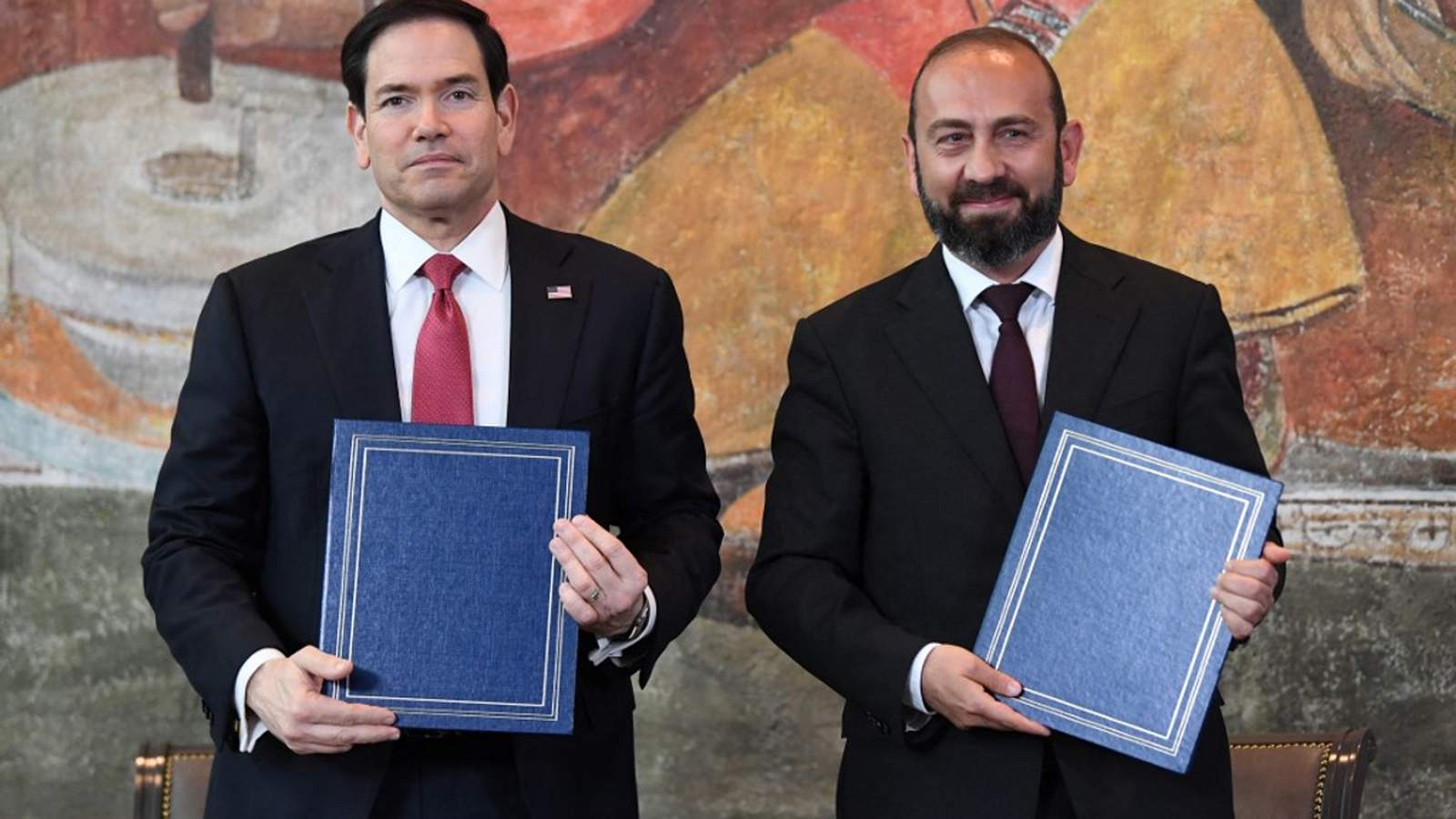
The arrival of US Secretary of State Marco Rubio in Yerevan—the first such visit by an American top diplomat since 2012—marks a watershed moment in the South Caucasus. For decades, the Kremlin has viewed the region as its exclusive sphere of influence, utilizing a mix of economic coercion and security monopolies to maintain control. Rubio’s visit, however, functions as a structural disruption to this paradigm, occurring just weeks before Armenia’s high-stakes June 7 parliamentary elections.
The centerpiece of the visit was the formalization of the Comprehensive Strategic Partnership Charter and the advancement of the “Trump Route for International Peace and Prosperity” (TRIPP). This infrastructure project, designed to facilitate transit across southern Armenia, directly competes with Moscow’s proposed Meghri corridor. By providing a Western-mediated alternative, Washington is effectively stripping Russia of its role as the sole arbiter of regional logistics and security.
The Economic Battlefield
Moscow’s response to Armenia’s pivot has been characterized by overt economic warfare. Following Prime Minister Nikol Pashinyan’s decision to freeze participation in the Collective Security Treaty Organization (CSTO), the Kremlin has threatened to hike natural gas prices and placed restrictive bans on Armenian agricultural exports. These measures, while ostensibly regulatory, are clearly intended to influence the Armenian electorate ahead of the June 7 vote by creating a climate of economic instability.
Rubio’s visit serves as a geopolitical counterweight to this pressure. By securing a 49-year infrastructure lease for a US-controlled entity to oversee regional transit, Armenia is effectively locking in a long-term commitment from Washington. This move ensures that Yerevan’s sovereign decisions are supported by a major power, thereby insulating the government against immediate threats of Russian economic retaliation.
Strategic Restraint and Diplomatic Signaling
Notably, the US approach during this visit was marked by calculated restraint. Rubio avoided the rhetoric of “democracy promotion,” which often serves as a lightning rod for pro-Russian propaganda. By focusing strictly on economic and security deliverables, the US avoided the “color revolution” trap, preventing the Kremlin from painting the visit as a blatant act of foreign interference in Armenian internal affairs. Furthermore, by centering the diplomatic framework on US-Armenian bilateralism rather than an exclusive EU-centric model, Washington has maintained a flexible, durable, and independent role in the region.
The geopolitical tension was further underscored by the recent presence of Ukrainian President Volodymyr Zelensky at the 8th European Political Community summit in Yerevan. The subsequent, furious reaction from the Russian Security Council, led by Sergei Shoigu, confirms that Moscow views Armenia’s shift as an existential threat to its regional standing. As Armenia moves to integrate its transit infrastructure into the TRIPP framework, it is effectively ending the era of Russian security dominance, signaling that the South Caucasus is undergoing a fundamental realignment toward a multipolar, Western-linked architecture.
The strategic significance of Rubio’s visit lies in its timing and its tangible nature. By shifting the focus from abstract diplomatic norms to concrete infrastructure and long-term security leases, the United States has provided Armenia with a viable pathway out of the Russian orbit. The success of this pivot will depend on the durability of the TRIPP agreement and the ability of the Armenian government to navigate the economic volatility inherent in decoupling from the Russian market. Ultimately, the visit establishes that the South Caucasus is no longer an isolated backyard for the Kremlin, but a region where American engagement is now a permanent and defining feature of the future landscape.