

Quick Read
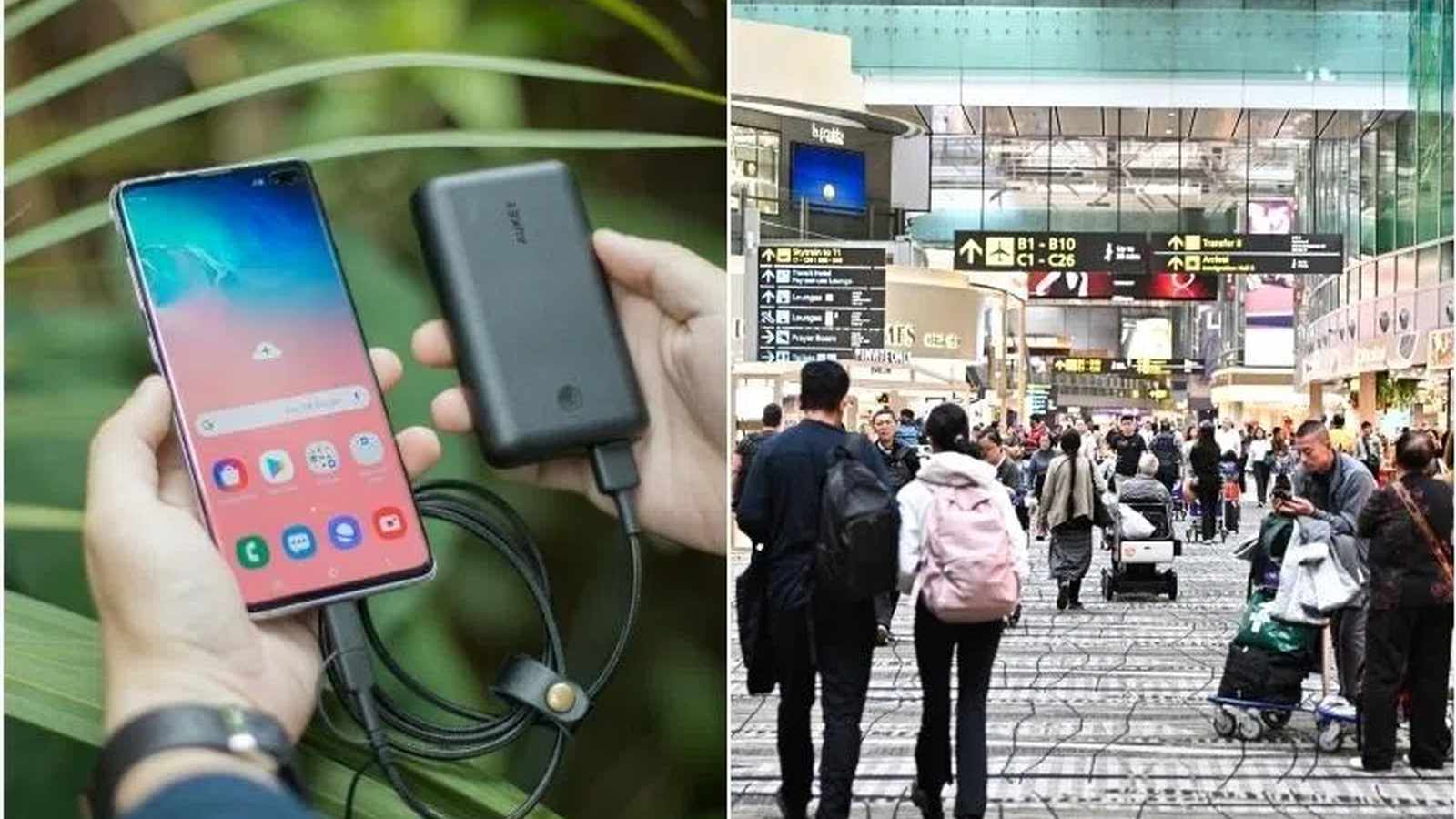
- Passengers are now limited to a maximum of two power banks per person when departing from Singapore.
- The new regulation, effective April 15, aligns with updated ICAO safety standards to reduce fire risks.
- Excess power banks must be surrendered at security checkpoints before boarding the aircraft.
SINGAPORE (Azat TV) – Starting April 15, 2026, passengers departing from Singapore will be restricted to carrying a maximum of two power banks per person, as the Civil Aviation Authority of Singapore (CAAS) implements new safety protocols to mitigate the risk of lithium-ion battery fires in pressurized cabin environments.
New Limits on Portable Power Sources
The mandate follows updated safety guidelines issued by the International Civil Aviation Organisation (ICAO) on April 2. Under the new policy, any traveler found with more than two power banks during security screening will be required to surrender the excess units before boarding. This represents a significant reduction from previous allowances, which permitted up to 20 units depending on capacity, and underscores a global shift toward stricter control over portable lithium-ion energy storage.
Operational Impact and Safety Compliance
CAAS has confirmed that the restriction applies specifically to devices categorized as universal external power sources. While other spare lithium batteries, such as those used for cameras, remain exempt from this specific limit, the authority emphasizes that the two-unit cap is absolute for power banks regardless of their capacity. The agency is currently coordinating with airlines to ensure that clear signage is displayed at airport touchpoints and that security personnel are trained to handle the transition smoothly.
Global Aviation Trends
The decision to limit power banks reflects a broader industry concern regarding the volatility of lithium-ion batteries in confined spaces. Several carriers, including Singapore Airlines and Scoot, have already implemented in-flight bans on the usage or charging of these devices following cabin fire incidents on other international carriers. Japan is reportedly considering a similar blanket ban on the use of power banks on domestic flights, signaling that regulatory scrutiny over personal electronic accessories is intensifying across the Asia-Pacific region.
The move by CAAS highlights the aviation industry’s pivot toward preemptive risk management as the density of personal electronics carried by travelers continues to rise, necessitating a standardized approach to cabin fire prevention that transcends individual airline policies.