


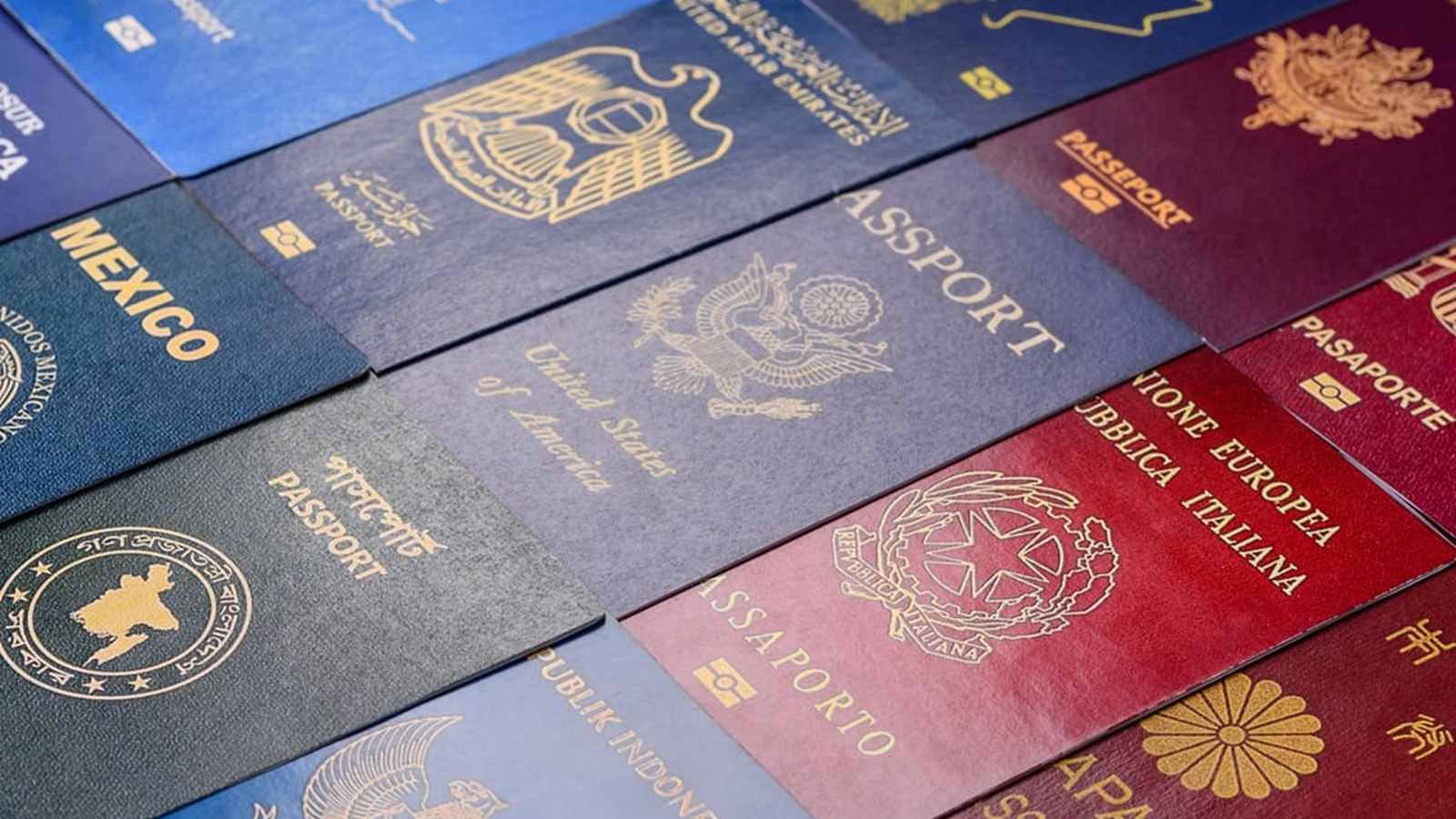
In an increasingly interconnected yet often fragmented world, the power of a passport remains a critical determinant of global mobility and opportunity. The latest Henley Passport Index 2026, compiled by consulting firm Henley & Partners using data from the International Air Transport Association (IATA), offers a comprehensive snapshot of the world’s most powerful travel documents. As of early 2026, the index, now in its 20th year, clearly delineates the vast disparities in freedom of movement, with Singapore once again asserting its dominance at the pinnacle of global mobility.
Singapore Leads Global Mobility, Europe’s Strong Showing Continues
For the updated Henley Passport Index 2026, Singapore proudly retains its title as the world’s most powerful passport, granting its citizens visa-free or visa-on-arrival access to an impressive 192 destinations. This consistent leadership underscores Singapore’s robust diplomatic engagement and strategic international relations, which have steadily expanded its global reach.
Following closely, Japan and South Korea share the second position, each offering access to 188 destinations. This strong showing from East Asian nations highlights their enduring influence and the benefits of well-established international partnerships. European countries, as is often the case, continue to dominate the upper echelons of the index. Denmark, Luxembourg, Spain, Sweden, and Switzerland collectively hold the third spot, with their passports facilitating travel to 186 destinations. Ten additional Western and Northern European nations populate the fourth position, providing access to 185 destinations, further cementing Europe’s collective strength in global mobility.
A notable success story in the latest rankings is the United Arab Emirates (UAE). Over the past two decades, the UAE has demonstrated an extraordinary ascent, adding 149 visa-free destinations since 2006. This remarkable progress has propelled the nation up 57 places to an impressive fifth position, now offering access to 184 destinations. This meteoric rise, as highlighted by Indianewengland.com, is a direct result of sustained diplomatic efforts and proactive visa liberalization policies, transforming the UAE passport into one of the fastest-growing powerhouses in the world.
Belarus’s Stark Reality: Lagging Far Behind its Neighbors
While some nations celebrate enhanced global access, the picture for others remains considerably less bright. Belarus, for instance, finds itself in a challenging position on the Henley Passport Index 2026, ranking 60th. Belarusian passport holders can currently access 79 countries and territories either visa-free or with a visa-on-arrival. This represents a slight decline from the fall of 2025, when the country had access to 80 destinations, despite its ranking remaining unchanged. Although formally performing slightly better than its 66th position in January 2025, experts from Henley & Partners emphasize that such fluctuations do not signal a genuine improvement in its standing. Instead, Belarus remains firmly at the bottom of the regional rankings, with a significant and growing gap separating it from its European neighbors and even many former Soviet Union states, as reported by Belsat.eu.
The contrast with its immediate neighbors is particularly stark and illustrative of this widening disparity. Lithuania, an EU member bordering Belarus, ranks impressively at 8th place, granting its citizens visa-free access to 181 destinations. Poland, another EU neighbor, ranks even higher in 6th place with access to 183 destinations, while Latvia secures 7th place, providing entry to 182 countries and territories. These figures mean that all EU countries sharing a border with Belarus are firmly entrenched among the world leaders in passport mobility, enjoying more than double the number of accessible destinations compared to Belarus.
Even among its post-Soviet counterparts, Belarus lags significantly. Ukraine, for example, ranks 30th, with its citizens able to visit 143 destinations visa-free. Russia, despite its complex geopolitical landscape, ranks 46th, offering access to 113 destinations. Against this backdrop, Belarus’s 79 destinations highlight a considerable disconnect, not only from the European Union but also from its closest regional partners.
India’s Ascent and China’s Steady Position
Beyond the extremes of the index, other nations show interesting dynamics. India has made notable progress in the 2026 rankings, climbing five places to 80th position. This ranking is shared with Algeria and Niger, with Indian travelers now enjoying visa-free or simplified entry across parts of Southeast Asia, Africa, the Caribbean, and several island nations. This improvement reflects India’s growing economic influence and strategic diplomatic efforts to ease travel for its citizens, supporting its burgeoning global engagement.
China, a major global player, holds the 59th position on the index, providing its passport holders with visa-free access to 81 destinations. This places China alongside countries like Botswana and Kosovo, which share the same rank and number of accessible destinations. The United States, after a brief dip in previous years, has returned to the top 10, now ranking 10th with access to 179 countries. This return to the elite group comes despite both the U.S. and the UK recording year-on-year declines in visa-free access, suggesting that other countries might have experienced more significant drops or stagnated, allowing the U.S. to regain its standing.
The Bottom of the Index: A Reflection of Global Inequality
At the very bottom of the Henley Passport Index 2026, the situation remains a stark reminder of profound global inequalities. Afghanistan closes the list at 101st place, with its citizens having access to a mere 24 destinations. Syria ranks slightly higher with 26 countries, and Iraq follows with 29. The bottom ten also includes nations such as Pakistan, Somalia, Nepal, Bangladesh, Eritrea, Libya, and Iran, where visa-free travel options range from a meager 31 to 40 destinations. The chasm between the top-ranked Singapore and bottom-ranked Afghanistan exceeds 160 destinations, a gap that, as the index’s compilers emphasize, starkly reflects the deep-seated global inequality in freedom of movement and access to international mobility.
Dr. Christian H. Kaelin, Chairman of Henley & Partners and the creator of the Henley Passport Index, aptly summarized this global reality. He noted that while global mobility has expanded significantly over the past two decades, ‘the benefits have been distributed unevenly.’ Dr. Kaelin further elaborated, stating that ‘passport privilege plays a decisive role in shaping opportunity, security, and economic participation, with rising average access masking a reality in which mobility advantages are increasingly concentrated among the world’s most economically powerful and politically stable nations.’ This expert assessment underscores a critical truth: a passport is not merely a travel document, but a powerful symbol of a nation’s geopolitical standing and the opportunities afforded to its citizens.
The Henley Passport Index 2026 serves as more than just a ranking; it is a profound indicator of global power dynamics, economic disparities, and the varying degrees of freedom afforded to citizens worldwide. The striking contrast between nations like Singapore and Belarus highlights how deeply intertwined a country’s diplomatic strength, economic stability, and political landscape are with its citizens’ ability to traverse international borders. In essence, the index reveals a world where the privilege of mobility is increasingly concentrated, creating significant implications for individual opportunity and global interconnectedness.