


The Semiconductor Sell-Off and the AI Paradox
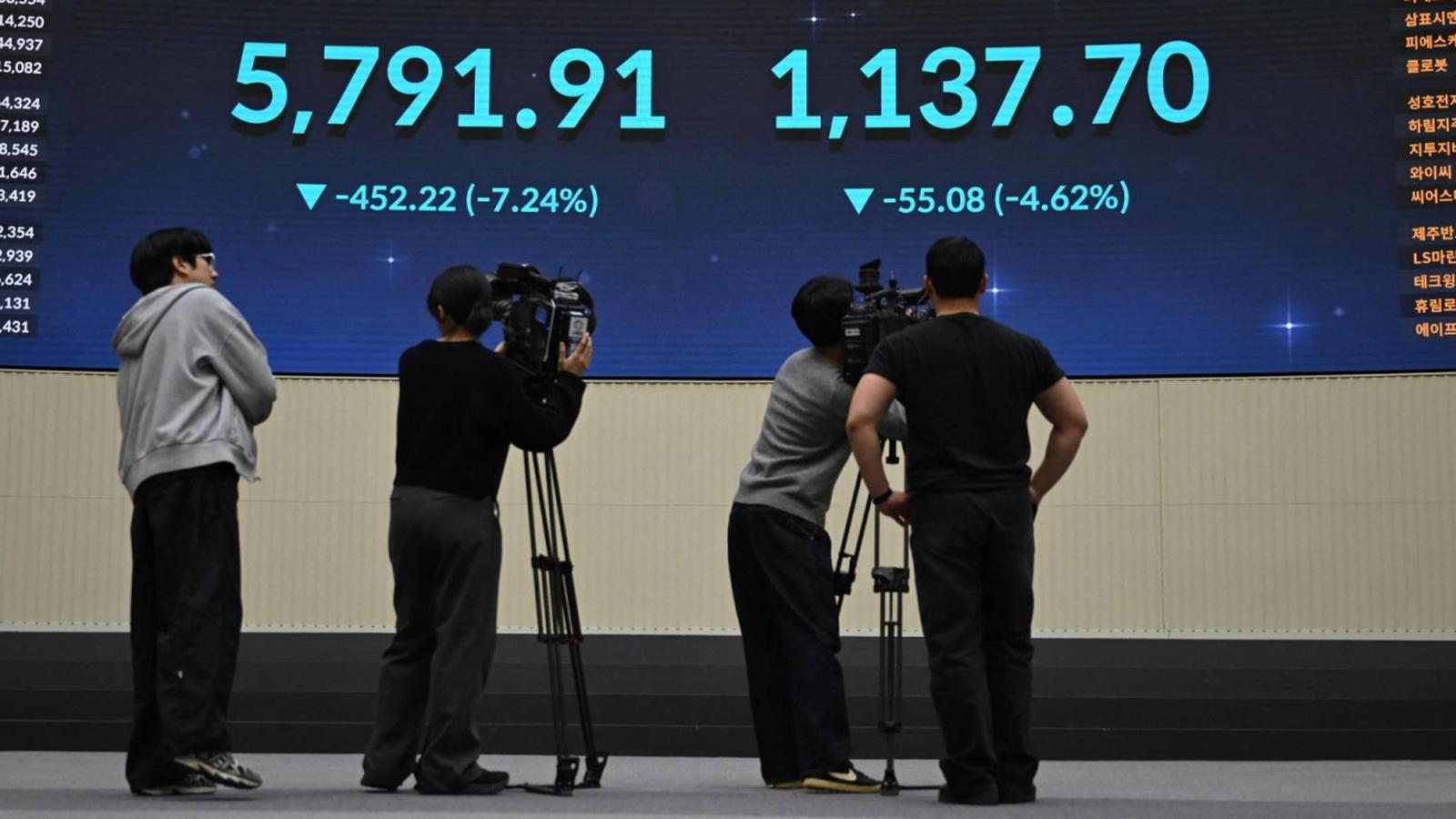
SEOUL (Azat TV) – South Korea’s benchmark Kospi stock index suffered a sharp contraction on Wednesday, July 29, 2026, closing 6% lower at 5,663.24 after plunging more than 8% earlier in the trading session. According to reports from the Associated Press, the dramatic rout was primarily driven by a massive sell-off in major semiconductor manufacturers, as global investors increasingly question the commercial viability and near-term returns of massive corporate expenditures on artificial intelligence (AI) infrastructure.
The downturn in Seoul was spearheaded by a 9.4% drop in the shares of SK Hynix, a critical supplier of high-bandwidth memory chips. The steep decline occurred despite the company reporting an operating profit that soared nearly sixfold compared to the previous year. However, because the final figures fell short of consensus analyst forecasts, investors reacted aggressively, highlighting the razor-thin margin for error currently afforded to high-flying tech firms. Samsung Electronics, another global technology heavyweight, saw its shares decline by 4.8% during the same session, reflecting a broader retreat from South Korea’s dominant technology export sector.
Market analysts note that the semiconductor sector has entered a highly sensitive phase. Over the past two years, valuations for companies like SK Hynix, Samsung, and U.S.-based Micron Technology have climbed rapidly on the back of explosive demand for AI hardware. However, a growing cohort of institutional investors is demanding concrete evidence of revenue generation from software and consumer-facing AI products to justify these capital expenditure levels. This skepticism has been further exacerbated by reports of rapid progress within China toward developing cheaper, advanced AI models, which could potentially commoditize the market and erode the high-margin dominance currently enjoyed by South Korean and American hardware manufacturers.
Regional Contagion and the Kyushu Earthquake Factor
The wave of risk aversion quickly rippled through neighboring Asian financial markets, though the domestic outcomes remained mixed. In Tokyo, the Nikkei 225 index shed early gains to close 1.5% lower at 61,434.19. The pain was concentrated in Japan’s semiconductor supply chain, with chipmaking equipment giant Tokyo Electron sinking 10.6% and chip testing specialist Lasertec Corp. dropping 8.3%.
The Japanese market also had to digest the immediate economic fallout from a major earthquake that struck the southern Kyushu region on Tuesday. Kyushu is a vital hub for Japan’s automotive and semiconductor manufacturing industries, and memories of previous seismic events causing prolonged industrial disruptions weighed heavily on sentiment. Shares of Nippon Paper, which operates a mill in the disaster zone that sustained severe physical damage, fell 2.1% as investors assessed the potential timeline for operational recovery.
Elsewhere in the region, Taiwan’s Taiex index, which is heavily weighted toward semiconductor giant TSMC, dropped 3.8%. In contrast, Chinese and Hong Kong markets managed to decouple from the regional sell-off. The Shanghai Composite index reversed its morning losses to finish 0.4% higher at 3,830.02, while Hong Kong’s Hang Seng index gained 1.8% to close at 25,762.80. Analysts attribute this resilience to domestic policy support and a rotation of capital out of highly valued tech export stocks into cheaper defensive assets. Meanwhile, Australia’s S&P/ASX 200 index added 1% to reach 9,038.60, supported by government data showing moderate inflation, which eased domestic pressure on the central bank to hike interest rates.
Geopolitical Volatility: Oil Surges Amid Middle East Escalation
Adding a layer of macroeconomic complexity to the equity market rout, global oil prices surged on Wednesday, reversing a temporary stabilization. The geopolitical premium returned to energy markets after a brief three-day pause in fighting in the Middle East was shattered by fresh military engagements. Jordan’s military confirmed that its air defense systems intercepted five missiles launched from Iran early Wednesday morning. This escalation followed an announcement by the United States military that it had successfully neutralized an Iranian missile barrage targeted at American forces stationed in the region.
The resumption of hostilities has renewed fears of a wider regional conflict that could directly threaten shipping corridors, particularly the Strait of Hormuz. The strategic waterway, which connects the Persian Gulf with the Gulf of Oman, serves as the transit route for approximately 20% of the world’s traded petroleum. In response to the heightened security risks, Brent crude, the international benchmark, jumped 3.1% to $84.58 per barrel. Similarly, West Texas Intermediate (WTI), the U.S. benchmark, gained 3.6% to trade at $82.14 per barrel.
Higher energy prices present a direct challenge to global central banks, which have been striving to bring inflation back down to target levels. A sustained increase in energy costs could keep headline inflation elevated, thereby limiting the ability of monetary authorities to cut interest rates, which in turn increases the cost of capital for capital-intensive sectors like technology and manufacturing.
Macroeconomic Outlook: Inflation and the Path Ahead
The current market dynamics illustrate the delicate balancing act facing global investors in the second half of 2026. On one hand, corporate earnings in traditional sectors remain relatively resilient. On Wall Street, the S&P 500 rose 0.2% and the Dow Jones Industrial Average added 1% on Tuesday, supported by strong consumer-packaged goods earnings, such as Coca-Cola’s 5% stock jump following a 7% revenue increase. On the other hand, the high-growth technology sector is experiencing a severe valuation reset.
During Tuesday’s trading session in New York, major semiconductor and technology hardware producers suffered heavy losses. Micron Technology, which had seen its stock price more than triple earlier in the year due to intense AI demand, plunged 8.9%. Advanced Micro Devices (AMD) fell 8.1%, and semiconductor equipment manufacturer Applied Materials dropped 7.8%. This preemptive sell-off in Western markets set a grim tone for the Asian trading session that followed.
As the market navigates this period of high volatility, the focus is shifting from speculative promise to realized profitability. While the structural demand for advanced computing power remains intact, the premium placed on these stocks means that even minor earnings misses or slightly conservative forward guidance can trigger massive capital outflows. For export-oriented economies like South Korea and Taiwan, whose equity indices are heavily weighted toward hardware manufacturing, this shift in investor sentiment represents a significant macroeconomic headwind that could influence broader economic growth projections for the remainder of the fiscal year.