


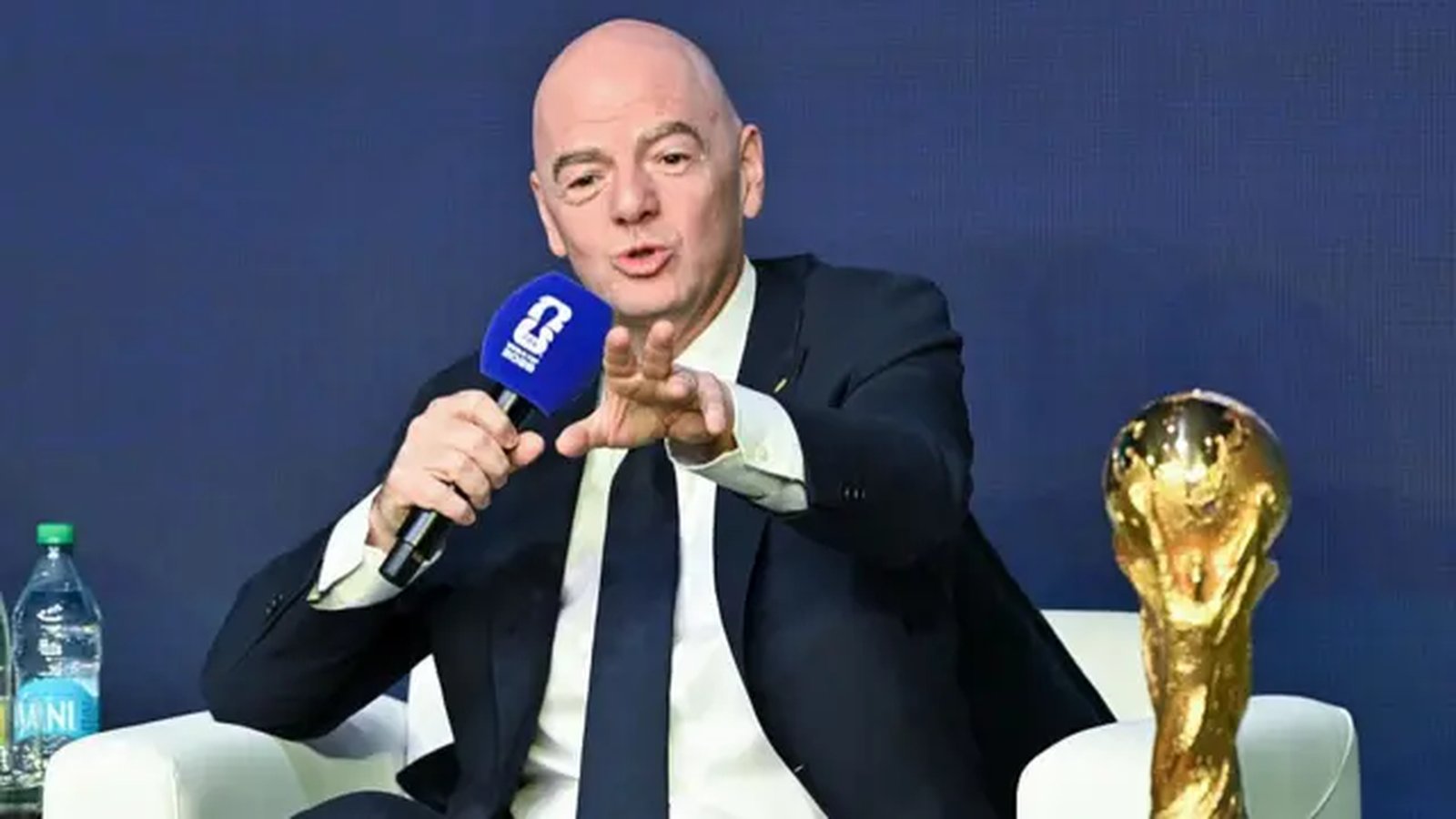
A profound existential crisis has gripped global football as UEFA, the powerhouse governing body of European soccer, convenes an emergency meeting to formalize its resistance against FIFA’s controversial plans to sell commercial stakes in the World Cup. The proposal, championed by FIFA President Gianni Infantino, aims to raise up to $20 billion by selling equity in a newly created commercial subsidiary. In response, European football leaders are preparing to discuss unprecedented countermeasures, including a potential boycott of future World Cup tournaments, a move that could effectively fracture the global game.
The $20 Billion Financial Vehicle: FIFA Forward Enterprise
According to documents and statements released by FIFA, the core of Gianni Infantino’s plan involves establishing a new commercial subsidiary named FIFA Forward Enterprise (FFE). This entity would assume absolute control over the event operations and commercial rights of FIFA’s tournament portfolio, including lucrative broadcasting, sponsorship, ticketing, and licensing deals for the men’s, women’s, and youth World Cups.
To fund this venture, FIFA has received an official proposal from Thrive Eternal, a permanent holding company led by venture capitalist Josh Kushner, brother of Jared Kushner (son-in-law of U.S. President Donald Trump). Unlike typical private equity firms that seek to liquidate their investments within five to ten years, a permanent holding company aims to retain its stake indefinitely, representing a permanent transfer of commercial control over football’s premier asset.
To secure the votes of FIFA’s 211 member associations, Infantino is offering a massive financial sweetener. Upon voting to approve the creation of FFE, each national association would receive an immediate windfall of $20 million. Furthermore, three additional guaranteed payments scheduled between 2027 and 2038 would bring the total package to $86 million per association. While FIFA insists it would maintain sporting control over FFE via majority board representation and exclusive authority over competition rules and the international match calendar, critics argue that multibillion-dollar investors will inevitably demand a say in key operational decisions.
UEFA’s Resistance and the Threat of a Boycott
UEFA was swift to condemn the plans, stating that the proposal “crosses a line that football’s governing institutions should never cross” and accusing FIFA of attempting to “enrich themselves” at the expense of the sport’s integrity. Sources have confirmed to ESPN and the BBC that UEFA’s 55 member associations, which include reigning world champions Spain, are holding an emergency session to formalize their opposition.
A boycott by European nations represents a nuclear option. UEFA represents the financial and competitive heart of global football, controlling the UEFA Champions League and housing the world’s most lucrative domestic competitions, including the English Premier League, Spain’s LaLiga, and Germany’s Bundesliga. Furthermore, five of the seven men’s World Cup winners in the 21st century have come from Europe. If UEFA withdraws its teams, the World Cup would lose its sporting legitimacy and commercial value.
This is not the first time UEFA has used the threat of a boycott to halt FIFA’s expansionist policies. In 2021, when Infantino proposed shifting the World Cup to a biennial cycle, a coordinated backlash from UEFA and South America’s CONMEBOL forced the FIFA president to back down. The current conflict is also fueled by deep institutional friction, with UEFA viewing the expanded FIFA Club World Cup as a direct commercial threat to the Champions League.
The Power Dynamics of the One-Member, One-Vote System
The political battleground within FIFA favors Infantino’s math, despite UEFA’s immense institutional power. FIFA operates on a democratic “one-member, one-vote” system. While UEFA holds the vast majority of the sport’s commercial power, it possesses only 55 of the 211 votes in the FIFA Congress.
To pass the FFE proposal, Infantino requires only a simple majority. The remaining 156 member associations across Africa (54), Asia (47), North and Central America (Concacaf – 41), and Oceania (13) stand to gain immense, transformative wealth from the promised $20 million upfront payment. For smaller associations such as Gibraltar, San Marino, or New Caledonia, this funding is a once-in-a-generation windfall that cannot easily be rejected. Consequently, Infantino’s strategy relies on mobilizing the global majority to override European opposition.
The Risks of Financialization and Fan Alienation
The prospect of private investors controlling the World Cup has raised severe alarms among commercial advisers and supporter groups alike. Experts warn that the financialization of the tournament could lead to aggressive commercial exploitation.
Omar Chaudhuri, Chief Intelligence Officer of London-based commercial brand advisers Twenty First Group, notes that the World Cup’s primary commercial power lies in its scarcity, as it is held only once every four years. Introducing outside investors seeking constant revenue growth could pressure FIFA to expand the tournament further, perhaps to 64 teams, or to host matches exclusively in high-profit regions like the United States.
Additionally, there are fears that investors could push for direct-to-consumer (D2C) streaming models, forcing fans to pay subscription fees directly to FIFA rather than watching matches on free-to-air television. Supporter groups have also voiced deep concern over the potential for skyrocketing ticket prices and the commercialization of in-game elements, such as monetizing mandatory hydration breaks for broadcasters.
Pau López Gaitán, an academic specializing in private equity in football, suggests that FIFA may have actually undervalued its asset, which could attract competing bids from state-backed sovereign wealth funds in the Middle East. Saudi Arabia, which is scheduled to host the 2034 World Cup, and Qatar have already established massive footprints in global sports investment, and any bidding war could further escalate the commercialization of the international game.
Timeline and Existential Stakes
In a letter dispatched to member associations, Infantino has set a strict deadline of September 19, 2026, for a final decision on the proposal. This leaves UEFA and its allies less than eight weeks to coordinate their opposition and attempt to convince non-European associations to reject the financial package.
If UEFA fails to block the vote, the resulting institutional split could rewrite the fabric of international sports governance. Some European officials are reportedly considering withdrawing from FIFA entirely. In such a scenario, UEFA could expand the European Championship to include invited powerhouses from South America and other continents, creating a direct rival to the World Cup that would command superior commercial appeal. With Infantino up for reelection in 2027, the outcome of this dispute will determine not only the future of the World Cup but also the survival of his presidency.