


FCC Signals Support for SpaceX Amid Global Satellite Internet Race
In a pivotal moment for the future of satellite internet, the Federal Communications Commission (FCC) is signaling robust support for SpaceX’s Starlink initiative. At the recent New America LEO Satellite Policy Symposium, Jay Schwarz, chief of the FCC’s Space Bureau, underscored the commission’s commitment to accelerating reforms that could allow low-Earth orbit (LEO) satellite systems, like Starlink and Amazon’s Project Kuiper (now Amazon Leo), to deliver gigabit-class broadband to American homes.
Schwarz emphasized that updating decades-old technical restrictions on radio emissions—known as “equivalent power flux density” rules—could unlock speeds comparable to ground-based fiber, especially in rural areas long underserved by traditional ISPs. In April, the FCC voted to modernize these rules, acknowledging their role as outdated barriers to high-speed satellite internet. Schwarz argued that reforming these inefficiencies would foster healthy competition not only among satellite providers but also with terrestrial networks, ultimately benefiting consumers by expanding choice and improving quality.
This regulatory momentum comes at a time when SpaceX is seeking approval for nearly 20,000 additional Starlink satellites and expanded radio spectrum usage. The FCC’s willingness to fast-track large-scale satellite license approvals reflects a broader urgency, prompted in part by China’s aggressive push for space dominance. Schwarz warned that “it’s space race 2.0,” with the Chinese Communist Party aiming to control orbits and offer a state-censored internet alternative worldwide.
Yet, the path forward is not without hurdles. Satellite approvals face opposition from environmentalists and astronomers concerned about light pollution and atmospheric impacts. The FCC’s challenge will be to balance innovation with responsible stewardship, ensuring sufficient radio spectrum for all while preventing anti-competitive practices among satellite firms.
Blue Origin’s Mars Mission: A New Challenger Emerges
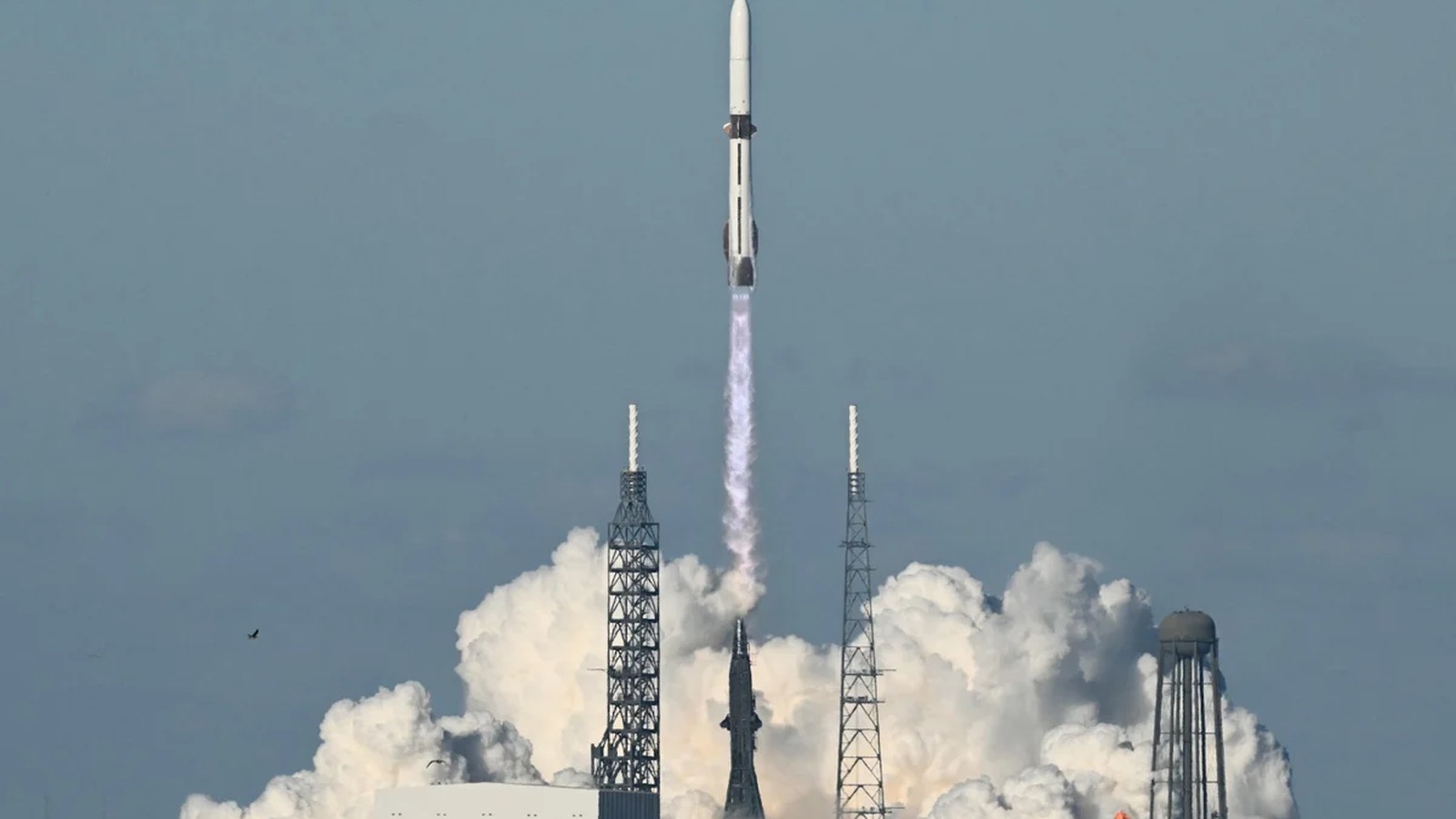
While SpaceX pursues regulatory breakthroughs, its primary rival, Blue Origin, scored a major technological win. On November 13, 2025, Blue Origin’s New Glenn rocket successfully launched NASA’s ESCAPADE mission to Mars and achieved a controlled landing of its massive first-stage booster on a drone ship in the Atlantic. This milestone not only aligns Blue Origin’s reusable rocket technology with SpaceX’s pioneering Falcon 9 but also strengthens its case for lucrative NASA contracts.
The ESCAPADE mission, designed to study Mars’s magnetosphere and the impact of solar wind, marks Blue Origin’s second orbital flight and a leap forward in reliability. The reusable New Glenn booster, powered by seven BE-4 engines, demonstrated its ability to withstand the rigors of launch and return, with plans to reuse it for up to 25 flights. Blue Origin’s CEO Dave Limp declared that the company would “move heaven and Earth” to support NASA’s lunar ambitions, especially as NASA reopens competition for the Artemis III moon lander—a role initially earmarked for SpaceX’s Starship, now facing development delays.
Notably, the successful landing took place amidst challenging geomagnetic conditions following a solar storm, showcasing Blue Origin’s adaptability. The twin ESCAPADE spacecraft are now en route to Mars, with a 22-month mission to unlock new insights into planetary atmospheric erosion—a key stepping stone for future human exploration.
Reusable Rockets: Redefining Commercial Space Access
Blue Origin’s achievement in landing its building-sized booster brings the company into direct competition with SpaceX’s Falcon 9, which revolutionized launch economics through reusability. The recoverability of rockets is critical to reducing costs and increasing launch frequency, making space more accessible and sustainable. The New Glenn’s flawless performance highlights the growing reliability of reusable launch systems and sets the stage for a new era in commercial spaceflight.
With both SpaceX and Blue Origin vying for NASA and commercial contracts, the pressure to innovate is intense. SpaceX’s Starship megarocket, although delayed, remains central to plans for lunar exploration and interplanetary missions. Blue Origin’s recent success, however, may tilt the balance in upcoming contract competitions, especially as NASA reconsiders its options for the Artemis III mission.
The Global Stakes: Regulatory Reform and the New Space Race
At the heart of this competitive landscape is the FCC’s ongoing effort to streamline regulatory processes. Schwarz’s remarks at the symposium revealed a vision for a licensing system that is predictable, swift, and less bureaucratic—one that allows engineers to focus on innovation rather than navigating regulatory mazes. The FCC aims to automate approvals, increase throughput, and ensure the radio spectrum is used efficiently, preventing dominant players from locking out competitors.
These reforms are not only about fostering domestic competition but also about maintaining U.S. leadership in space technology as China races to offer its own satellite internet—potentially with strict censorship controls. The FCC’s reforms, coupled with technological advances from SpaceX and Blue Origin, will shape the global space race in the years ahead.
As commercial space ventures push the boundaries of what’s possible, the interplay between regulatory bodies, environmental concerns, and technological innovation will determine who leads the next generation of space exploration and communication.
SpaceX’s position at the forefront of satellite internet and reusable rockets is no longer unchallenged. Regulatory reforms and Blue Origin’s advances signal a more dynamic, competitive era, where agility and adaptability—not just innovation—will decide which companies shape humanity’s future in space.