


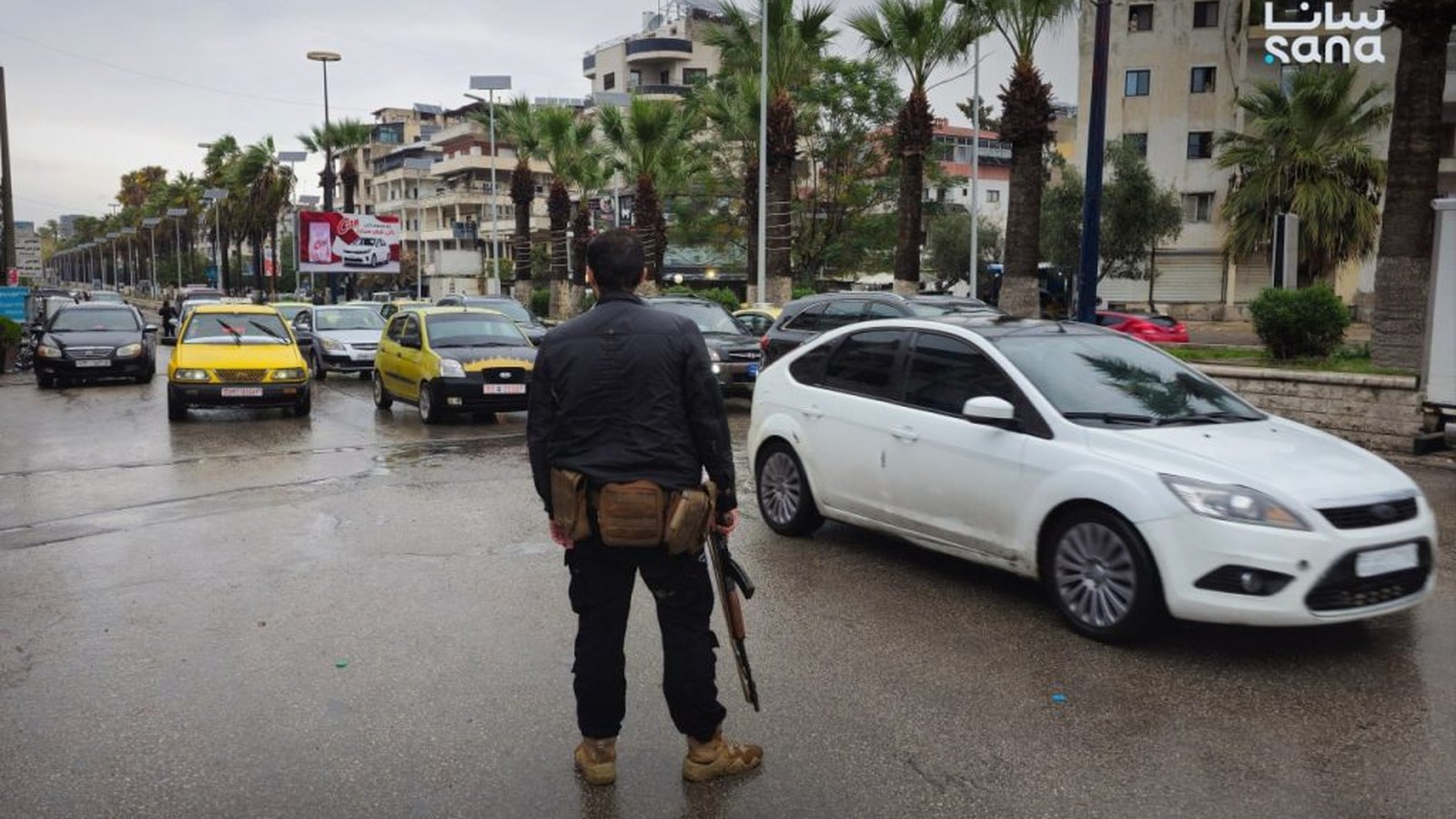
Homs Under Curfew: Tensions Boil Over After Deadly Attack
The city of Homs, long regarded as a crossroads of Syria’s diverse communities, finds itself once again at the epicenter of unrest. After a married couple from a prominent Bedouin tribe were found dead in their home south of the city on November 23, 2025, local authorities quickly imposed a sweeping curfew. The restrictions, initially set for Sunday evening, were extended through Monday as security forces scrambled to stabilize the situation (Al Jazeera).
The Interior Ministry stated that the curfew covered not only predominantly Alawite districts but also mixed and Sunni-majority areas. Officials insisted the measures aimed to “preserve safety” amid escalating fear. In the words of Major General Murhaf al-Naasan, head of internal security in Homs, the killings appeared intended “to fuel sectarian divisions and undermine stability in the region.” However, police chief Colonel Bilal al-Aswad later downplayed sectarian motives, while spokesperson Nour Eddin al-Baba suggested that slogans found at the crime scene were likely planted “to mislead investigators and incite strife.”
The aftermath was swift and unnerving. Armed men from the Bani Khalid tribe, angered by the killings, reportedly moved through Alawite-majority and mixed neighborhoods, torching properties and firing into the air (Syrian Observatory for Human Rights). While no further deaths were reported, the mood in Homs shifted palpably—residents described a climate of fear and uncertainty, recalling the city’s history as a flashpoint for communal violence.
Alawite Protests: Calls for Federalism and Protection
Against this backdrop, mass protests erupted across Syria’s coastal regions and into Homs. The demonstrations, urged by Ghazal Ghazal—the top religious leader of the Alawite community—were a direct response to both the violence and long-standing grievances. Thousands of Alawites marched in cities like Tartous, Latakia, Baniyas, Jableh, and Homs, carrying banners that called for federalism, political decentralization, and the release of detainees (Tehran Times).
Protesters, including some Christians, chanted slogans rejecting what they described as government-sponsored sectarian violence. Their demands were not only for protection but also for deep political reforms. The Supreme Islamic Alawite Council circulated videos encouraging demonstrators to document sit-ins and to seek solidarity from other minority communities, notably the Kurds in Rojava and the Druze in Suwayda.
Yet, the protests were not without risk. Local reports indicated that Syrian security forces fired on and detained some demonstrators in multiple cities, with injuries and arrests recorded. The Alawite Council also issued an urgent appeal to the United Nations Security Council, claiming that “Alawite neighborhoods in Homs had been subjected to a barbaric armed attack carried out by groups of Bedouins supported by elements of the de facto [interim] authorities.” The Council blamed the interim government in Damascus for failing to ensure the safety of Alawite civilians.
Government Response: Warnings and Reassurances
The Syrian government, led since December 2024 by President Ahmed al-Sharaa after the ousting of Bashar al-Assad, is navigating a delicate balance. The Interior Ministry, through spokesperson Nour Eddin al-Baba, repeatedly emphasized the state’s role as the “sole guarantor” of Syrians’ rights and safety (SANA). Al-Baba assured the public that internal security units had been deployed to protect protest gatherings and that the right to freedom of expression would be respected, so long as it remained within legal bounds and did not disrupt civil peace.
However, al-Baba also issued stern warnings against “external calls that seek to sow division and destabilize the social fabric,” referencing parties allegedly based outside Syria and disconnected from local realities. The Ministry cautioned against sectarian slogans and rhetoric in some protests, arguing that such acts reveal agendas misaligned with genuine community demands.
Security forces arrested at least 120 individuals suspected of involvement in violence, though details remained sparse. The government’s public messaging leaned heavily on themes of unity, legality, and resistance to manipulation. In his visits to Homs, al-Baba described conversations with residents as “productive and positive,” seeking to reassure those shaken by recent events.
Historical Context: A City Haunted by Division
Homs’s current crisis cannot be divorced from its tumultuous recent history. The city was a hub of anti-government protest during the 2011 uprising, and its sectarian fabric—woven from Alawite, Sunni, Christian, and other communities—has often been tested by violence and mistrust. Bashar al-Assad’s Alawite background colored political dynamics for years, and the March 2025 crackdown, in which thousands of Alawite civilians were reportedly killed by government forces, left deep scars.
Since that crackdown, the Alawite community has been disarmed by Damascus and exposed to renewed vulnerabilities: sectarian attacks, disappearances, and executions. The current protests are both a reaction to immediate violence and a culmination of years of marginalization and fear. For many, calls for federalism and decentralization are not mere slogans—they are lifelines in a country where central authority has repeatedly failed to protect minorities.
The Path Ahead: Uncertainty and Fragile Hopes
President Ahmed al-Sharaa’s interim government has publicly pledged to protect minority rights, but its ability to deliver remains uncertain. The extension of curfews and rapid deployment of security forces may have curbed immediate violence, but the underlying tensions are unresolved. The Alawite protests, marked by calls for systemic change, signal both deep frustration and a yearning for a future beyond sectarian strife.
In the words of a local protester: “We want peace, but we also want justice. Without justice, peace is just silence.” For Homs and Syria’s coastal communities, the struggle for both continues—caught between hope, trauma, and the ever-present threat of manipulation.
Assessment: The events in Homs expose the precarious fault lines beneath Syria’s social fabric. While the government seeks to project stability and inclusivity, the persistence of sectarian violence and communal distrust highlights how far the country remains from genuine reconciliation. The Alawite protests, calls for federalism, and demands for protection reflect both historical wounds and an urgent plea for new political solutions. In this moment, Syria’s future hinges not just on security measures, but on its capacity to foster trust and address the grievances of all its people.