


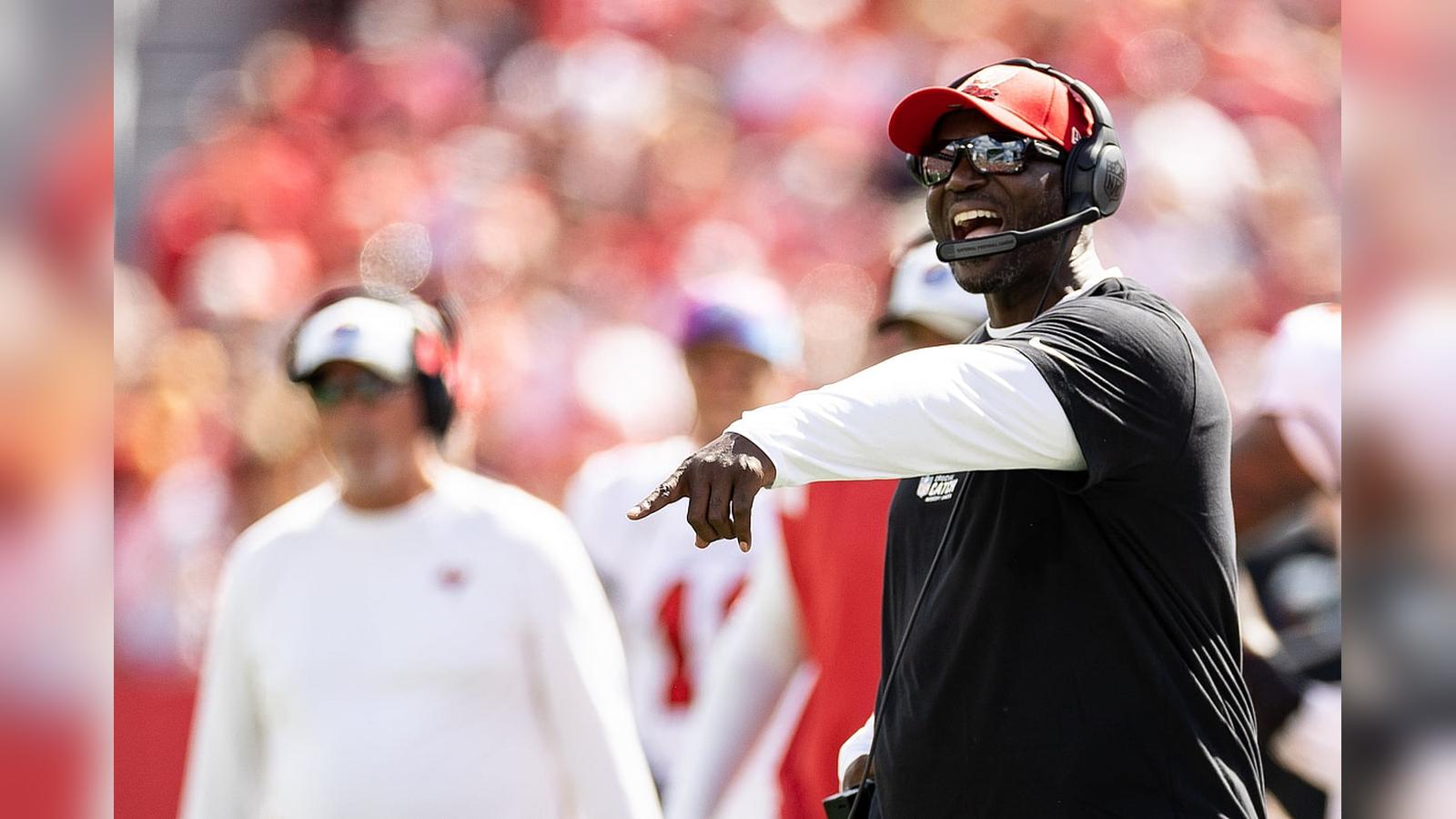
Following a frustrating Week 1 defeat against the Cincinnati Bengals, Tampa Bay Buccaneers head coach Todd Bowles is focusing heavily on mental discipline and fundamental execution as the team prepares for a crucial Week 2 matchup against the Cleveland Browns. The spotlight has fallen directly on veteran linebacker Alex Anzalone and several other high-profile captains who struggled with execution, prompting public calls for accountability from the coaching staff.
Anzalone, who transitioned to the critical weakside “Mo” linebacker position in Bowles’ defensive scheme during the 2026 offseason, found himself at the center of the defensive breakdowns. Despite recording seven tackles, his performance was marred by poor coverage angles, most notably on a touchdown pass to Bengals tight end Mike Gesicki, and several missed tackles in critical situations. Speaking on WFLA-TV, as reported by JoeBucsFan, Bowles noted that Anzalone “just got overexcited,” attributing the veteran’s uncharacteristic struggles to mental errors rather than physical limitations. The coaching staff’s frustration stems from the fact that healthy, seasoned leaders were the ones committing rookie-level mistakes.
Tactical Discipline and Veteran Accountability
The defensive lapses in Week 1 extended beyond Anzalone. According to an evaluation by AtoZ Sports, several key contributors must make immediate adjustments if Tampa Bay hopes to avoid a 0-2 start. Bowles has stressed that veteran leadership is the foundation of his defensive philosophy, making the mental lapses of captains like Anzalone and defensive tackle Vita Vea particularly damaging.
Vea, who signed a lucrative contract extension during the offseason, was largely a non-factor in the season opener, registering only one pressure on 26 pass-rush snaps and recording zero run stops. Bowles has repeatedly emphasized that the Buccaneers’ defense “starts and ends” with Vea, calling him the engine of the defensive front. With fellow defensive lineman Calijah Kancey acting as the lone consistent disruptor in Week 1, Vea’s lack of production placed immense pressure on the secondary and linebacker corps, exacerbating Anzalone’s coverage difficulties.
Restoring Cohesion to the Defensive Front
Another major area of concern is the pass rush, where rookie edge rusher Rueben Bain Jr. struggled to maintain lane discipline. In his NFL debut, the 15th overall pick registered zero pressures on 24 pass-rush snaps according to PFF. Bowles revealed that Bain became frustrated after being chipped and stalled by the Bengals’ offensive line, leading him to abandon his schematic assignments.
By attempting to “play superhero” and freelancing into occupied gaps, Bain disrupted the coordination of the entire pass-rush unit. Bowles explained that when one defender freelances, it often results in two players occupying the same lane, allowing the offensive line to easily neutralize both. For the Buccaneers to successfully pressure Cleveland’s passing game in Week 2, Bain and the rest of the defensive front must trust the defensive scheme and maintain their rush lanes.
Offensive Interior and Tight End Execution
The issues were not isolated to the defensive side of the ball. On offense, center Cody Mauch struggled heavily against the Bengals’ interior defensive line, allowing a team-high three pressures. Mauch’s inability to anchor the pocket prevented quarterback Baker Mayfield from stepping into his throws, disrupting the timing of the passing game.
Additionally, tight end Cade Otton, who also received a significant offseason contract, failed to establish himself as a reliable target. A critical drop by Otton on second-and-long contributed to a drive-killing sequence that ended in a fumble. With the Browns featuring a formidable defense led by linebacker Carson Schwesinger, Otton must bounce back as a blocker and a receiver to provide Mayfield with a dependable safety valve over the middle.
As the Buccaneers host Cleveland, the path to victory relies on correcting these fundamental mistakes. Bowles’ message to his team has been clear: physical talent is secondary to tactical discipline, and the team’s highly-paid veterans must lead by example.