


Institutional Outlook on Ethereum
Fundstrat co-founder and BitMine chairman Tom Lee has identified Ethereum (ETH) as one of the most mispriced assets currently in the global market. Despite a significant price correction from its highs earlier this year, Lee maintains that Ethereum’s fundamental utility as a settlement layer for real-world assets and AI-driven commerce remains robust.
Speaking in a recent market analysis, Lee argued that as global financial assets—including gold, equities, and real estate—migrate to blockchain infrastructure, Ethereum is positioned to capture a significant portion of that value. He suggested that given its 11-year operational track record, the network provides the trust required by institutional investors that newer chains currently lack.
Network Utility and Robinhood Chain
The bullish case for Ethereum is bolstered by recent activity on layer-2 networks. Lee highlighted the success of the Robinhood Chain, which launched on July 1 using Arbitrum technology. According to Lee, the network has already processed over $1 billion in volume, signaling strong product-market fit. This activity, combined with BitMine Immersion Technologies’ recent $49 million acquisition of 27,801 ETH, underscores a continued institutional appetite for the asset.
Lee noted that the integration of 27 million Robinhood users into the ecosystem, who are paying transaction fees in ETH, validates the “Ethereum as money” narrative. While market data shows active addresses on the new chain currently track near 788,000, the broader trend points toward increased everyday utility.
Market Indicators and Future Projections
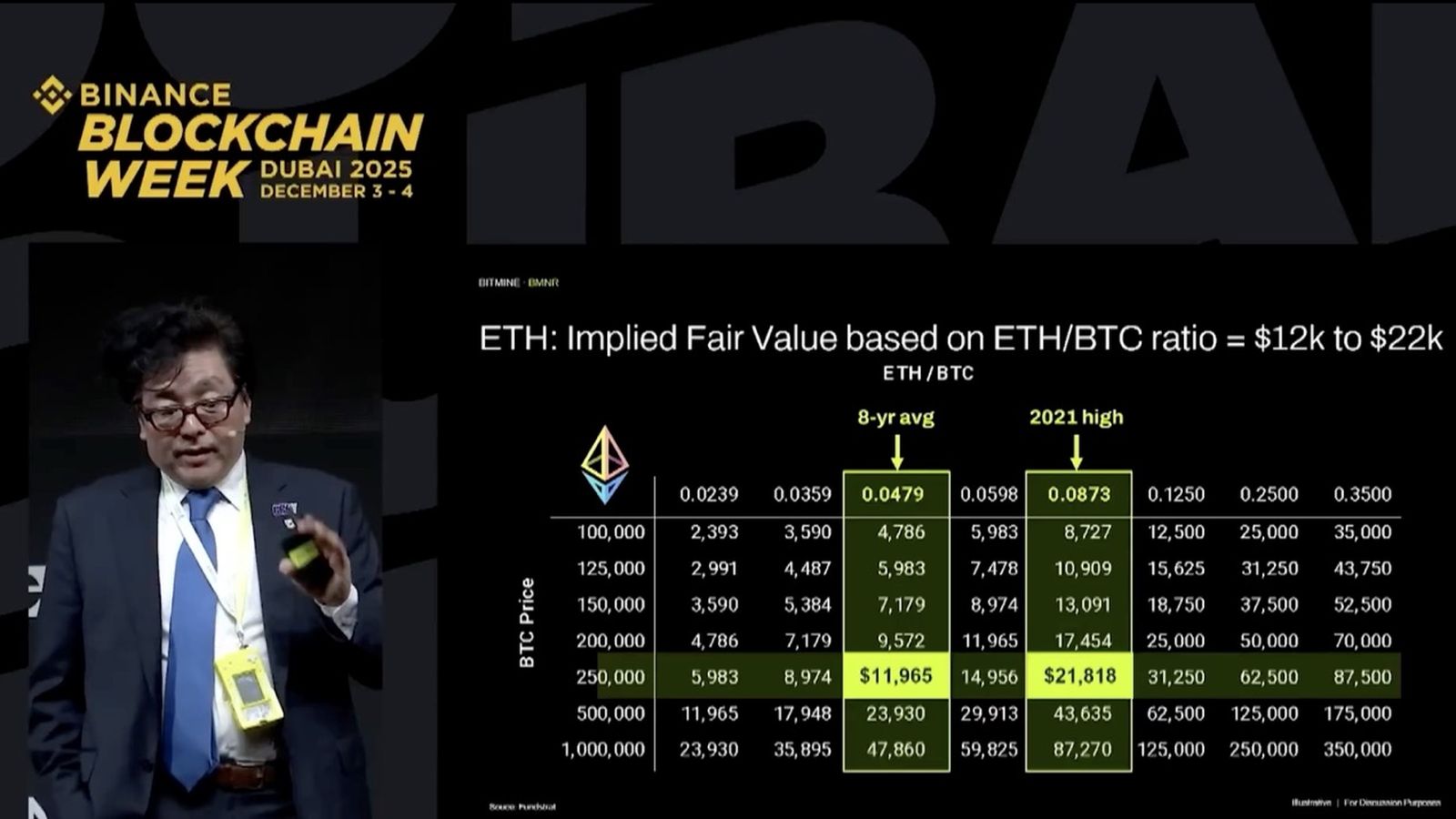
Beyond network adoption, Lee pointed to the ETH/BTC price ratio as a critical indicator of shifting market sentiment. The recent breakout of this ratio above long-term resistance levels suggests a rotation of capital into higher-beta assets, a pattern historically associated with broader market rallies.
Despite the current price lag, Lee expects the current cycle to bottom out between August and October 2026. He remains optimistic about 2027, projecting substantial gains for the sector as AI-driven corporate margin expansion and accommodative central bank policies create a favorable environment for growth.