


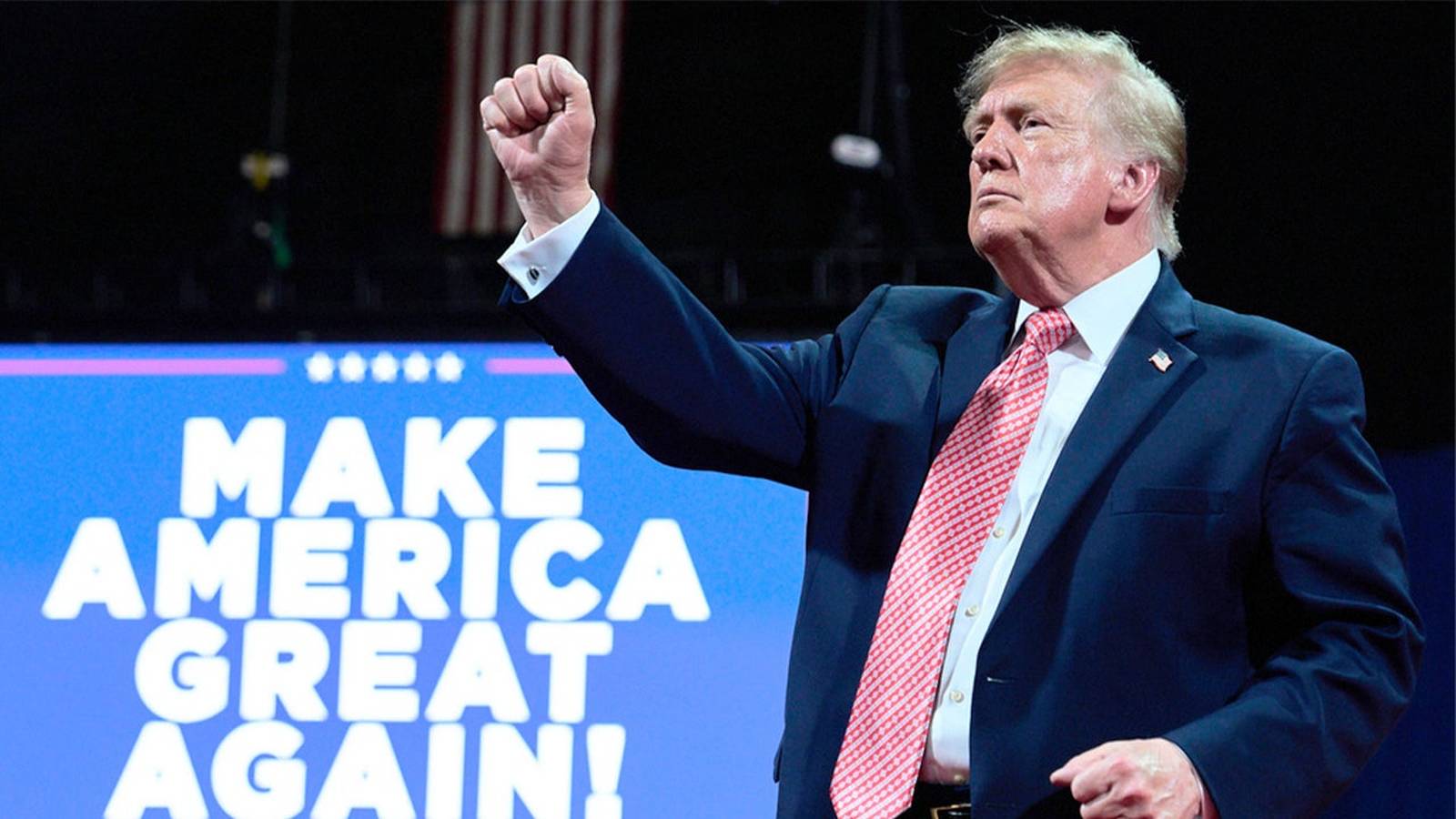
Trump Heads to Battleground North Carolina
With fourteen days remaining until the 2026 midterm elections, President Donald Trump traveled to North Carolina to campaign for Republican Senate candidate Michael Whatley, according to Fox News. The high-profile campaign stop coincides with the expansion of early voting across the critical battleground state, where both parties are locked in an intense fight to secure control of the U.S. Senate. Republicans are striving to defend the open Senate seat against a robust challenge from Democratic contender Roy Cooper, making the state a focal point of national political strategy.
The political landscape in North Carolina reflects the broader national contest, where the GOP is navigating a challenging environment marked by low presidential approval ratings and a grim national mood. Party strategists are relying heavily on presidential visits to mobilize low-propensity base voters. At the same time, recent reports highlight tightening polls and local campaign committee adjustments, underscoring the fierce nature of the competition in a state that Trump carried during the 2024 presidential cycle.
National Financial Landscape and Party Spending
As the clock ticks toward Election Day, financial firepower has become a central battleground. The Republican National Committee (RNC) has actively deployed its massive war chest, transferring more than $50 million to the party’s House and Senate campaign committees. According to Fox News, the RNC funneled over $44 million between mid-August and mid-October, divided evenly between the National Republican Congressional Committee (NRCC) and the National Republican Senatorial Committee (NRSC), with an additional $6 million expected prior to November 3.
This financial injection bolsters Republican efforts to defend seats in districts and states previously considered safe. The RNC entered September with $126 million in cash on hand, driven by fundraising efforts led by President Trump and Vice President JD Vance, who oversees the national committee’s finance operations. Despite Democratic candidates often outraising individual GOP opponents in specific races, the Republican party apparatus maintains a significant overall financial advantage through the RNC and aligned outside organizations.
Early Voting Dynamics Across the Map
The push in North Carolina mirrors extraordinary early voting momentum in other key states. In Georgia, Secretary of State Brad Raffensperger announced that in-person early voting surpassed one million ballots ahead of noon, reaching 1,007,015 votes. This figure represents a 12 percent increase compared to the 894,412 in-person early votes recorded at the exact same point during the 2022 midterm cycle, highlighting heightened voter engagement.
Nationwide, external financial contributions continue to reshape the electoral map. Billionaire Michael Bloomberg is reportedly injecting approximately $80 million into Democratic groups to support congressional targets, as reported by The New York Times and confirmed by major news outlets. These parallel financial waves and accelerating early turnout numbers set the stage for a dramatic final fortnight leading to the November 3 midterm conclusions.
Broad Electoral Stakes and Voter Sentiment
The intensifying campaign in North Carolina is part of a complex national mosaic where both political parties are fighting tooth and nail over congressional majorities. With inflation reports indicating that consumer prices rose 3.7 percent over the past year and 0.6 percent in September alone, economic anxiety remains a primary driver for voters stepping into polling booths. Key Republican figures have emphasized that holding onto working-class coalitions is vital for the party’s legislative survival, noting that economic pressures and cost-of-living concerns are testing voter allegiance across traditional heartland states.
As early voting windows expand in North Carolina and neighboring jurisdictions, local campaign organizers are intensifying their ground operations. Rallies featuring high-profile surrogates and party leaders are designed to overcome voter fatigue and ensure that high-priority demographics cast their ballots before Election Day. The outcome of these efforts will ultimately determine whether the Republican party can successfully protect its Senate majority or if a late Democratic surge will alter the balance of power in Washington.