


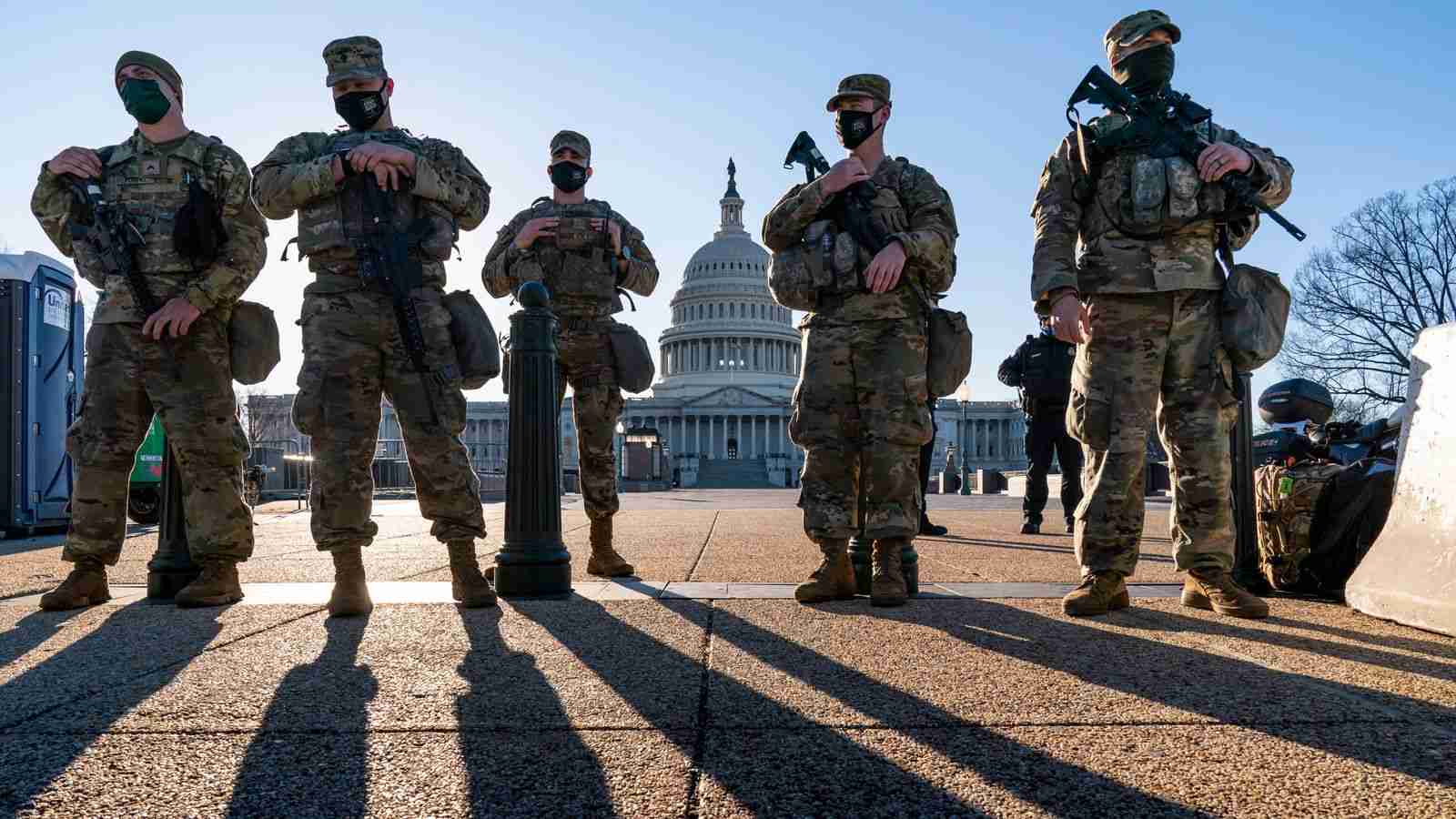
Trump Authorizes National Guard in Chicago: A City at the Center of Federal-State Tensions
In a move that has quickly become the focal point of a heated national debate, President Donald Trump has authorized the deployment of 300 National Guard troops to Chicago. The White House claims the measure is necessary to protect federal officers and property in the face of what it describes as “ongoing violent riots and lawlessness”—a characterization disputed by local leaders and echoed in similar confrontations in other Democratic-led cities. This decision comes as a federal judge in Oregon temporarily blocks the administration’s attempt to send National Guard troops to Portland, citing constitutional limits and questioning the factual basis for such interventions.
Federal Power vs. State Authority: The Legal and Political Showdown
The backdrop to Trump’s move in Chicago is a broader struggle over the limits of federal authority in domestic law enforcement. On Saturday, U.S. District Judge Karin Immergut, a Trump appointee, issued a restraining order halting the deployment of National Guard troops to Portland. Her ruling stated that the President “exceeded his constitutional authority and violated the Tenth Amendment” by federalizing the Oregon National Guard without sufficient justification. Judge Immergut noted there was no evidence of a “danger of a rebellion” in Portland, and that local law enforcement was capable of managing the protests, which have largely remained peaceful despite isolated incidents of violence. She warned that accepting the administration’s arguments would blur the line between civil and military power, risking the erosion of crucial constitutional safeguards (Reuters).
The White House has responded by filing an appeal, maintaining that the president acted lawfully to protect federal assets. Spokeswoman Abigail Jackson told CNN, “President Trump will not turn a blind eye to the lawlessness plaguing American cities.” The administration has already dispatched National Guard troops to Los Angeles and Washington, D.C., fueling accusations from state and local officials that Trump is targeting Democratic cities for political purposes.
Chicago: The Immediate Flashpoint
Chicago became the latest battleground early Saturday when the Illinois governor, JB Pritzker, announced that he had received an ultimatum from the Trump administration: “Call up your troops, or we will.” Pritzker, a Democrat, publicly condemned the demand as “outrageous and un-American,” asserting that the situation in Chicago did not warrant military intervention. “There is no need for military troops on the ground in the State of Illinois,” he stated, emphasizing his administration’s ability to maintain order.
The call for federal intervention followed a tense incident on Chicago’s southwest side, where U.S. Customs and Border Protection agents fired “defensive shots” at a woman who allegedly rammed her car into a federal law enforcement vehicle. The woman, identified as Marimar Martinez, was hospitalized and later taken into FBI custody. Another individual, Anthony Ian Santos Ruiz, was also detained in connection with the incident. Federal authorities described the episode as an escalation by protesters, but local police clarified that their role was limited to documenting the scene and controlling traffic, with the investigation remaining under federal jurisdiction (Axios).
Footage captured by Reuters showed law enforcement deploying gas canisters to disperse crowds near an Immigration and Customs Enforcement facility, as protesters screamed and shielded themselves. “This is Brighton Park, this is not a war zone,” one resident told a reporter, voicing concerns over the militarization of her community.
Local Leadership Pushes Back: Constitutional and Human Concerns
Governor Pritzker and other Illinois officials have continued to challenge the federal narrative, pointing to the largely peaceful nature of protests and raising alarm about the impact of aggressive law enforcement tactics. Pritzker cited previous incidents where masked agents allegedly used chemical agents near an elementary school and zip-tied residents during raids, including children. He has instructed state agencies to investigate possible abuses and assured families that the state will take formal steps to protect children if allegations of misconduct arise.
Meanwhile, Democratic representatives in Illinois have scheduled public statements to address recent ICE raids, highlighting broader concerns about federal overreach and the treatment of vulnerable residents. These issues mirror arguments made by Oregon officials in their lawsuit against Trump’s deployment of the National Guard to Portland, which claims the move violates federal law and the state’s sovereign right to police its own citizens. The suit also argues that Trump’s decision to send troops to “disfavored” Democratic cities infringes on the rights protected by the 10th Amendment (Sky News).
The Broader Context: A National Debate Over Law, Order, and Democracy
Trump’s strategy of deploying federal troops has become emblematic of a larger political divide in the United States. The president has repeatedly described cities like Portland and Chicago as “war-ravaged” and “overrun by domestic terrorists,” framing federal intervention as a necessary measure to restore order. However, local leaders and civil rights advocates argue that this narrative is exaggerated and that existing law enforcement is capable of addressing isolated incidents of violence. They warn that the use of military force risks undermining the delicate balance between federal and state powers, and may further escalate tensions rather than resolve them.
The legal battles now unfolding in courts—from Oregon to California to Washington, D.C.—reflect this complex tug-of-war over the boundaries of presidential authority. Judges have so far shown skepticism toward the administration’s arguments, emphasizing the need for factual justification and cautioning against the normalization of military involvement in civilian affairs.
Community Voices: The Human Impact of Federal Action
On the ground in Chicago, reactions to the National Guard deployment have been deeply divided. Some residents express fear and uncertainty, worried about the presence of troops in their neighborhoods and the possibility of escalating violence. Others, particularly those who support stronger law enforcement, view the move as a necessary step to ensure public safety. The images of gas canisters, defensive gunfire, and armored vehicles serve as stark reminders of the human cost of political conflict—raising urgent questions about whose interests are truly being protected, and at what price.
As the situation unfolds, both in Chicago and nationwide, the lines between public safety, civil liberties, and political maneuvering remain sharply contested. With legal challenges pending and local leaders pushing back, the coming weeks will be critical in determining how—and where—the federal government can intervene in America’s cities.
Assessment: The deployment of National Guard troops to Chicago exemplifies the deep tensions between federal and state authority, and reveals how political narratives can shape—and sometimes distort—responses to complex civic challenges. As legal battles continue, the need for transparent communication and respect for constitutional boundaries remains paramount, lest the pursuit of security undermine the very principles it seeks to uphold.