


Quick Read
- Donald Trump will call Vladimir Putin and Volodymyr Zelenskyy on Monday.
- The talks aim to negotiate a ceasefire in Ukraine’s ongoing war.
- Russia and Ukraine recently held their first direct talks in three years.
- A Russian drone attack in Ukraine’s Sumy region killed nine civilians on Saturday.
- Kremlin and NATO leaders are closely monitoring the planned calls.
Trump’s Planned Calls to Putin and Zelenskyy
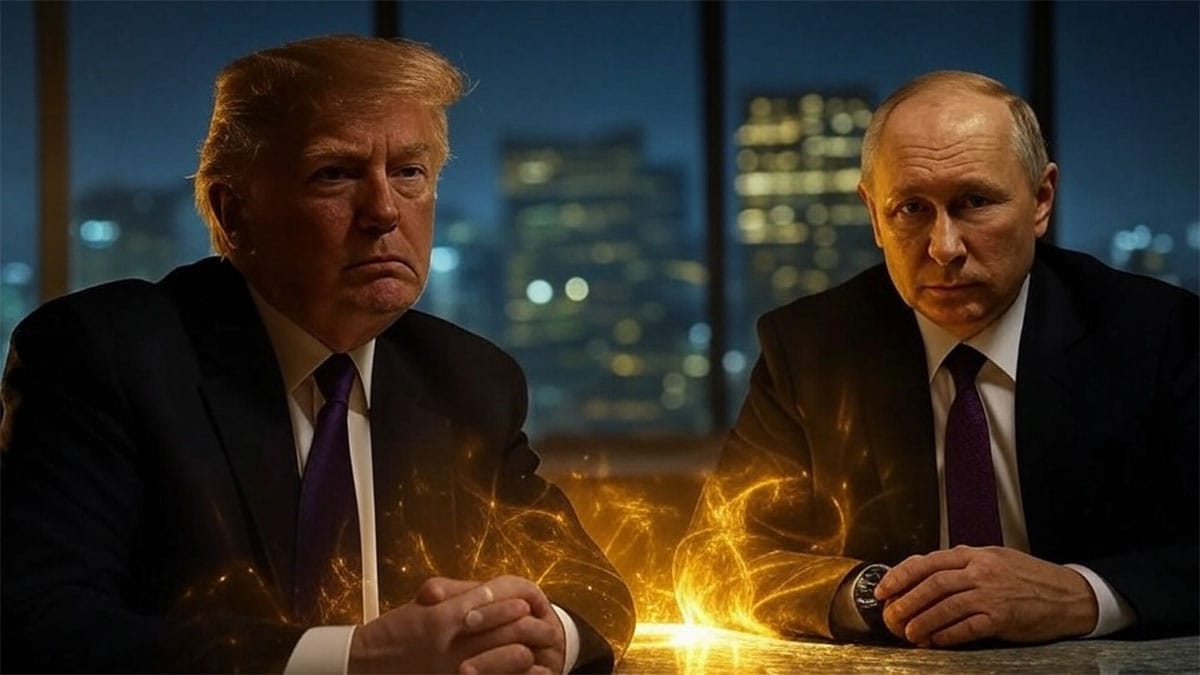
$1 Donald Trump announced plans to hold phone conversations with Russian President Vladimir Putin and Ukrainian President Volodymyr Zelenskyy on Monday. The calls aim to facilitate a ceasefire in the ongoing war in Ukraine, which has caused immense loss of life and displacement since its inception in 2022. Trump shared his intentions via a post on his social media platform, Truth Social, expressing hope that the discussions will lead to a productive outcome.
“Hopefully it will be a productive day, a ceasefire will take place, and this very violent war, a war that should have never happened, will end,” Trump wrote. According to Kremlin spokesperson Dmitry Peskov, preparations for the call with Putin are already underway.
 Background on the Conflict
The war in Ukraine began in February 2022, following Russia’s full-scale invasion. The conflict has since escalated into a protracted war of attrition, with both sides suffering significant military and civilian casualties. Efforts to broker peace have largely been unsuccessful, with the latest round of direct talks between Russia and Ukraine in Istanbul failing to yield a ceasefire agreement.
Despite these challenges, Trump’s planned calls mark a renewed attempt to mediate the conflict. His approach includes not only discussions with Putin and Zelenskyy but also consultations with NATO leaders to align on a unified strategy for peace.
Recent Developments on the Ground
As diplomatic efforts continue, the situation on the ground remains dire. On Saturday, a Russian drone attack targeted a bus evacuating civilians in Bilopillia, a town in Ukraine’s northeastern Sumy region. According to Ukrainian officials, the attack killed nine people and injured seven others. Ukrainian President Volodymyr Zelenskyy condemned the strike as a “deliberate killing of civilians” and called for tougher international sanctions against Russia.
“Without stronger pressure, Russia will not seek real diplomacy,” Zelenskyy stated in a post on the social media platform X (formerly Twitter). The attack underscores the urgent need for a ceasefire, as civilian casualties continue to mount.

Challenges in Ceasefire Negotiations
The path to a ceasefire is fraught with obstacles. Russia has reportedly rejected Ukraine’s proposal for a temporary ceasefire as a first step toward a broader peace settlement. Instead, Moscow has insisted on retaining control over several Ukrainian regions as a condition for ending the war, a demand that Kyiv and its Western allies find unacceptable.
The recent talks in Istanbul, while unproductive in achieving a ceasefire, did result in an agreement for a significant prisoner exchange. Both sides agreed to swap 1,000 prisoners of war, a move that could serve as a confidence-building measure for future negotiations.
The Role of International Actors
International actors, including NATO and the European Union, have played a pivotal role in supporting Ukraine’s defense and pressuring Russia through sanctions. U.K. Foreign Secretary David Lammy and German Chancellor Friedrich Merz have both condemned Russia’s continued aggression and called for immediate action to halt the violence.
In a related development, U.S. Secretary of State Marco Rubio recently suggested the Vatican as a potential venue for future peace talks, highlighting the need for neutral ground to facilitate dialogue between the warring parties.
 What to Expect from Monday’s Calls
Trump’s planned calls with Putin and Zelenskyy are being closely monitored by international observers. While Trump has expressed optimism about the potential for a ceasefire, he has also acknowledged the challenges involved. “He and I will meet, and I think we’ll solve it, or maybe not,” Trump said of Putin during a recent press briefing.
Experts suggest that the outcome of these calls could hinge on several factors, including Russia’s willingness to compromise, Ukraine’s ability to maintain its defensive position, and the level of support from NATO allies. The calls also come at a time when public and political pressure is mounting for a resolution to the conflict, which has caused widespread humanitarian suffering.
The international community awaits the outcome of Monday’s calls with cautious optimism, as the stakes remain high for Ukraine, Russia, and global stability.
Source: Apnews, Lbc