


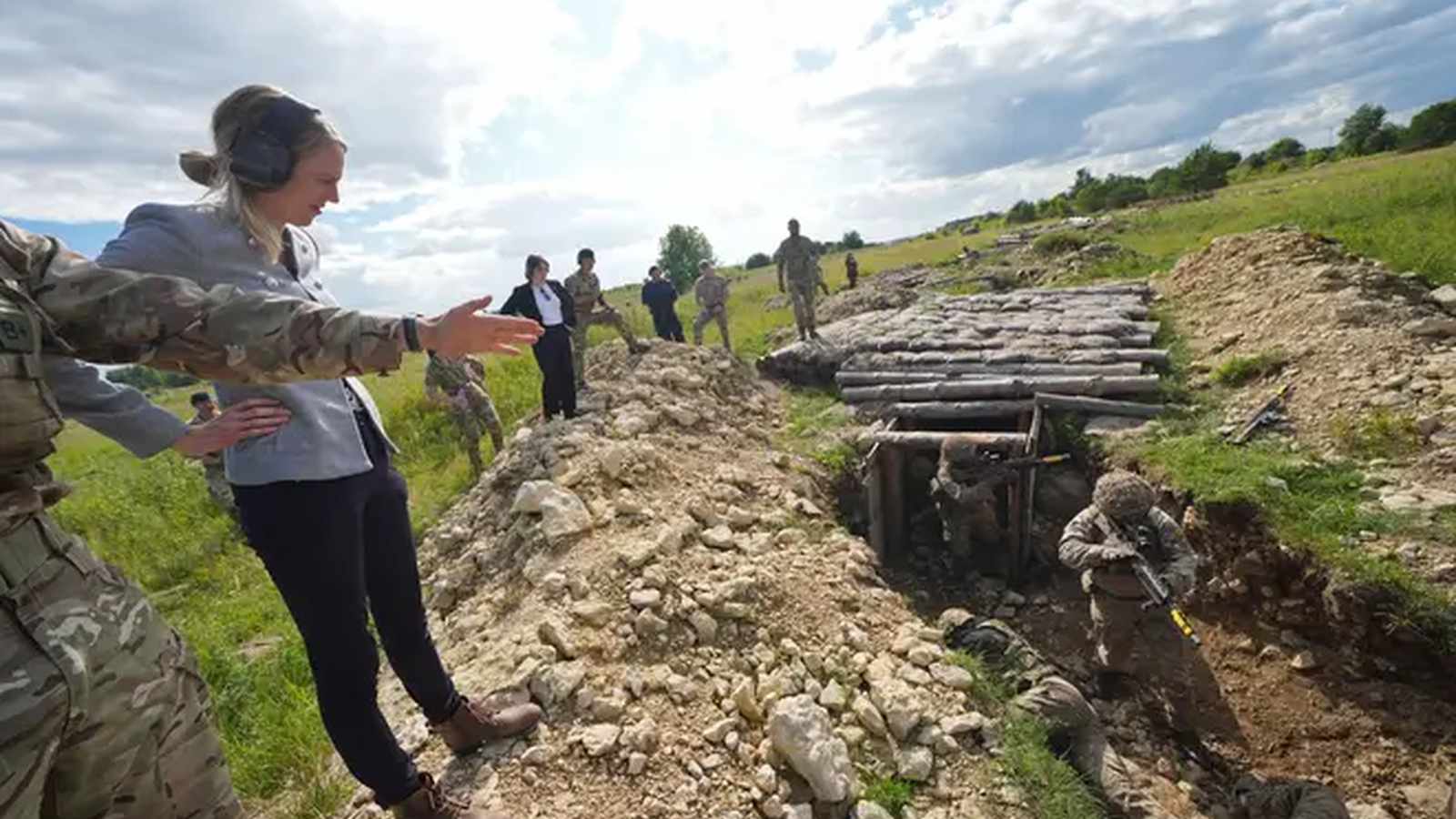
The United Kingdom Ministry of Defence is preparing to execute a comprehensive mobilisation exercise next year to evaluate how effectively the country can recall, equip, and integrate former service personnel into active military formations during a major security crisis. Speaking before the House of Lords national resilience committee, Armed Forces Minister Louise Sandher-Jones announced that a designated cohort drawn from Britain’s 95,000-strong strategic reserve will participate in operational call-up procedures on a scale not undertaken in recent decades, as reported by LBC.
The planned exercise comes at a time when the British Armed Forces are undergoing significant structural pressure. The regular Army has contracted to approximately 71,000 full-time, fully trained personnel, representing its smallest standing force in over two centuries. Concurrently, heightened geopolitical tensions across Europe, active Russian intelligence operations, and direct threats against British defense infrastructure supplying Ukraine have prompted defense planners to test mechanism for rapidly scaling up national combat power should a wider conflict emerge.
Operational Testing and the Strategic Reserve Mandate
The strategic reserve is fundamentally distinct from the United Kingdom’s active volunteer reserve forces, which currently comprise nearly 32,000 part-time personnel serving alongside civilian careers. Under long-standing military regulations, former regular and reserve officers retain a statutory recall liability for life, while enlisted personnel remain subject to potential reactivation for several years following their formal departure from active service.
In her testimony to lawmakers, Sandher-Jones—herself a former Army intelligence officer—acknowledged that the strategic reserve had historically functioned as a passive legal reality rather than an active operational asset. Recalling her own exit from the armed forces, she noted that she simply filed away her reserve obligation and never expected it to be invoked. However, she emphasized that changing global security dynamics mean the defense establishment can no longer afford to treat reserve liabilities as administrative formalities, according to LBC. The upcoming exercise is designed to test every link in the reactivation chain, including individual locating protocols, physical call-up notifications, medical screening, kit issuance, and tactical orientation.
Legislative Reforms and Lowering the Activation Threshold
The mobilisation drill aligns with broader statutory reforms embedded within the proposed Armed Forces Bill. Government ministers announced earlier this year plans to raise the maximum age for veteran recall from 55 to 65, dramatically expanding the pool of available experienced personnel, as detailed by London Loves Business.
Furthermore, new legislation scheduled to take effect next spring will fundamentally alter the legal threshold required to trigger mobilisation. Previously, statutory powers to call up strategic reservists were restricted to extreme scenarios characterized by “national danger, great emergency or attack on the UK.” Under the revised framework, ministers will be empowered to activate former personnel under the expanded criterion of “war-like preparations,” as reported by GB News. This legal modification is intended to allow military leadership to initiate force assembly and logistics staging while conflict is imminent, rather than waiting for an actual strike on British territory.
Data Tracking Gaps and Administrative Roadblocks
Despite the strategic ambitions outlined by the Ministry of Defence, senior defense officials and military analysts have highlighted severe administrative obstacles that could undermine rapid mobilization. Lord Robertson of Port Ellen, who led last year’s Strategic Defence Review, cautioned that defense authorities currently lack accurate records regarding the location, physical fitness, and availability of most individuals within the strategic reserve, according to LBC.
This assessment was reinforced by Chief of the Defence Staff Air Chief Marshal Sir Richard Knighton, who publicly conceded that the United Kingdom lacks an effective system for tracking and routinely engaging personnel once they transition back into civilian life. Lieutenant General Paul Griffiths, commander of Standing Joint Command, emphasized that while veterans possess a vast wealth of operational expertise, modernizing communication channels and database management is an indispensable prerequisite for leveraging those skills effectively during a national emergency.
Regular Army Shrinkage and Financial Strain
The effort to reinvigorate the strategic reserve is taking place against the backdrop of acute operational and budgetary pressures within the active military. The reduction of the regular Army to 71,000 troops has been compounded by severe internal cost-cutting measures. Reports indicate that live-firing exercises have been temporarily suspended across certain units, while non-essential training within the Army’s 3rd Division has been postponed or canceled to control operational expenditure, as highlighted by LBC.
Although official figures released by the Ministry of Defence showed a modest net positive growth in personnel over a 12-month period for the first time since 2021—with the Army gaining roughly 170 troops, the Royal Air Force adding 840, and the Royal Navy gaining 440—analysts agree these figures are insufficient to restore historical force levels. Prime Minister Andy Burnham faces mounting political scrutiny over whether defense spending can be accelerated quickly enough to match expanding threats. While the government has pledged to raise defense expenditure to 3.5 percent of GDP by 2035, the Treasury has deferred setting a firm timeline for reaching 3 percent until next year’s comprehensive spending review, leaving a estimated £10 billion annual funding gap to be resolved, according to LBC.
Geopolitical Context and National Resilience
The decision to test veteran mobilisation reflects an evolving doctrine among Western defense planners, who increasingly view conflict readiness through the lens of whole-of-society resilience. Intelligence warnings regarding Russian state-sponsored sabotage, cyber operations, and rhetoric threatening British manufacturing sites producing equipment for Ukrainian forces have sharpened focus on deterrence, as noted by The Telegraph.
By conducting a visible mobilization exercise, the UK Ministry of Defence aims not only to refine its internal logistics but also to signal strategic resolve to foreign adversaries. However, the ultimate success of the program will depend on whether defense authorities can resolve long-standing administrative deficits, maintain veteran engagement, and secure the financial resources necessary to support a expanded military posture over the coming decade.