


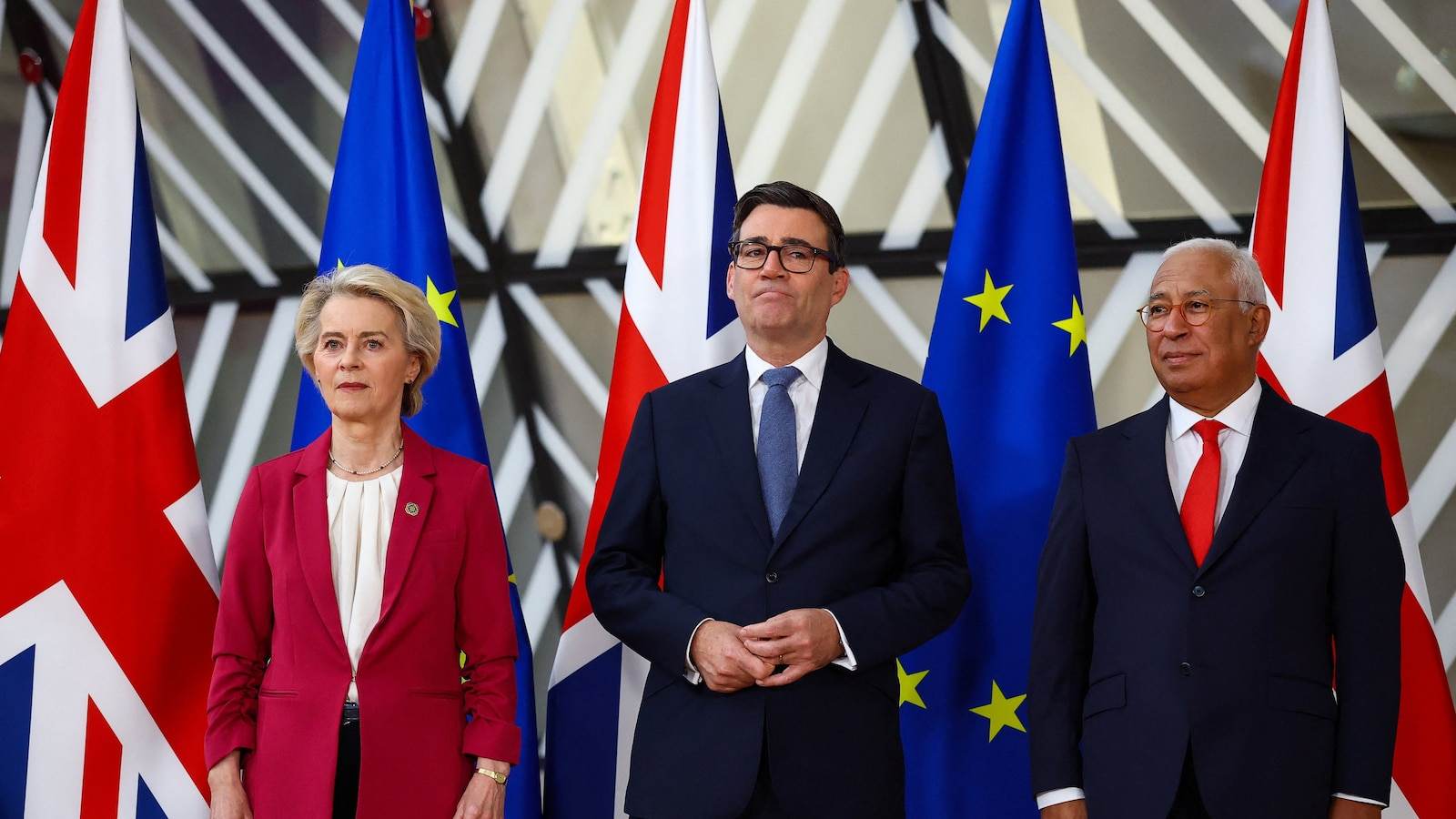
BRUSSELS (Azat TV) – The United Kingdom and the European Union reached a comprehensive package of agreements covering trade, carbon emissions, and youth mobility during a summit in Brussels on November 20, 2026. The high-level meeting marked a deliberate effort to reverse a decade of post-Brexit economic drift and division, establishing what European Commission President Ursula von der Leyen described as a “turning point” in bilateral relations, as reported by KSL.com.
Under the newly confirmed framework, both sides agreed to remove burdensome checks on cross-border trade in plant and agricultural products, link their respective emissions trading schemes, and implement a targeted youth mobility program. This scheme will allow up to 100,000 young adults from each side to live, study, and work in the other’s territory for a period of up to three years. The Associated Press noted in Jamaica Gleaner that the summit sought to mend fences and pave the way for a more constructive partnership.
Economic Relief and Projected Growth
Prime Minister Andy Burnham pitched the package as a pragmatic mechanism for cutting costs, stabilizing supermarket prices, and creating new opportunities for working people and younger generations. Streamlining agricultural exports by eliminating border checks is expected to ease the cost of living for British consumers.
Burnham projected that the new agreements could add 0.5% to the British economy. However, economic integration brings immediate structural questions. Negotiators must still resolve complex secondary issues, such as manufacturing rules and access to the bloc’s “made in Europe” provisions.
Political Stakes and the Re-entry Debate
While the summit aimed to rebuild bridges, it also reignited intense political debate across Britain. To secure the trade and regulatory alignments, the U.K. must accept certain EU standards and rules without having a vote in setting them. Critics argue this dynamic compromises national sovereignty.
Reform UK leader Nigel Farage warned during broadcast appearances that the agreement effectively restarts the broader Brexit debate, suggesting it will quickly devolve into questions about whether the nation should ultimately seek to rejoin the 27-nation bloc entirely. European Council President António Costa maintained that while the bloc remains open to the closest possible relationship, any future integration must respect single-market principles regarding the free movement of goods, services, capital, and people.
Unresolved Issues and Next Steps
Significant hurdles remain on the horizon. Negotiators have given themselves a six-month window to resolve contentious disputes over student fees, specifically whether European students studying in the U.K. should pay domestic tuition rates rather than international fees.
Furthermore, EU officials remain cautious, demanding long-term policy clarity from London after years of shifting political postures. As months or even years of detailed technical talks lie ahead, the summit has initiated a delicate balancing act between immediate economic pragmatism and enduring constitutional divisions.