


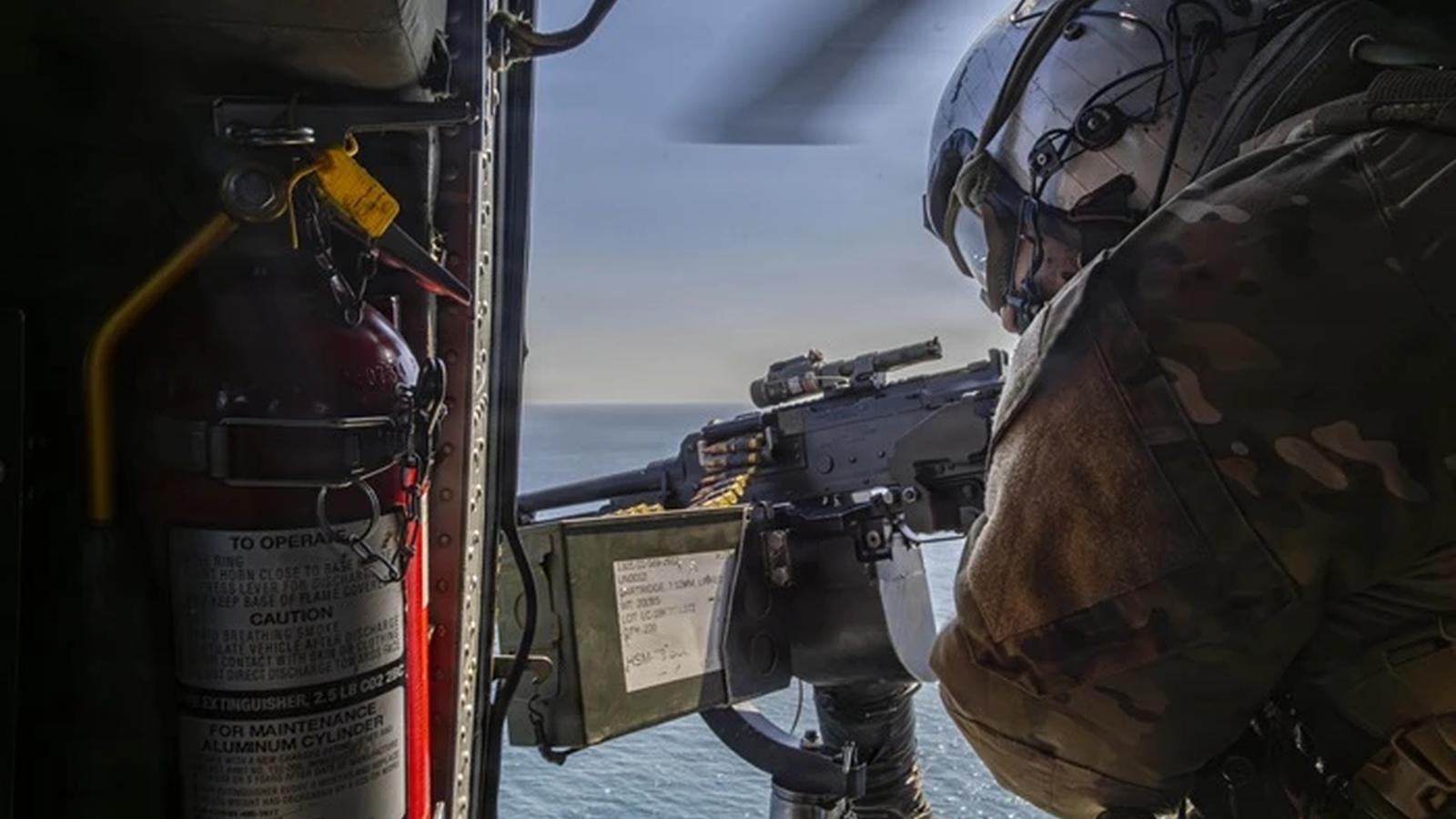
The United States Central Command (CENTCOM) has formalized a comprehensive naval blockade of Iranian ports, deploying a significant force of 10,000 personnel and over ten warships to control maritime access in the Persian Gulf and Gulf of Oman. Admiral Brad Cooper, head of CENTCOM, confirmed that the operation has effectively neutralized Iran’s maritime economic activity, which historically accounts for roughly 90% of the nation’s trade dependency.
Strategic Deployment and Operational Scope
The blockade, which took effect on April 13, utilizes a sophisticated network of destroyers, aircraft, and unmanned aerial systems. Military officials clarified that the U.S. Navy is not positioning vessels directly within the Strait of Hormuz—a precaution taken due to reports of Iranian mining activities in the narrow corridor—but is instead maintaining a strategic perimeter in the Gulf of Oman and the Arabian Sea. This “network” approach allows American forces to exert influence while minimizing the risk of direct kinetic escalation with Iranian coastal defenses.
The Impact on Global Maritime Trade
In the initial 36 hours of the operation, U.S. forces successfully redirected six commercial vessels that had attempted to navigate the Strait of Hormuz. CENTCOM emphasizes that the blockade is applied impartially to all international shipping, citing the presence of vessels from 87 countries in the region. The U.S. administration frames this as a necessary measure to ensure the safety of maritime corridors, though the move represents a significant escalation in the use of economic containment as a tool of statecraft.
Geopolitical Stakes and Institutional Accountability
While the immediate goal is to squeeze the Iranian economy, the broader implications for regional stability remain precarious. The success of this blockade hinges on the delicate balance between enforcing international maritime norms and avoiding a wider conflict. From a liberal democratic perspective, the use of naval power to enforce such an extensive blockade raises complex questions regarding the rule of law in international waters and the potential for humanitarian consequences if the isolation of the Iranian economy persists. As tensions remain high, the international community is closely watching whether these tactical maneuvers will lead to a diplomatic breakthrough or a prolonged standoff that further destabilizes the Middle East.