


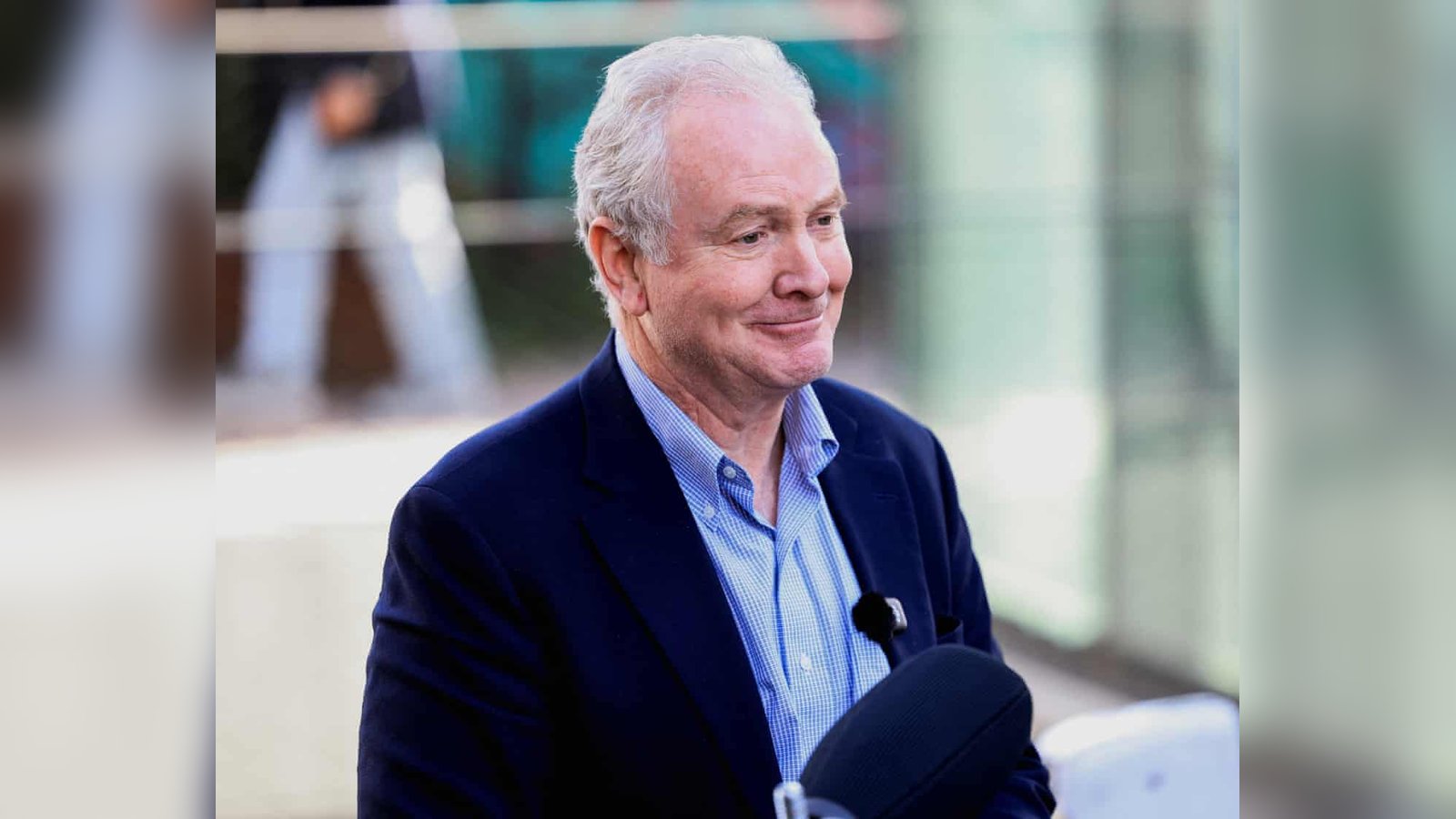
WASHINGTON (Azat TV) – United States Senator Chris Van Hollen of Maryland escalated his intra-party challenge against Senate Democratic leader Chuck Schumer on Sunday, November 15, 2026, asserting in a series of morning television appearances that his bid to lead the incoming Senate majority has a viable path to victory. Van Hollen appeared on CNN, ABC, and Fox News to challenge Schumer, who has led the Democratic caucus for nearly a decade. The contest represents the first contested leadership election for Senate Democrats in decades, testing the direction of the party as it prepares to assume control of the chamber following the November 3 midterm elections. The Guardian reported that Van Hollen maintained his support had grown to 15 senators and criticized reports that Schumer’s team might move the caucus leadership election date earlier than December 1.
Challenging Locked-In Commitments and Caucus Direction
Van Hollen rejected claims by Schumer’s allies that the incumbent leader has locked up enough commitments to secure another term. Last week, a list of committed votes was reportedly leaked by Schumer’s team to the political news outlet The Hill, asserting that Van Hollen had no chance of winning and that progressive backers were merely using the challenge to gain leverage. Speaking on The Guardian, Van Hollen called the report a “bunch of nonsense” and argued that some lawmakers listed as Schumer supporters had already pledged to back his own candidacy.
Elaborating on ABC News, Van Hollen accused Schumer’s camp of utilizing misinformation and intimidation tactics to discourage undecided members from openly supporting an alternative. “They’re essentially trying to instill fear in people who may say that they’re going to support me as a new leader,” Van Hollen said. He contended that the leadership election should allow for an open debate about the party’s future rather than rushing the process or relying on backroom alignments.
Midterm Context and Ideological Fault Lines
The leadership showdown follows the November 3 midterm elections, in which the Republican party lost control of Congress during the second half of Donald Trump’s second presidency. Van Hollen argued that voters rejected Republican policies but did not fully endorse the previous Democratic congressional strategy, stating that the party must earn public trust by breaking away from “business as usual.” He emphasized that the contest should not be framed through old Washington labels of left versus right, but rather as an effort to combat economic inequality and political corruption.
The debate has exposed underlying tensions regarding party inclusivity. Van Hollen criticized Schumer for opposing or failing to support progressive primary candidates who ultimately won their general elections, specifically citing Senators-elect Abdul El-Sayed of Michigan and Troy Jackson of Maine, noting they succeeded despite opposition from establishment-aligned groups including the American Israel Public Affairs Committee (AIPAC) and cryptocurrency donors.
Divided Caucus and Incoming Senators
Support within the incoming Democratic caucus remains fractured. While Schumer helped recruit several winning candidates and raised substantial campaign funds, a bloc of incoming senators has voiced a desire for new leadership or remained uncommitted. Alongside El-Sayed and Jackson, incoming senators-elect Adam Hamilton of Kansas, Annie Andrews of South Carolina, Chris Pappas of New Hampshire, and Peggy Flanagan of Minnesota have expressed openness to alternative leadership. Vermont Senator Bernie Sanders has also stated he will not support Schumer’s bid.
Conversely, other incoming members have adopted a cautious approach. Mississippi Senator-elect Scott Colom stated on NBC News’s Meet the Press that he remained in “listening mode,” aiming to evaluate past leadership performance before casting his vote in the closed-door, secret-ballot election scheduled for early December. Meanwhile, critics of Schumer have pointed to narrow defeats in other states, such as Angie Nixon in Florida and Jamie Davis in Louisiana, arguing that stronger establishment support could have secured additional victories.
Stakes of the December Secret-Ballot Vote
The upcoming closed-door vote will determine whether the Democratic caucus maintains continuity under Schumer or shifts toward Van Hollen’s proposed populist platform. As both sides lobby undecided members ahead of the December vote, the outcome will signal how the incoming Senate majority intends to position itself against the Republican legislative agenda for the remainder of Trump’s term.