


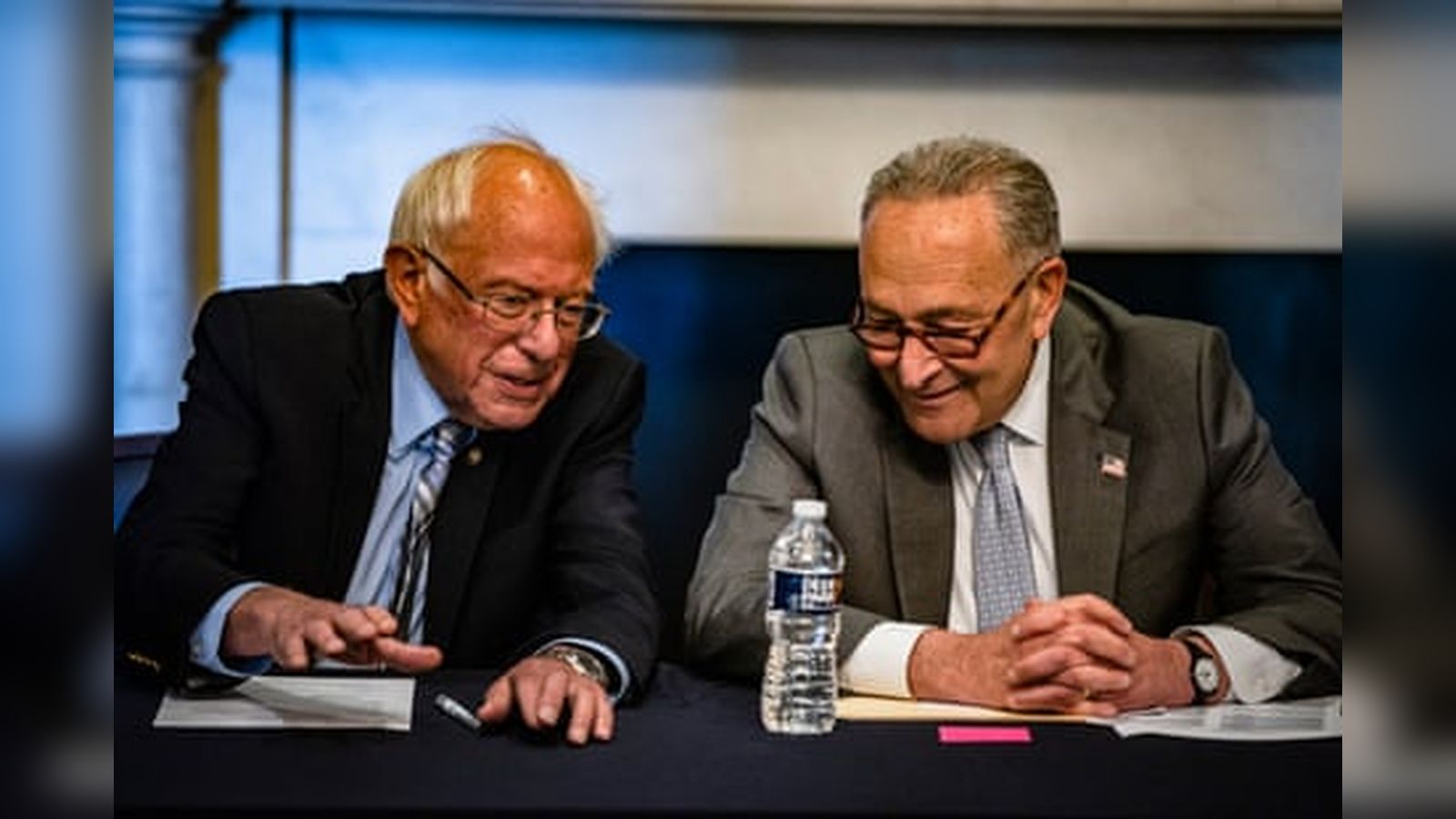
WASHINGTON (Azat TV) – On Tuesday, November 10, 2026, U.S. Senator Bernie Sanders announced that he would not support Senator Chuck Schumer in his bid to remain the Democratic leader in the Senate. Speaking on Capitol Hill alongside Senator Elissa Slotkin of Michigan, Sanders argued that the party's sweeping victories in the midterm elections signal an unmistakable demand from voters for a new generation of leadership and a bold change in direction.
The announcement from Sanders, an independent from Vermont who caucuses with Democrats, sets up a high-stakes internal confrontation following the party's unexpected success across the Senate map. Sanders acknowledged that he has known Schumer for more than thirty years and respects his unmatched work ethic, but insisted that the current political climate demands a complete overhaul of the party's institutional approach.
A Push for Generational Change and Debate
Elaborating on his position during a Capitol Hill news conference, Sanders told reporters that the midterm campaign centered entirely around transformation and systemic reform. He argued that the Senate Democratic caucus must embrace open, vigorous debate rather than a quiet coronation when leadership elections arrive later in the month. The independent senator emphasized that the time for a new generation of leadership has arrived.
Senator Elissa Slotkin echoed those sentiments during the joint appearance, declaring that she would withhold her support from any candidate until prospective leaders present a detailed, comprehensive legislative and strategic plan for the new congressional majority. Slotkin noted that she is not actively seeking the majority leadership position herself, but she maintained that voters clearly cast their ballots for change on election night.
Challengers Emerge as Caucus Tensions Grow
The intra-party dispute highlights broader tensions within the Democratic caucus as incoming lawmakers and progressive organizers demand structural reforms. High-profile incoming Democratic senators have voiced their desire for new leadership, including figures such as senator-elect Abdul El-Sayed of Michigan, senator-elect Adam Hamilton of Kansas, senator-elect Annie Andrews of South Carolina, senator-elect Chris Pappas of New Hampshire, senator-elect Troy Jackson of Maine, and senator-elect Peggy Flanagan of Minnesota.
Meanwhile, other veteran lawmakers have begun assessing potential challenges. Senator Chris Van Hollen of Maryland stated at a live interview during a conference convened by the progressive organization Groundwork Collaborative that he is calling colleagues to gauge their support for a leadership change. Van Hollen stopped short of explicitly calling for Schumer's ouster, but he agreed that the election should not be treated as a coronation and that the caucus needs democracy within its own walls.
Schumer Defends Record Amid Rising Pressure
Despite the growing public opposition and organized phone campaigns from the party's progressive wing, Senator Chuck Schumer has expressed unwavering confidence in his re-election as majority leader. Having led Senate Democrats since 2017, Schumer pointed to the party's recent electoral momentum and successful map expansion into states like Texas, Kansas, and South Carolina as proof of effective leadership.
Speaking to reporters in Washington, Schumer maintained that his caucus remains unified around core economic priorities, lowering costs, and addressing legislative agendas for the upcoming Congress. While Republicans have been meeting behind closed doors to choose their own party leaders, Senate Democrats are just beginning their internal conversations ahead of leadership elections expected later in November.