


A Return to Racing Roots
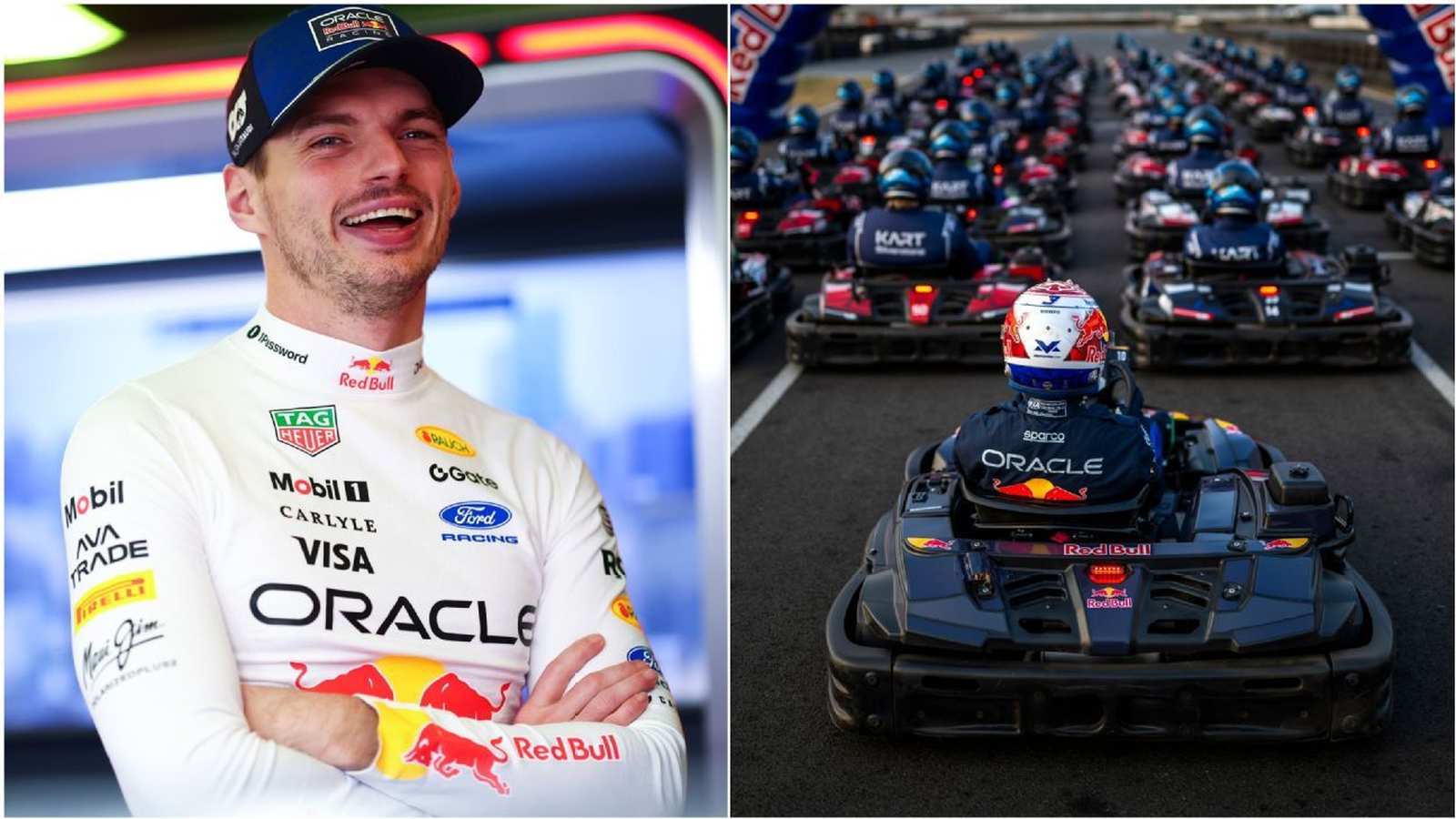
Formula 1 world champion Max Verstappen is stepping away from the grand prix paddock today, Sept. 16, to face a unique test of his driving pedigree: the “Max vs 100” challenge at Silverstone. The event, broadcast live on ESPN and Disney+, sees the Red Bull driver attempting to navigate a specially designed track and overtake a field of 100 amateur and semi-professional karters.
For Verstappen, the event is a nostalgic return to the grueling training schedule that defined his youth. Between the ages of four and 15, the Dutchman spent his weekends traveling across Europe with his father, Jos Verstappen, clocking over 60,000 miles a year to compete in karting circuits. “Go-karting has been a massive part of my life,” Verstappen told ESPN. “It was a really nice period… all different kinds of conditions, tracks, and travels.”
Strategy and Technical Stakes
Unlike standard F1 races, this challenge relies on raw race-craft and split-second decision-making on a smaller scale. Verstappen noted that he does not plan to overthink the strategy, preferring to “go with the flow” as he gauges the skill level of the 100-person field. The logistics involve a custom track configuration designed to maximize overtaking opportunities, a nod to the “mini-races” he and his father practiced during his early development.
The pressure of the event stems from the public nature of the challenge. While Verstappen admits that losing to amateur drivers would be “quite embarrassing,” the exercise serves as a rare bridge between modern high-tech motorsport and the accessible foundations of karting. The event also highlights the evolution of driver-fan engagement, moving beyond traditional interviews and paddock access into interactive, high-stakes sport entertainment.
The Legacy of the ‘Verstappen Method’
The intensity of today’s race reflects the unconventional training methods employed by Jos Verstappen during Max’s childhood. The pair would test in freezing winter conditions, with Max often warming his gloves on the hot exhaust of his kart between sessions. This “full send” approach—a term Verstappen uses to describe his aggressive driving style—was refined in the workshop, where father and son would tune engines until midnight to gain even the slightest performance advantage.
While Verstappen has since moved on to GT racing and F1 dominance, the fundamental skills honed in Genk, Belgium—braking late, precise rotation, and early throttle application—remain the core of his success. Today’s event at Silverstone provides a public showcase of these foundational skills, though the four-time world champion concedes that the scale of 100 competitors represents a “hectic” environment far removed from the controlled grid of a Formula 1 race.