


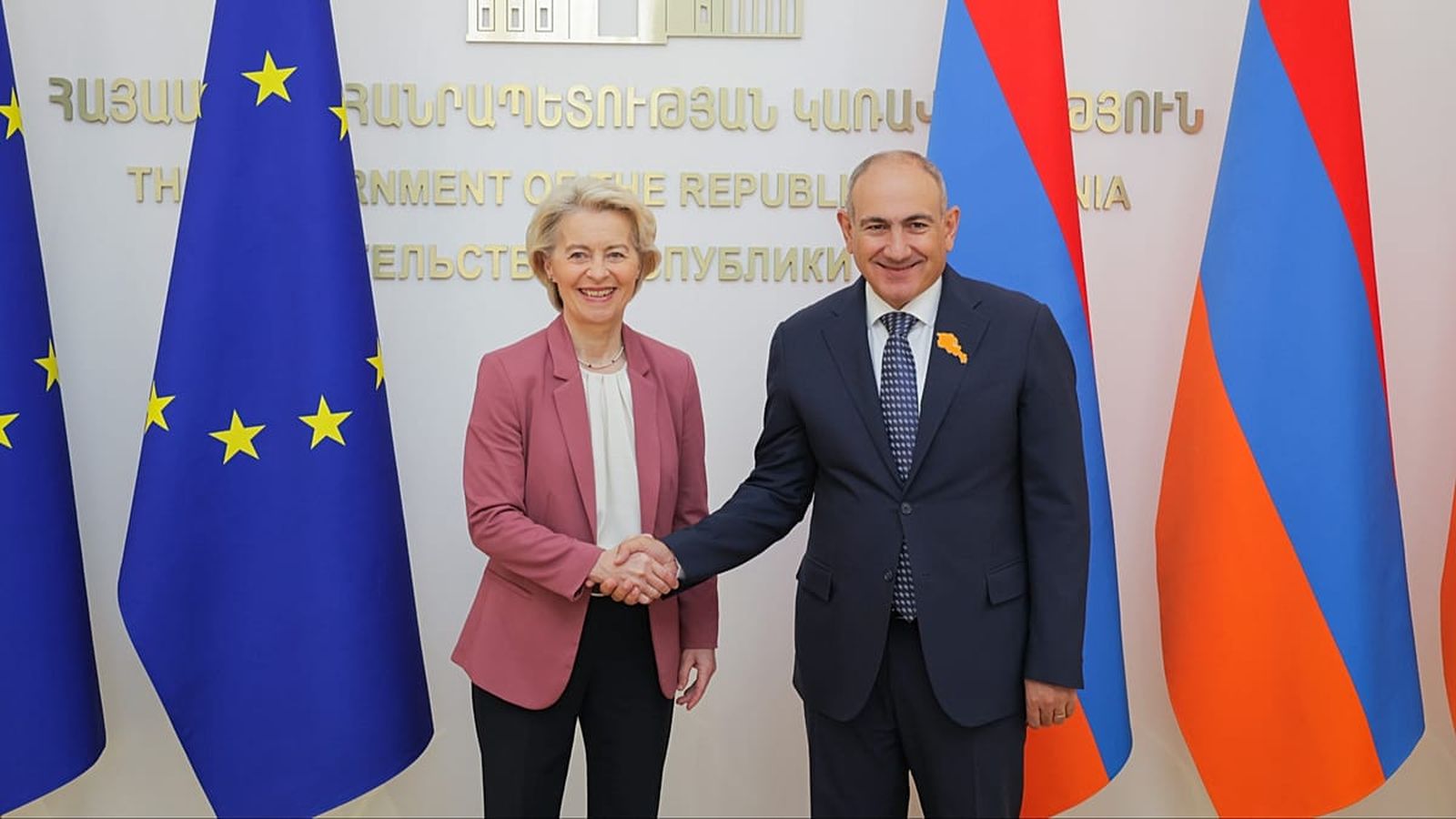
European Commission President Ursula von der Leyen visited Yerevan on July 2, 2026, to announce a comprehensive support package aimed at bolstering Armenia’s economy as it navigates a complex geopolitical realignment. The visit, which followed a stop in Baku on July 1, signals the European Union’s intent to deepen its engagement in the South Caucasus.
Economic Support and Trade Liberalization
During her meeting with Prime Minister Nikol Pashinyan, von der Leyen unveiled “Autonomous Trade Measures” intended to liberalize approximately 80% of Armenian exports to the EU single market. This initiative seeks to mitigate the impact of trade restrictions imposed by Russia, which Yerevan has characterized as economic coercion. The measures are expected to open European doors to nearly 99% of Armenian fresh produce and over 90% of its beverage exports.
Furthermore, the Commission President confirmed that the EU is allocating €20 million for a “peace-fostering programme” aimed at supporting border communities through investments in healthcare, demining, and skills development. This is part of a broader Global Gateway package designed to mobilize up to €2 billion in infrastructure investments, including potential regional rail and energy connectivity projects.
Geopolitical Stakes and Strategic Analysis
The visit underscores a shift in EU strategy, moving from passive observation to active economic partnership. However, analysts point to significant structural challenges. While the EU offers a financial cushion, Armenia remains deeply integrated into the Eurasian Economic Union (EAEU) and reliant on Russian energy infrastructure, including the Metsamor nuclear plant.
The EU’s “Peace through Connectivity” framework faces criticism for its reliance on transactional relationships. While Brussels encourages Armenia’s pro-Western reforms and democratic trajectory, it simultaneously engages with Azerbaijan—a move that has drawn scrutiny given reports of domestic crackdowns in Baku. The challenge for the EU remains whether it can provide sufficient “hard” security or economic alternatives to replace the traditional influence exerted by Moscow and Tehran, both of which remain immediate neighbors with significant leverage over Armenia’s borders and energy grid.
Prime Minister Pashinyan reiterated that Armenia’s foreign policy is guided solely by national interest, stating that the country seeks to avoid crises with Russia while pursuing European integration. The EU has pledged to assist in energy diversification, drawing on experiences from Moldova and Ukraine, to reduce Armenia’s vulnerability to external energy pressure.