


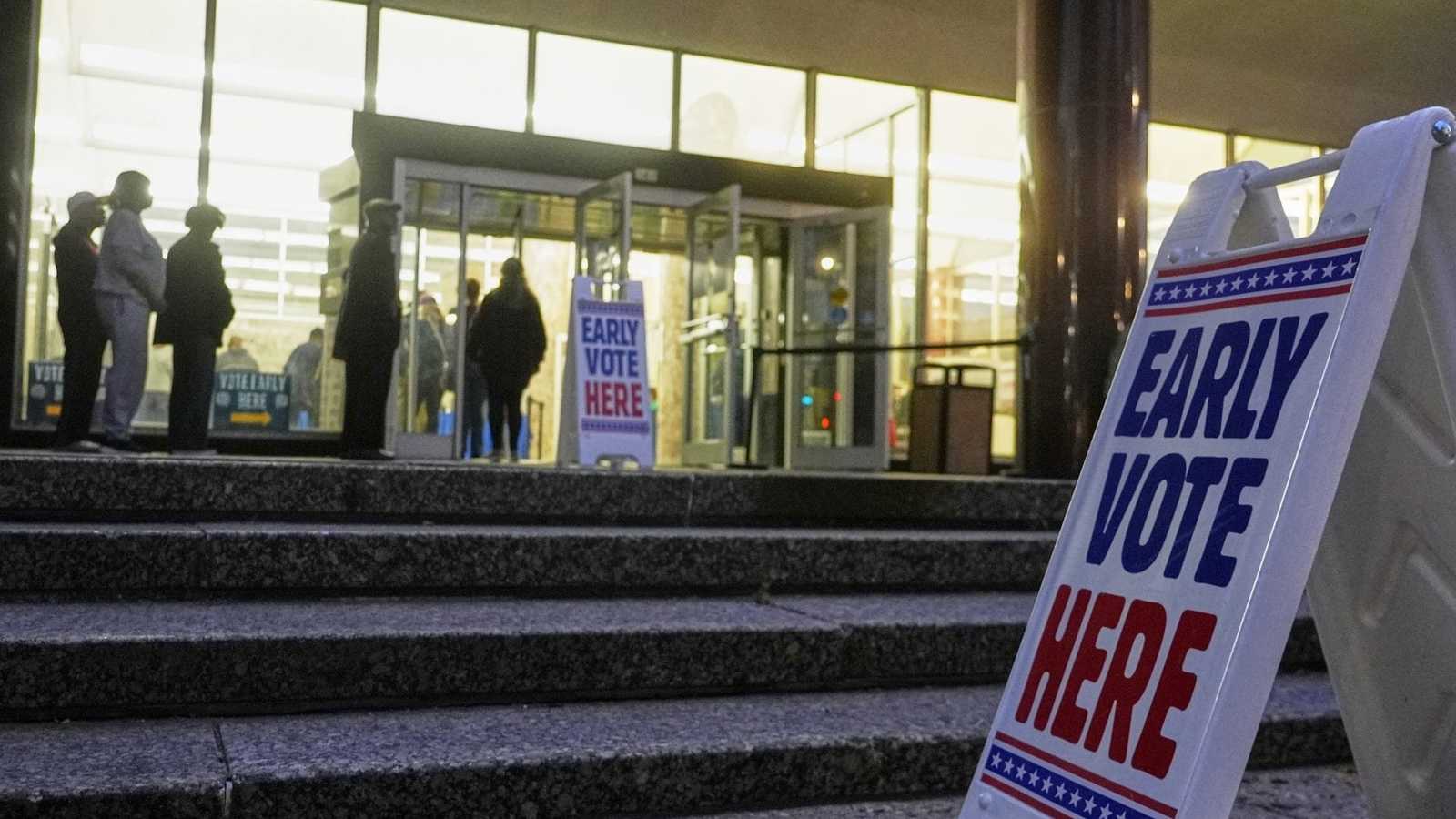
WASHINGTON (Azat TV) – With control of Congress and key statehouses hanging in the balance, voters across the United States are casting advance ballots in high-stakes midterm elections that mark the final two years of Republican President Donald Trump’s administration, according to interviews published by the Vernon Reporter on Nov. 2, 2026. Ahead of Tuesday’s nationwide polling, interviews with citizens participating in the democratic process reveal a widespread, bipartisan anxiety that the familiar fabric of American life is eroding under the weight of severe political polarization, economic pressures, and deep cultural shifts.
While political opponents view their ballots as a vital mechanism to check executive power and halt perceived institutional chaos, many supporters see Trump as a necessary, albeit polarizing, force required to protect the nation’s trajectory. This shared sense of urgency has motivated first-time participants and seasoned voters alike, transforming the midterms into a referendum on the country’s immediate direction.
The Divergent Views on Executive Leadership and Institutional Stability
For critics of the administration, the motivation to vote is rooted in a desire to establish a political counterweight. Arthur Horner, a 59-year-old food importer running a business impacted by tariff policy, described his vote in Harrisburg, Pennsylvania, as an effort “to put the brakes on just the madness,” as reported by the Vernon Reporter. Similarly, Linda Markle, a 72-year-old Democrat in Bucks County, Pennsylvania, voiced deep concern over social division, stating that the political atmosphere under the current presidency has fostered mutual animosity among neighbors.
Conversely, supporters defend the administration’s disruptive approach as an essential antidote to national decline. Denise Wunder, a retired sandwich shop manager in Topeka, Kansas, framed Trump as “our last hope” against societal deterioration, acknowledging his abrasive rhetoric while prioritizing his policy agenda on immigration and economic nationalism. In Harrisburg, mortgage branch manager David Stouffer noted that he is willing to tolerate short-term economic burdens, such as higher gas prices stemming from foreign conflicts, in exchange for tax cuts and stricter border enforcement.
Economic Pressures and Business Uncertainty
Economic anxiety cuts across party lines, manifesting differently depending on commercial exposure and personal financial security. Business owners point to policy volatility as a major operational hurdle. Horner highlighted the commercial difficulties of adjusting pricing structures monthly amid shifting executive actions and what he characterized as an inactive congressional opposition.
At the same time, other voters prioritize long-term fiscal conservatism and industrial policy. Chris Smith, a 27-year-old software engineer in Harrisburg who voted for Trump in 2024, acknowledged that the president exhibits erratic tendencies on various issues. However, Smith ultimately cast a Republican ballot because he views the party as more fiscally responsible and supports its domestic manufacturing initiatives.
Generational Engagement and the Future of Democracy
The heightened political stakes have also drawn younger voters into the electorate, often through family traditions. In Topeka, Kansas, brothers Samontae Mwangi, 20, and Gathenya Mwangi, 19, cast their first-ever ballots alongside their grandfather, Lynn Henderson, a 68-year-old retired tire worker and former Marine. The family members emphasized that high voter turnout remains the primary mechanism for achieving meaningful legislative and social change.
As election day arrives, the underlying divisions documented across multiple states underscore an electorate united primarily by the fear of losing the nation they know, yet deeply fractured over the remedies required to save it.