


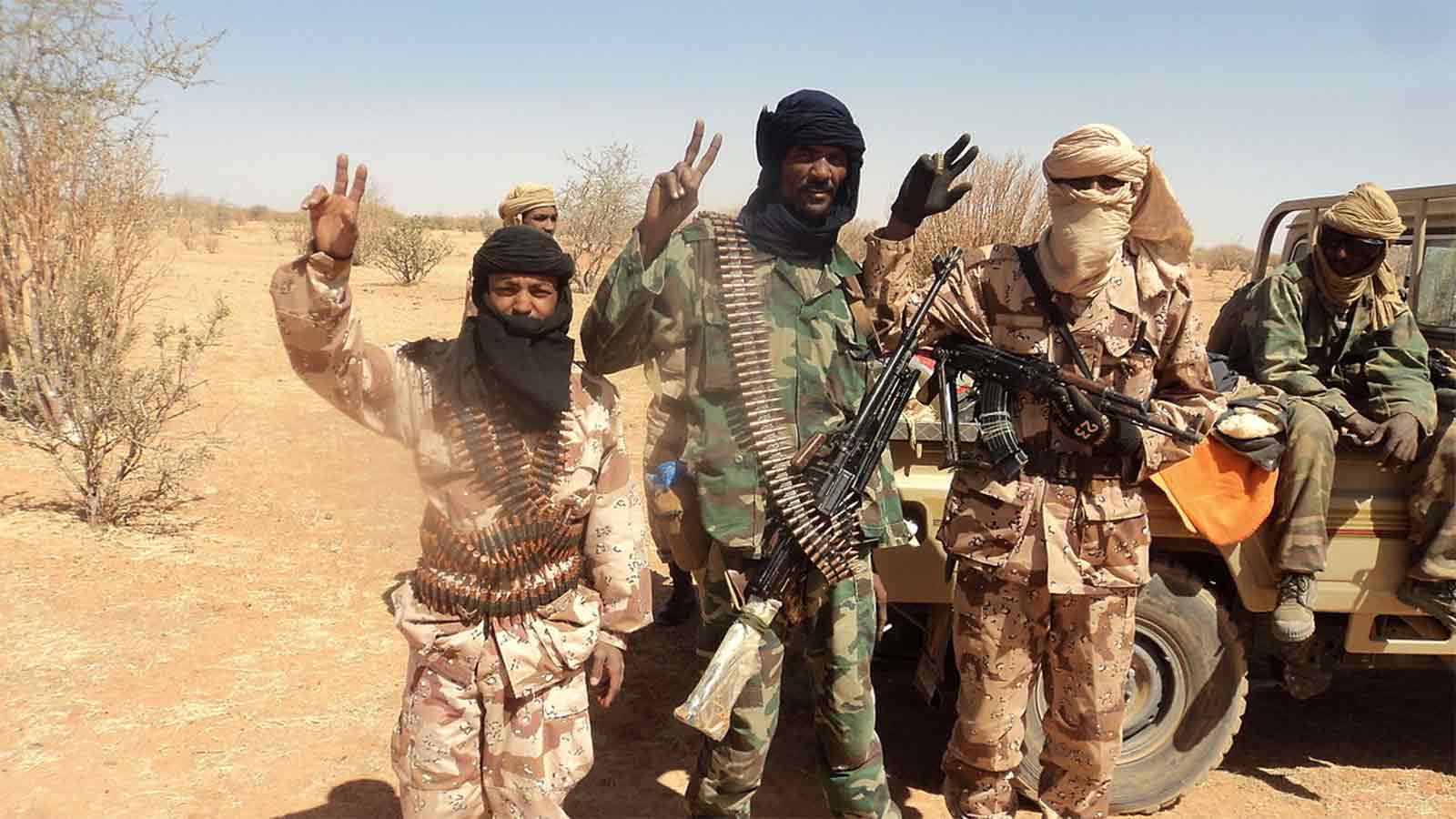
Jihadists on the Brink: The Battle for Mali’s Future
The Sahel, a region whose very name evokes the idea of a shoreline between desert and savannah, is burning. Right now, Mali—a country twice the size of France, rich in history but battered by decades of unrest—is teetering on the edge. The capital, Bamako, is under blockade. Petrol convoys are attacked, schools shuttered, and businesses closed. Long queues snake around empty fuel stations. Daily life feels less like routine and more like survival.
At the center of this crisis is Jama’at Nusrat al-Islam wal-Muslimin (JNIM), an Al Qaeda affiliate whose grip on vast swathes of Mali has grown steadily since its creation in 2017. Alongside smaller groups like the Macina Liberation Front, JNIM is undermining the military junta that took power in 2020. Foreign governments have sounded the alarm, urging their citizens to leave the country immediately. But for Malians, escape isn’t so simple. The city of three million is surrounded, and the junta clings to power, searching for a way out.
How Did It Come to This? History’s Heavy Hand
The story behind Mali’s crisis runs deeper than today’s headlines. The north and south of the country have always been divided—by geography, culture, and history. The Tuareg, a nomadic Berber people, dominate the arid north. The south, with its rain-fed fields and greater wealth, is home to people of darker skin and different traditions. Even after the rise of Islamic and Sahelian empires linked these regions through trade, mistrust lingered.
Trade brought salt, gold, and ivory through Timbuktu, but it also enabled the trafficking of more than 10 million slaves. Colonial powers then drew borders that rarely reflected the realities on the ground, leaving the Tuareg as a marginalized minority. Rebellions flared up repeatedly after independence in 1960, with calls for an autonomous state—Azawad—echoing through the decades.
The events of 2012 marked a turning point. After Libya’s collapse, heavily armed Tuareg mercenaries returned home, igniting another rebellion. Islamist groups seized the moment, and Al Qaeda quickly stepped in. Violence spilled across borders, setting the entire Sahel ablaze. The Global Terrorism Index reports that more than half of all deaths linked to terrorism in 2024 occurred in the Sahel, with nearly five million people displaced. Mali alone accounts for 300,000 refugees—numbers that could surge if the state collapses.
Foreign Interventions: From France to Russia and Beyond
Three years ago, General Assimi Goïta made a series of decisions that would prove fateful. He expelled French and UN peacekeepers, ended cooperation with the G5 Sahel counterterrorism pact, and invited 1,500 Russian Wagner Group mercenaries. The logic was questionable: how could so few troops secure a country with seven borders?
Wagner’s performance was mixed at best. Dozens of its fighters died in a single incident near Algeria. The group rebranded as the ‘Africa Corps’ after its founder, Yevgeny Prigozhin, died in 2023. While some mercenaries remain, their effectiveness is in doubt. The poor showing is a setback for Moscow, which often uses such units for its own interests under the guise of plausible deniability.
Meanwhile, the US is tiptoeing back in, resuming limited intelligence-sharing in 2025—a pragmatic move since its drone base in Niger closed last year. French involvement, however, is unlikely. Anti-French sentiment, stoked by the junta, remains high.
The Wider Sahel: A ‘Coup Belt’ on Edge
Mali is not alone in its turmoil. The Sahel has become known as the ‘coup belt,’ with governments toppled in Burkina Faso, Niger, Sudan, and Chad. Jihadist groups linked to Al Qaeda and ISIS operate in all these countries, competing for recruits and control of lucrative territories, including gold mines. The emir of JNIM, Iyad Ag Ghali, a veteran Tuareg leader, directs a force stretched across national borders—from Burkina Faso and Niger to occasional operations in Togo, Benin, and Côte d’Ivoire.
Some experts speculate that an outright assault on Bamako may not be imminent. JNIM’s fighters are numerous but not unlimited, and a pitched battle could weaken their hold. The group has shown a willingness to negotiate with local leaders, sometimes simply to avoid looting or destruction. This opens a small window for dialogue with the junta, even as violence continues.
What’s at Stake: Migration, Instability, and Europe’s Proximity
The consequences of Mali’s crisis extend far beyond its borders. The Sahel is a major migration route, with African coastlines serving as launching points toward Europe. If Mali falls, surrounding countries—especially Burkina Faso—could quickly follow, threatening Benin, Togo, Ghana, and Côte d’Ivoire next. The potential for mass displacement is enormous, with ripple effects reaching the Mediterranean and beyond.
General Goïta has few options left. Russian support may be limited, and Western nations remain wary. Negotiation may be the only path forward, but it promises only a fragile peace in a region scarred by poverty, environmental degradation, and chronic instability. As history has shown, what happens in the Sahel rarely stays there.
The crisis in Mali is a stark reminder that Africa’s struggles with insurgency, colonial legacies, and foreign intervention have global consequences. Stability in the Sahel is not just a regional concern—it is a matter of international urgency, demanding nuanced engagement and long-term solutions from the world’s powers.