


Rediscovering Heritage Outside Major Urban Corridors
In a newly published regional travel evaluation for 2026, WorldAtlas has spotlighted eleven smaller Texas municipalities that offer exceptional historical, architectural, and natural assets while remaining largely bypassed by mainstream interstate tourism. The compilation emphasizes communities across East Texas, the Panhandle, and the Permian Basin, demonstrating how local preservation efforts, historic courthouses, and specialized museums protect critical chapters of American frontier, industrial, and agricultural history.
While high-speed transit along major highways often directs visitors toward primary metropolitan centers like Dallas, Houston, and Austin, these eleven locations offer direct access to virgin pine forests, centuries-old community institutions, and unusual engineering remnants. Local civic leaders and historical preservationists continue to rely on these sites to support small-town economies and maintain distinct regional identities.
Architectural Landmarks and Planned Communities
Among the highlighted sites, Clarksville in Northeast Texas stands out for both its civic history and nearby ecological preservation. Established in 1833 by James Clark, the town features an 1884 limestone Red River County Courthouse topped by a mansard-roofed clock tower. Just ten miles north along State Highway 37 lies the 1,335-acre Lennox Woods Preserve, managed by The Nature Conservancy. The preserve protects rare virgin timber, including a post oak estimated to be over 300 years old and a loblolly pine nearly 150 years old, offering a striking contrast to Texas’s arid western landscapes.
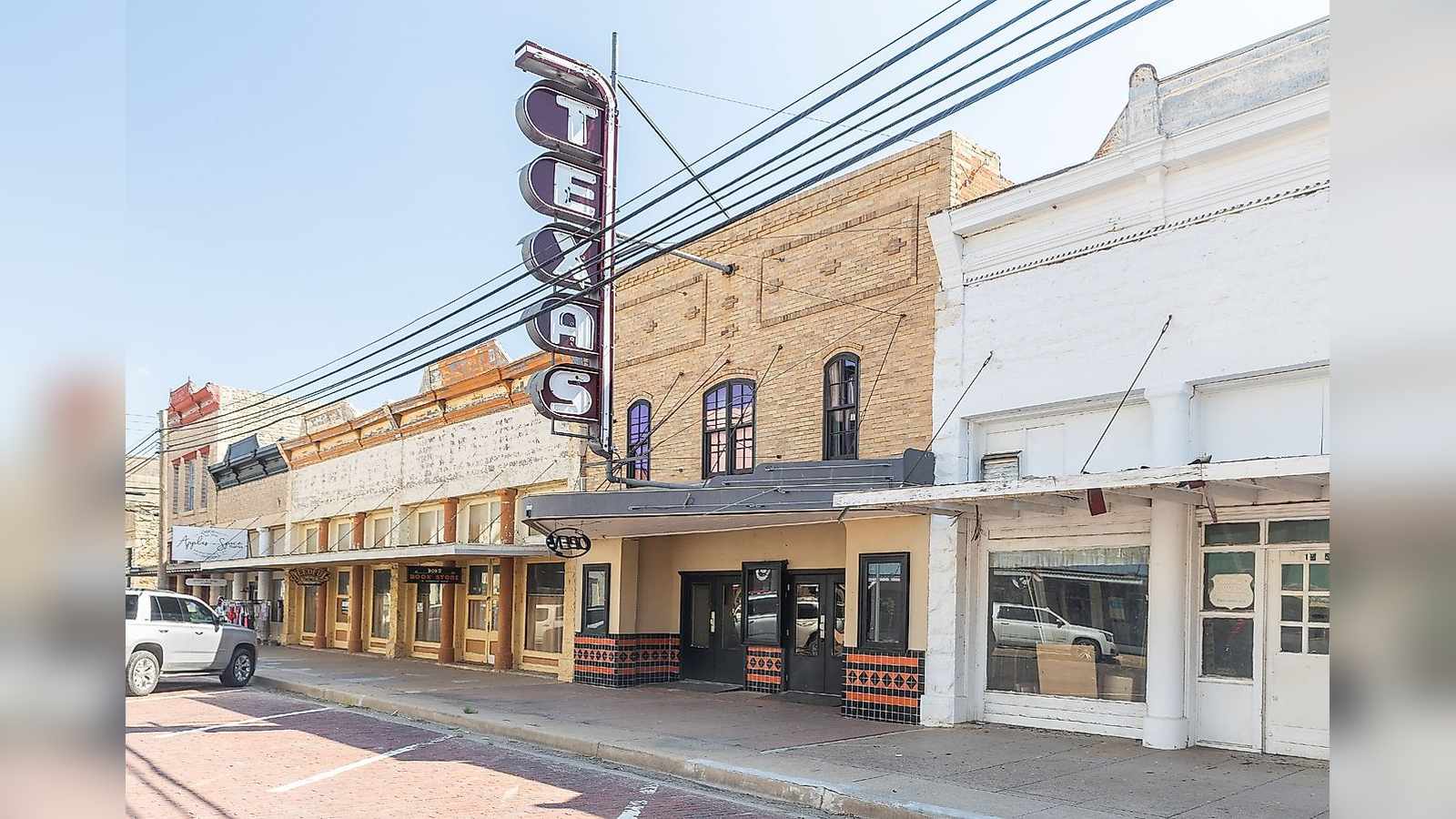
Further west, Ballinger retains one of only five operating Carnegie public library buildings in Texas out of thirty-two originally constructed. Opened in 1911 through funding from industrialist Andrew Carnegie, the Classical Revival structure sits near the historic Runnels County Courthouse. In Garza County, the town of Post highlights early 20th-century social planning. Founded in 1906 by cereal mogul C.W. Post as an ambitious planned community, the town’s Garza County Historical Museum now operates inside a 1911 sanitarium with 26 rooms of historical exhibits, while local restoration efforts continue on the 1916 Garza Theatre.
Agricultural Milestones and Industrial History
In the Texas Panhandle and South Plains, agriculture and energy shape the cultural footprint of several featured towns. Dalhart hosts the XIT Museum, which documents the legendary XIT Ranch—a three-million-acre spread handed to a Chicago syndicate in the 1880s to finance the construction of the Texas State Capitol. Nearby, the 93,000-acre Rita Blanca National Grassland preserves shortgrass prairie reclaimed by the federal government following the 1930s Dust Bowl.
Hereford, widely known as the “Beef Capital of the World,” displays its agricultural evolution through the Deaf Smith County Historical Museum, situated inside a 1927 school building, alongside the historic 1909 E.B. Black House. In Seminole, the Gaines County Museum and the West Texas Living Heritage Museum illustrate the complex migration of German-speaking Mennonites who arrived via Russia and Mexico in 1977, transforming local agriculture and small business enterprise alongside Comanche, Anglo, Hispanic, and Black historical traditions.
Ecological Refuges and Engineering Curiosities
For nature and outdoor enthusiasts, Crockett serves as a gateway to the 160,000-acre Davy Crockett National Forest. Its 45-acre Ratcliff Lake Recreation Area, originally a sawmill log pond for the Central Coal and Coke Company, was converted into a public recreation facility in 1936 by the Civilian Conservation Corps, which planted roughly three million trees to restore the surrounding landscape.
In Monahans, wind-swept sand dunes reaching 70 feet in height are protected within Monahans Sandhills State Park. The town also features the Million Barrel Museum, built around an eight-acre concrete crude oil reservoir constructed by Shell Oil in 1928 that failed due to leakage. In nearby Andrews, the Legacy Park Museum highlights early pioneer survival through the restored J.S. Means Ranch House, operating against the active industrial backdrop of Permian Basin pump jacks. Together, these eleven towns illustrate how regional history and conservation thrive far beyond the state’s primary travel arteries.