


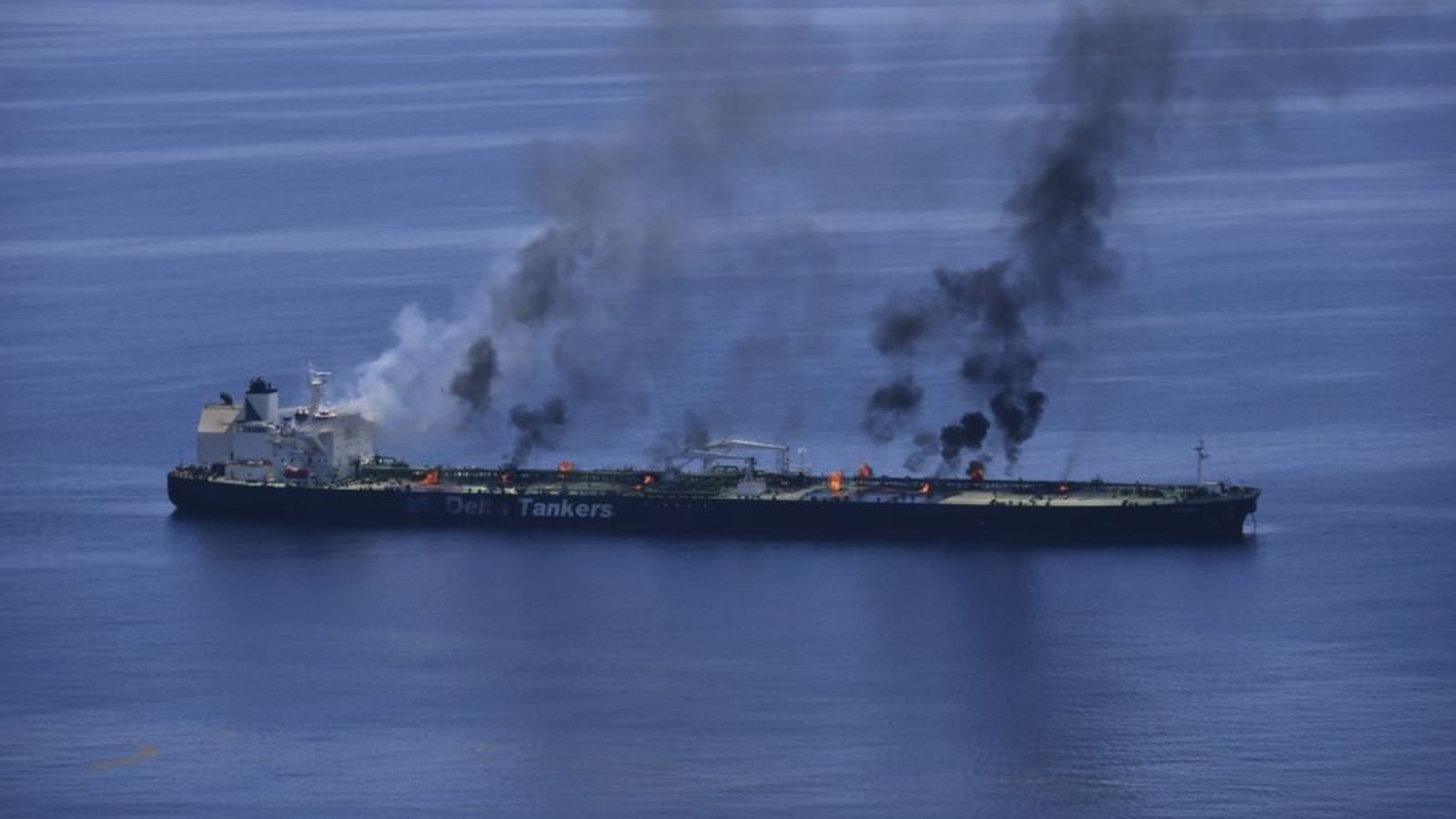
Yemen’s Iran-aligned Houthi rebels have claimed responsibility for attacking two Saudi oil tankers in the Red Sea, escalating tensions in a critical global shipping corridor. The group stated the attacks were in response to a Saudi maritime blockade.
Houthi military spokesperson Yahya Saree announced on Wednesday that the group targeted the oil tankers, named Encelia and Layla, for allegedly violating a naval embargo they had previously imposed on Saudi vessels. Saree claimed the attacks were conducted using ballistic missiles, cruise missiles, and drones, resulting in fires on the ships. He also stated that nearly ten other ships were forced to alter their routes.
The Saudi Press Agency confirmed that the Encelia was hit, citing an official from Saudi Arabia’s Transport General Authority. The agency reported that all crew members were safe. However, it did not provide details regarding the claimed attack on the Layla. The SPA condemned the attacks, calling them a violation of international laws and conventions that protect the safety of commercial vessels and their crews.
The United Kingdom Maritime Trade Operations (UKMTO) center also reported receiving information about a tanker being struck. The UKMTO stated that the master of a tanker reported being hit by an unknown projectile, which caused a fire onboard that the crew was actively fighting.
The Houthis, officially known as Ansar Allah, had declared a maritime blockade on Saudi Arabia on July 20. This action followed a period of intense violence in Yemen, including the Yemeni government bombing the Houthi-controlled Sanaa airport to prevent an Iranian plane from landing. The Houthis framed their blockade as a reciprocal measure, stating it was based on the principle of “an eye for an eye” and affirmed their right to respond to the blockade with a blockade. They accused Saudi leaders of imposing an “unjust and oppressive siege” for nearly 12 years, alleging resource plundering and a comprehensive blockade on their ports and airports.
Hussain al-Bukhaiti, a journalist based in Sanaa, suggested that the Houthis’ naval blockade against Saudi Arabia aims to compel Riyadh to lift its own embargo on Houthi-controlled ports and airports. He noted that the Saudi government has rejected claims of imposing a siege on the Yemeni people, while critics point to the Houthis’ rejection of a Jordanian proposal to resume flights between Amman and Sanaa.
The Red Sea, and specifically the Bab al-Mandeb Strait, is a crucial chokepoint for global trade. Approximately 5 percent of the world’s crude oil and refined petroleum products, amounting to about 4.1 billion barrels in 2024, pass through this strait. The region’s importance is amplified by ongoing disruptions in other key shipping routes, such as the Strait of Hormuz, which has been effectively closed since late February due to the war involving the U.S. and Iran. If the Bab al-Mandeb were also to become significantly disrupted, it could potentially block a substantial portion of global oil and gas supply.
Al-Bukhaiti drew parallels to previous Houthi actions, recalling their successful disruption of Red Sea access for Israeli ports, which he claimed led to the closure of Eilat port. He also mentioned a May 2025 agreement mediated by Oman, suggesting that the U.S. had to engage in negotiations with the Houthis to resolve that situation.
The Houthi attacks on shipping in the Red Sea follow a pattern of actions taken by the group since October 2023, in response to the war in Gaza. While these attacks had reportedly ceased with a ceasefire announcement in Gaza in October 2025, the recent claims suggest a renewal or continuation of their maritime operations against vessels perceived as linked to their adversaries.
Despite U.S. and Israeli strikes aimed at degrading their capabilities, experts suggest the Houthis retain some capacity to strike ships in the Red Sea. This persistent threat highlights the complex security dynamics in the region and the ongoing challenges in ensuring the safety of international maritime traffic.