


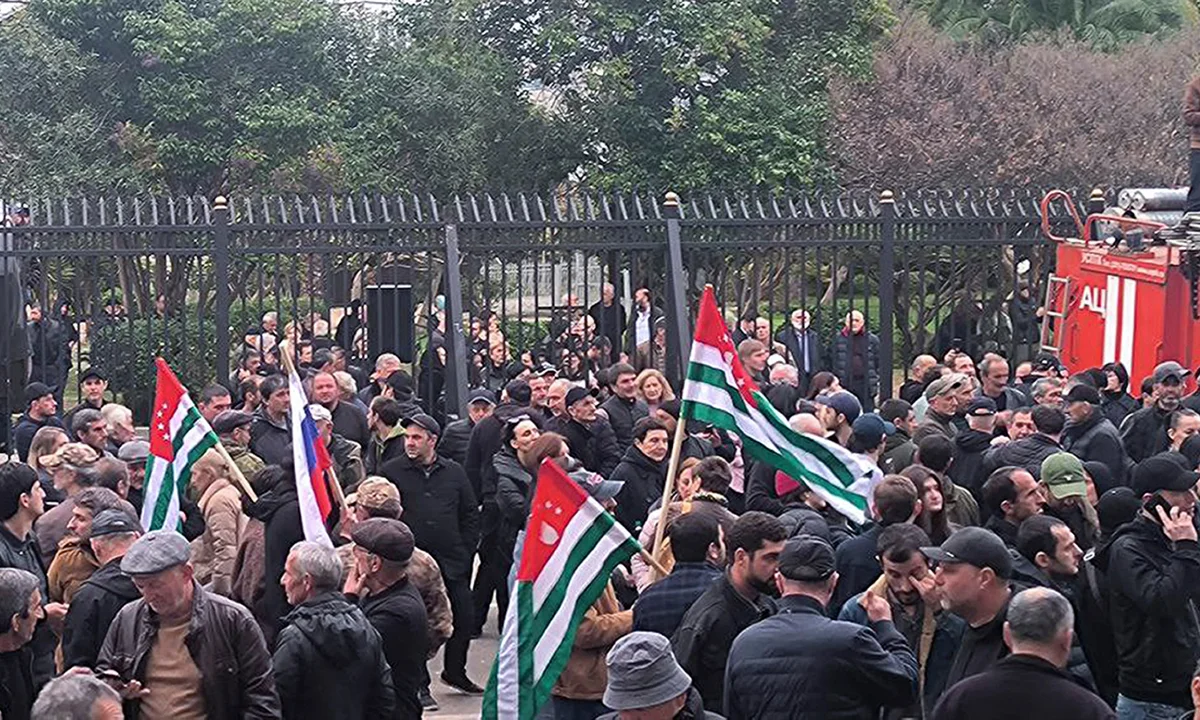
Political turmoil continues to grip Abkhazia, the breakaway region of Georgia recognized by Russia, as protesters maintain their occupation of the parliament building they stormed on Friday. The demonstrations erupted over an investment agreement with Moscow that protesters claim President Aslan Bzhania is using to consolidate his grip on power.
In a significant development, President Bzhania has offered to step down and call for snap elections, contingent on protesters evacuating the parliament building in the capital, Sukhumi. “When they leave the building, I will write my resignation letter,” Bzhania declared, while also confirming his intention to participate in the proposed new elections.
The protesters have taken pains to clarify their position through a public statement, emphasizing that their opposition is not directed against Abkhazia’s relationship with Russia but rather against what they perceive as Bzhania’s exploitation of these ties for personal advantage.
Moscow has expressed growing concern over the escalating crisis, advising Russian citizens to avoid travel to the region. The situation highlights the complex relationship between Russia and Abkhazia, which, along with South Ossetia, has been recognized as independent by Moscow since the 2008 war with Georgia, though most of the international community continues to regard both regions as Georgian territory.
The ongoing protests underscore the deep divisions within Abkhazia’s political landscape, where relations with Russia remain a cornerstone of its political identity. The crisis has brought to the surface underlying tensions about the direction of Abkhazia’s governance and its relationship with its powerful northern neighbor.
These developments represent one of the most significant challenges to Abkhazia’s political stability in recent years, with implications that extend beyond its borders to impact regional dynamics and Russian-Georgian relations.