


Record Revenue Driven by Data Center AI Boom
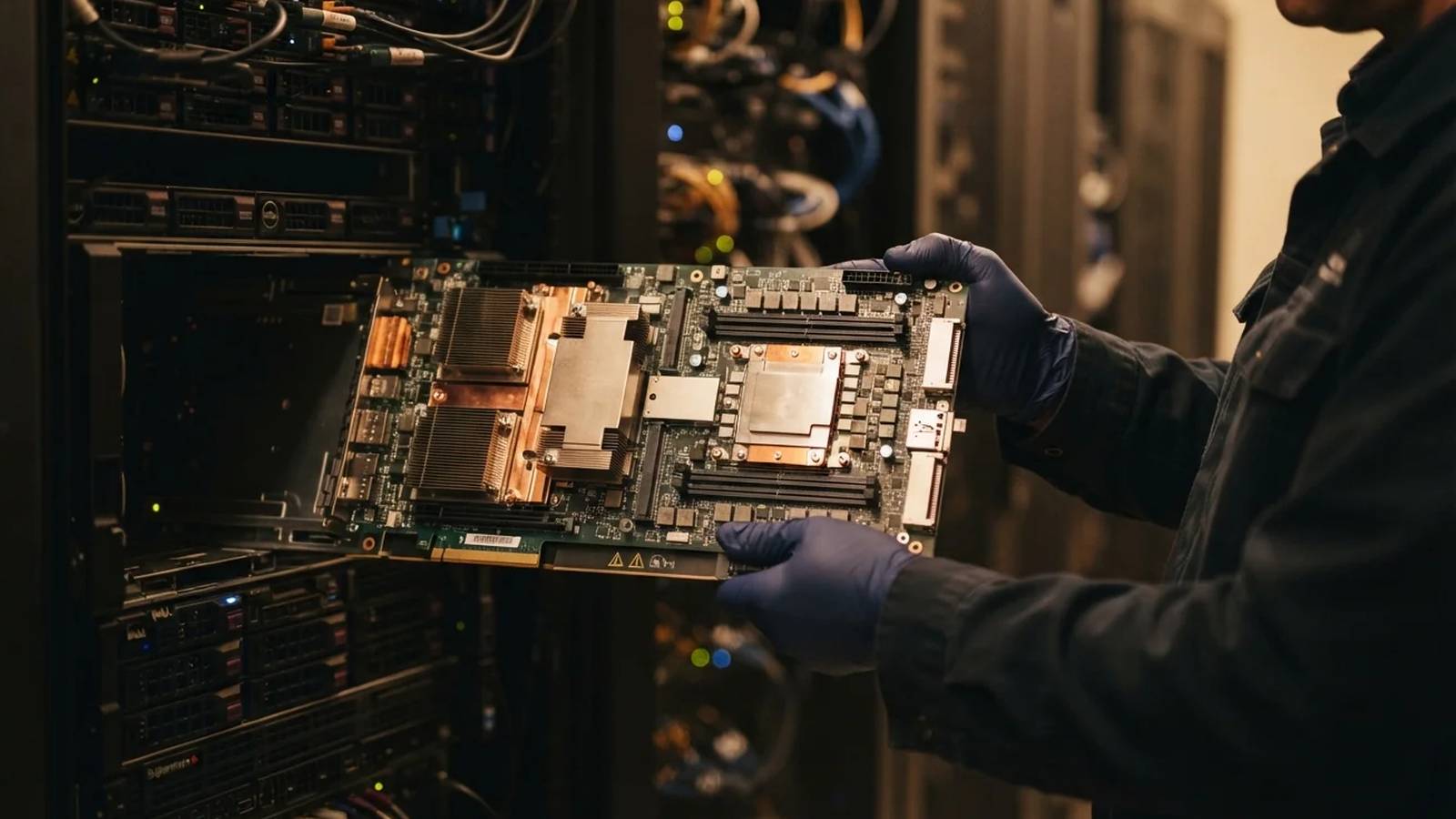
Advanced Micro Devices (AMD) announced its second-quarter 2026 financial results, reporting a record $11.5 billion in revenue. This represents a significant 50% year-over-year increase and a 13% sequential growth. The company’s performance was overwhelmingly propelled by its Data Center segment, which saw its revenue more than double, reaching $6.7 billion. This surge marks a 107% increase year-over-year and accounts for 58% of AMD’s total revenue, underscoring the critical role of AI and high-performance computing in the company’s success.
EPYC CPUs and Instinct GPUs Power Data Center Growth
The impressive performance in the Data Center segment is attributed to strong demand for AMD’s EPYC server CPUs and its Instinct GPUs. These components are crucial for powering the massive computational needs of artificial intelligence workloads, including training and inference. Dr. Lisa Su, AMD’s Chair and CEO, highlighted the company’s strong momentum, stating, “We delivered an excellent quarter, with record revenue and profitability as Data Center revenue more than doubled year-over-year. We enter the second half with strong momentum as EPYC demand accelerates, Instinct deployments scale and Helios begins to ramp.” She further emphasized the broader impact of AI, noting that it is “driving a significant expansion in demand for compute across all of our markets.”
Mixed Performance Across Other Segments
While the Data Center segment soared, other business units showed mixed results. The Client and Gaming segment generated $3.8 billion in revenue, a 6% increase year-over-year. Within this, the Client business, driven by AMD Ryzen processors, grew by 23%. However, the Gaming business experienced a significant downturn, with revenue falling 31% year-over-year to $779 million, primarily due to lower semi-custom revenue, which is often tied to console sales. The Embedded segment showed steady growth, with revenue up 19% year-over-year to $977 million.
Strategic Acquisitions and Partnerships
Beyond its core financial results, AMD announced significant strategic moves aimed at bolstering its AI capabilities. The company acquired MEXT, a firm specializing in AI-powered predictive memory technology designed to optimize memory usage and expand capacity for AI workloads. Furthermore, AMD revealed a major partnership with Anthropic, a leading AI safety and research company. This collaboration involves deploying up to 2 gigawatts of AMD Instinct MI450 Series GPUs within AMD’s Helios rack-scale solutions and a multiyear commitment to co-develop GPU and ROCm software. This partnership aims to accelerate AI deployments at scale, leveraging AMD’s hardware and Anthropic’s AI expertise.
AMD also highlighted its expanded collaborations with industry giants like Microsoft, Cerebras, and Cisco. The company is working with Microsoft to deploy AMD Helios racks on Azure for frontier model inference and enhance Azure’s VM series with AMD EPYC CPUs. The collaboration with Cerebras aims to combine AMD Helios with Cerebras’ Wafer-Scale Engine for ultra-low-latency inference, while the partnership with Cisco focuses on integrating AMD Ryzen AI Halo systems with Cisco’s networking and security capabilities for enterprise-level agentic AI deployment.
Product Launches and Future Outlook
AMD’s recent product announcements include the launch of the AMD Helios™ rackscale solution, touted as the world’s most powerful AI server rack, and the AMD Instinct MI400 Series GPU family. The company also introduced its 6th Gen AMD EPYC server CPUs and the ROCm.ai developer platform. For the third quarter of 2026, AMD projects revenue of approximately $13 billion, with an expected non-GAAP gross margin of around 56%. This outlook suggests continued strong year-over-year growth of approximately 41%.
Market Reaction and Investor Sentiment
Despite the strong financial results and strategic announcements, AMD’s stock experienced a notable decline of 8.81% following the earnings report. This negative market reaction, despite record revenue and substantial growth, indicates a complex investor sentiment. While the company’s AI-driven growth is evident, factors such as increased operating expenses, the downturn in the gaming segment, and perhaps broader market concerns could be influencing investor reactions. AMD’s stock was trading at $472.89 with significantly above-average trading volume, suggesting high investor interest and volatility.
Challenges and Competitive Landscape
AMD operates in a highly competitive semiconductor market, particularly in the AI and data center space, where NVIDIA remains a dominant player. While AMD’s Data Center revenue has surged, sustained growth will depend on its ability to continue innovating and capturing market share from competitors. The gaming segment’s decline also presents a challenge, requiring strategic adjustments to regain momentum. Furthermore, the company faces risks related to government regulations, export controls, and the cyclical nature of the semiconductor industry, as noted in its cautionary statement.
The strategic partnership with Anthropic, aiming to deploy 2 gigawatts of GPUs, represents a significant commitment and potential growth driver. However, the full scale of this deployment is not yet realized, and market observers will be closely watching its progress. The acquisition of MEXT also signals AMD’s commitment to enhancing its memory solutions for AI, a critical component in advanced computing systems.