


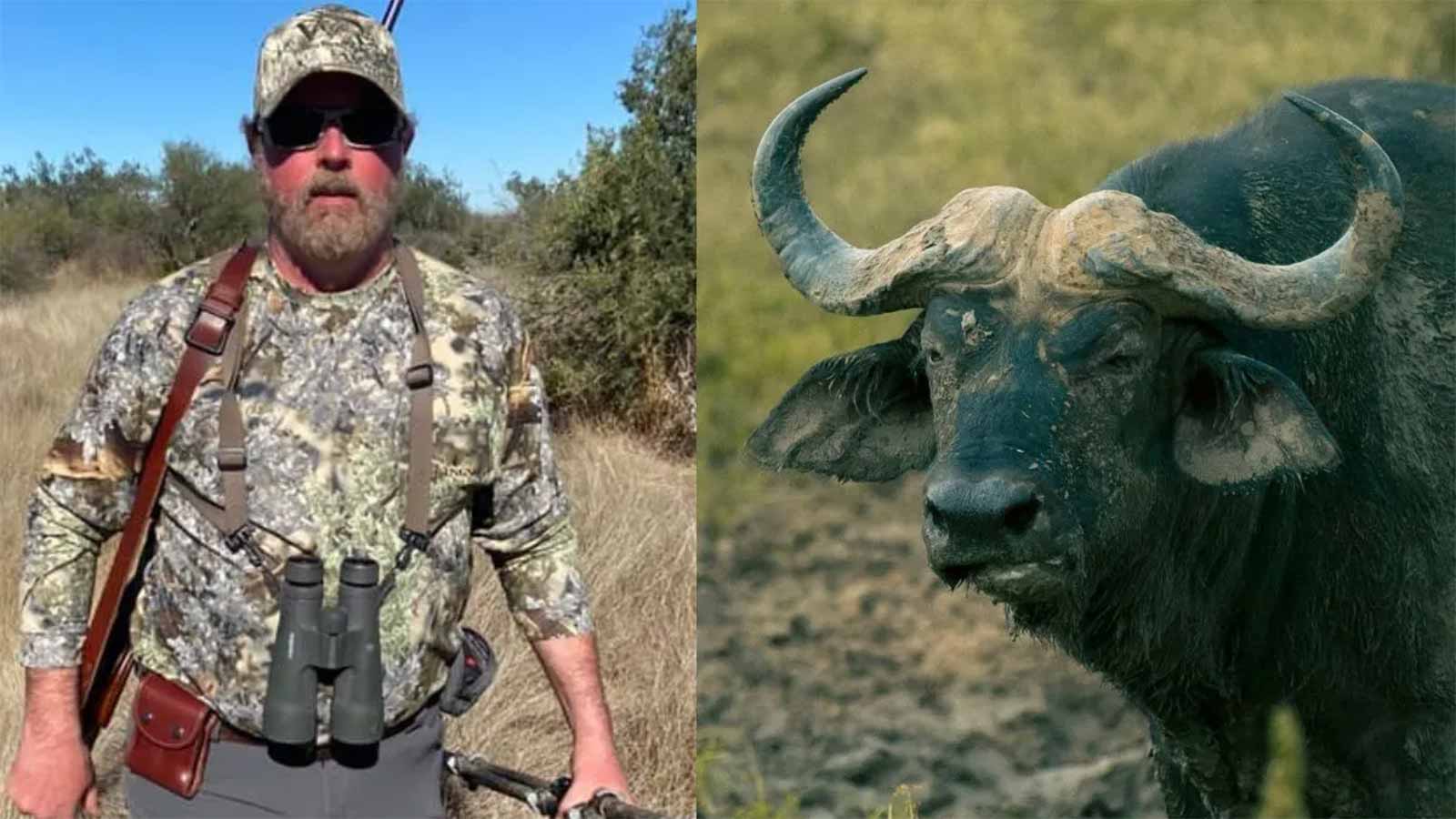
An American big game hunter, Asher Watkins, met a tragic end on August 3, 2025, when a Cape buffalo fatally gored him during a hunting expedition in South Africa’s Limpopo province. The incident, confirmed by Coenraad Vermaak Safaris, has reignited discussions about the perils of trophy hunting and the unpredictability of African wildlife.
The Fatal Encounter
Asher Watkins, a 52-year-old Texas rancher and avid hunter, was pursuing a Cape buffalo in the 50,000-acre Bambisana concession, a region well-known for its wildlife safaris. Accompanied by a professional hunter and a tracker from Coenraad Vermaak Safaris, Watkins had already successfully hunted a waterbuck earlier in the day. However, events took a tragic turn when the group encountered the massive 1.3-tonne bull buffalo, often referred to as ‘Black Death’ by trophy hunters due to its aggressive nature.
According to reports from Witness, the buffalo had not been shot or wounded prior to the incident. Despite this, it became agitated and charged Watkins, goring him fatally. The attack was described as sudden and unprovoked, leaving little time for the team to react. The safari company later issued a statement expressing their condolences, saying, “It is with deep sadness and heavy hearts that we confirm the tragic death of our client and friend, Asher Watkins.”
The Dangers of Hunting Cape Buffalo
Cape buffaloes, also known as ‘widowmakers,’ are notorious for their unpredictable aggression and are considered one of the most dangerous animals to hunt. According to Legit.ng, these animals are responsible for approximately 200 deaths annually, more than lions, elephants, or crocodiles. The danger they pose is a key reason why they are highly sought after in the trophy hunting community, despite the risks involved.
Watkins’ death has drawn attention to the ethical and safety concerns surrounding big game hunting. Critics argue that such practices not only endanger human lives but also disrupt ecosystems. Meanwhile, proponents of trophy hunting maintain that it generates significant revenue for conservation efforts and local economies.
Historical Context and Broader Implications
Big game hunting has long been a contentious issue, with incidents like Watkins’ death adding fuel to the debate. South Africa, home to some of the world’s most iconic wildlife, has a robust hunting industry regulated by government policies. Yet, as highlighted by Witness, the dangers of interacting with wild animals are ever-present, not just for hunters but also for local communities and conservation workers.
In recent weeks, South Africa has seen multiple fatal encounters with wildlife, including a soldier trampled by elephants during a border patrol. These incidents underscore the need for stricter safety protocols and better education on wildlife behavior for those venturing into the wild.
The Legacy of Asher Watkins
Asher Watkins was more than just a hunter; he was a social media personality who shared his hunting expeditions with a global audience. His death serves as a stark reminder of the inherent risks of big game hunting. While his passing has sparked an outpouring of grief among his followers, it has also prompted renewed scrutiny of the hunting industry’s practices and its impact on both humans and animals.
Coenraad Vermaak Safaris, one of South Africa’s oldest registered hunting outfitters, has pledged to review its safety measures in light of the incident. “We remain committed to ensuring the safety of our clients while promoting ethical hunting practices,” the company stated.
As the world reflects on the life and tragic death of Asher Watkins, the broader conversation around wildlife conservation, ethical hunting, and human-wildlife interactions continues to evolve.