


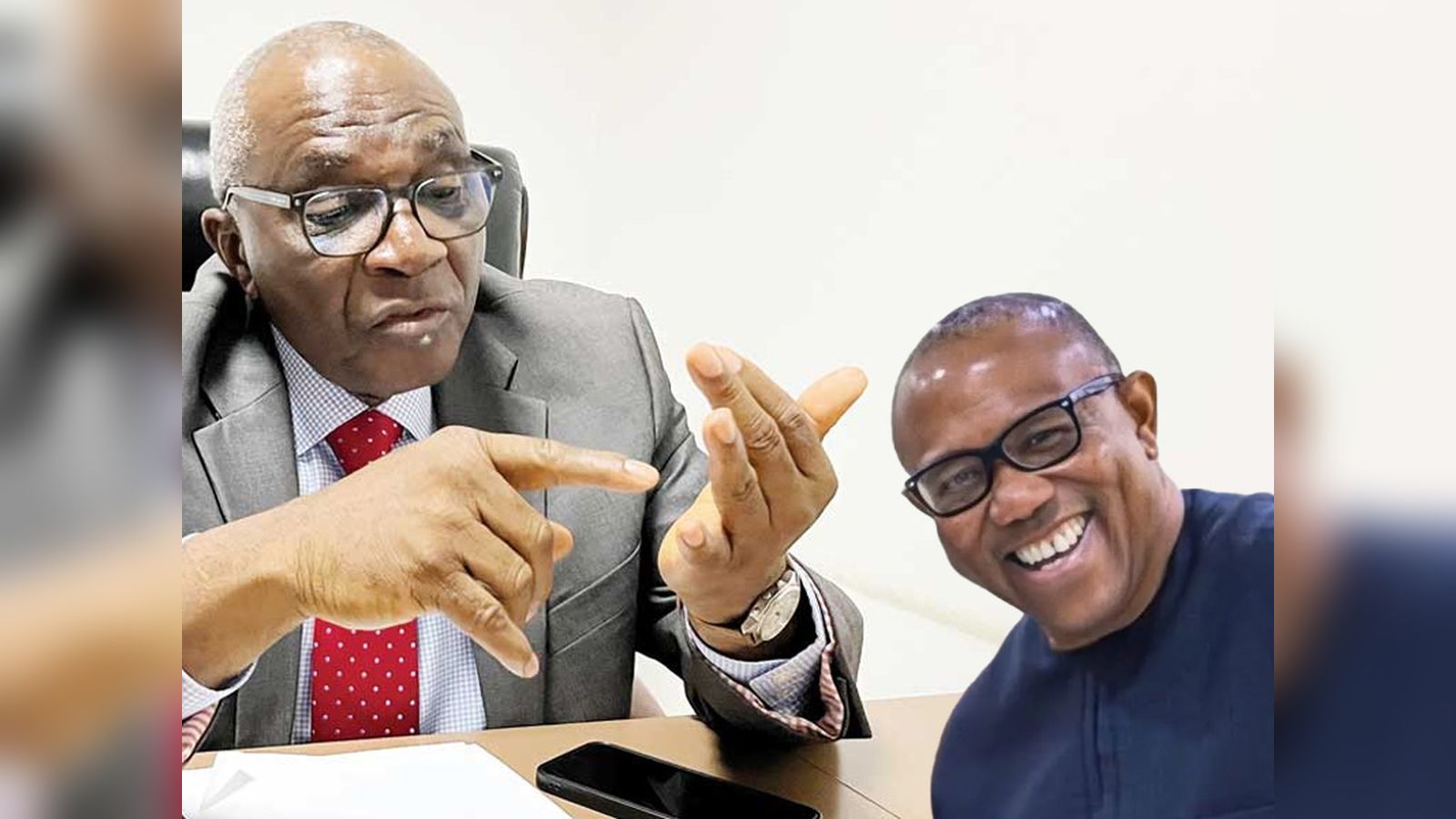
The Political Trigger: A Dare from the Presidency
The Nigerian political landscape has been upended by a direct challenge from the federal executive to opposition leader Peter Obi. The Presidency has publicly dared Obi, the presidential candidate of the Nigeria Democratic Congress (NDC), to honor his previous pledge to withdraw from the 2027 presidential race. This escalation follows the official release of public debt records by the Anambra State Government, which directly contradict Obi’s long-standing claims of leaving the state with a clean financial slate at the end of his tenure as governor in 2014.
According to a report by Arise News, presidential spokesperson Bayo Onanuga took to social media to confront the opposition leader. Onanuga pointed out that Obi had previously threatened to quit the electoral stage if anyone could prove financial wrongdoing or outstanding debts from his two terms as governor. With the Anambra State Government now publishing detailed figures of liabilities, the Presidency insists “the ball is back in his court” to fulfill his threat and withdraw from the upcoming election.
The Anambra State Disclosures: Fact-Checking the Legacy
The controversy deepened when the Anambra State Government, led by Governor Chukwuma Soludo, issued a comprehensive statement titled “Gov Peter Obi and Record of Public Debt in Anambra: Facts Beyond Propaganda and Lies.” The document, signed by the Commissioner for Information and Value Reformation, Dr. Law Mefor, outlines substantial domestic and external debts attributed to Obi’s administration.
The state government clarified that during his eight years in office, Obi spent approximately $4.05 billion (equivalent to N5.4 trillion at current exchange rates) and contracted $123.77 million in external debt alone. According to official figures published by Sahara Reporters, the outstanding balance of these specific external loans stood at N127.4 billion as of June 30, 2026. The current administration has been actively servicing these liabilities, paying hundreds of millions of Naira monthly.
The released records specify several major external loans left by Obi’s administration, including:
- A $48.33 million additional financing loan for the Malaria Control Booster Project, with $37.34 million remaining outstanding as of mid-2026.
- A $37.89 million loan for the Nigeria Erosion and Watershed Management Project, which still carries an outstanding balance of $34.86 million.
- Various other multilateral loans tied to education, healthcare, Fadama agricultural development, and community infrastructure.
Unpaid Salaries, Pensions, and the Ecological Fund Dispute
Beyond external debt, the Soludo administration has sharply disputed Obi’s claims that he left office without owing local workers. Commissioner Mefor asserted that the current government inherited and has since cleared approximately N22 billion in gratuity arrears owed to retired state and local government employees, including teachers. Furthermore, the state alleges that salary arrears for workers of the defunct Anambra State Water Corporation remained unresolved throughout Obi’s tenure, with only five out of sixteen verified months of arrears paid before he left office.
The dispute also touches on a highly contested financial account. Obi had previously claimed to have left substantial ecological funds for his successor. However, the Anambra State Government clarified that the account Obi referred to was actually an Internally Generated Revenue (IGR) Consolidated Account, not an ecological fund. Mefor challenged Obi to explain where the alleged funds were kept, describing the former governor’s assertions as “nebulous creative accounting.”
Obi’s Defense and the Stakes for 2027
As reported by Vanguard, Peter Obi has dismissed the state government’s claims as politically motivated propaganda designed to damage his reputation ahead of the 2027 elections. Obi maintained that his administration cleared historical gratuities and arrears worth over N35 billion and left more than N75 billion in savings for his successor, Willie Obiano. He argued that any outstanding project-tied loans were standard developmental instruments and should not be framed as irresponsible borrowing.
This escalating dispute threatens to impact Obi’s primary political appeal, which is built on a reputation for strict fiscal discipline, transparency, and integrity. As the 2027 presidential campaign begins to take shape, the debate over his financial stewardship in Anambra is likely to remain a central point of contention between the opposition and the ruling APC-led federal government.